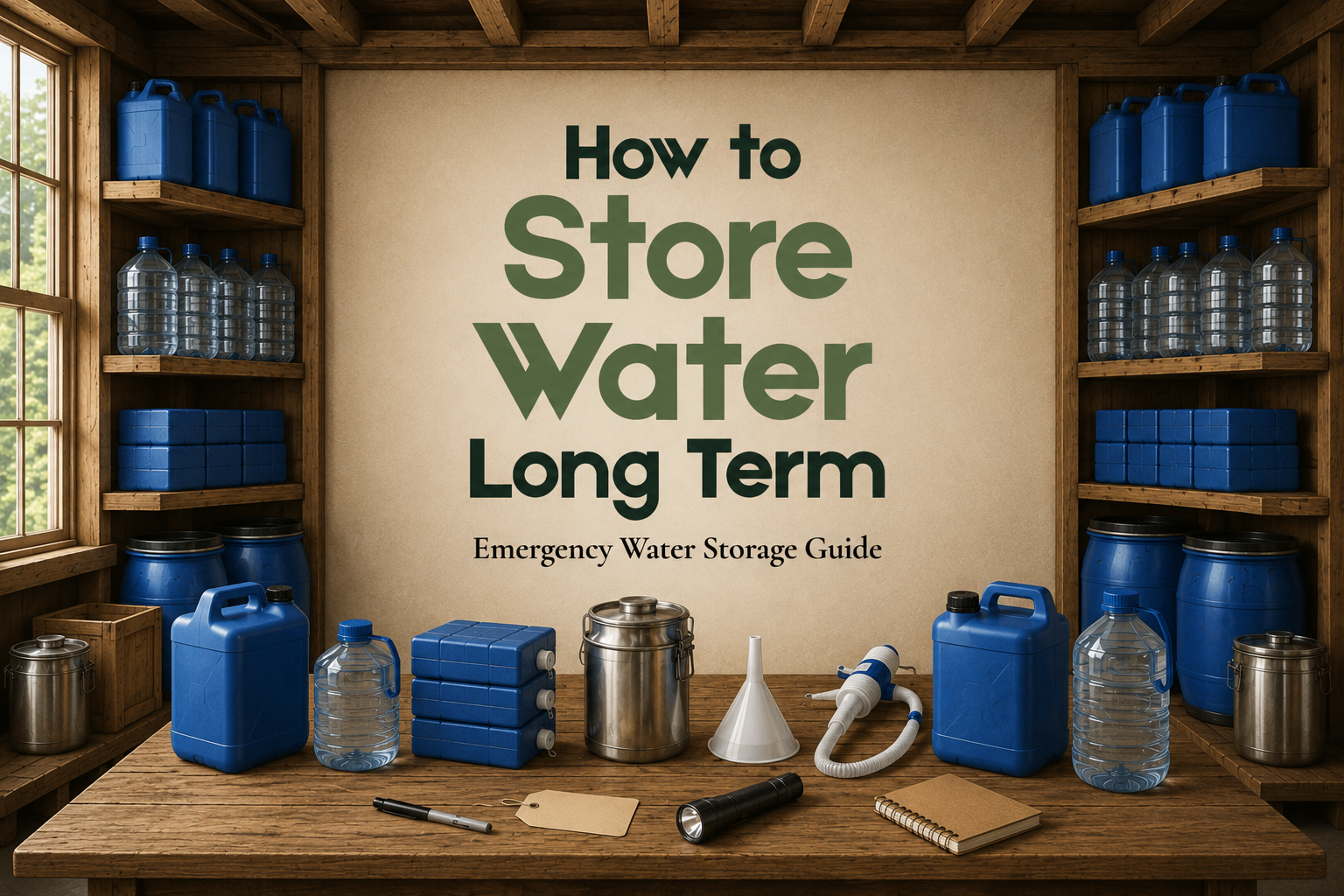

How to Store Water Long Term (The Right Way)
Water is the one emergency supply you simply can’t afford to overlook. While many people focus on stocking canned food, rice, or emergency meals, clean drinking water is usually the first essential resource to become unavailable during a disaster. A power outage, severe storm, flood, wildfire, or broken water main can quickly interrupt your normal water supply, leaving you without safe water for drinking, cooking, or basic hygiene.
The good news is that long-term water storage doesn’t have to be complicated. With the right containers, proper sanitation, and a suitable storage location, you can build a dependable emergency water reserve that stays safe for months—or even years.
If you’re just getting started, it’s also important to know how much water your household should store before deciding where to keep it. Our guide on How Much Water Should You Store for Emergencies? explains recommended storage amounts for families of different sizes and emergency durations.
In this guide, you’ll learn:
- Which containers are safest for long-term water storage
- Whether tap water needs additional treatment
- How to sanitize containers correctly
- The best places to store emergency water
- How long stored water actually lasts
- Common mistakes that can ruin your water supply
By the end of this article, you’ll have a practical system for storing emergency drinking water with confidence.
Why Long-Term Water Storage Matters
Most people assume that clean water will always be available simply by turning on the faucet. In reality, municipal water systems depend on electricity, treatment facilities, pumping stations, and an extensive network of underground pipes. When any part of that system fails, access to safe drinking water can disappear much faster than people expect.
Natural disasters are one of the most common causes of water interruptions. Hurricanes can flood treatment plants, earthquakes may damage pipelines, winter storms can freeze water lines, and wildfires often force evacuations that leave communities without reliable utilities. Even a localized water main break can result in boil-water advisories that last several days.
Unlike food, water has almost no substitute. The average adult can often go weeks with limited food, but dehydration becomes dangerous within a matter of days. That’s why emergency preparedness experts consistently recommend making water your first priority.
Long-term water storage also provides peace of mind beyond major disasters. It can help during:
- Extended power outages
- Temporary municipal water contamination
- Plumbing repairs
- Severe weather events
- Unexpected supply disruptions
- Short-term emergencies that limit access to stores
For many households, building an emergency water supply is one of the simplest preparedness projects with one of the biggest returns.
Related: Once you’ve planned your storage system, read our guide on How Much Water Should You Store for Emergencies? to calculate the right amount for your family.
Choose the Right Water Containers
Not every container is suitable for storing drinking water over long periods. The material, construction, and previous contents all influence whether water remains safe and pleasant to drink.
Choosing the right container from the beginning prevents contamination, unpleasant tastes, and unnecessary waste.
Food-Grade Plastic Containers
Food-grade plastic containers are the most popular choice for home emergency water storage because they balance safety, affordability, and durability.
Most are made from high-density polyethylene (HDPE), a plastic specifically designed for food and water storage. These containers resist cracking, tolerate temperature changes reasonably well, and don’t transfer unwanted chemicals when used correctly.
Common examples include:
- 5 to 7 gallon water containers
- Stackable emergency water containers
- Water bricks
- Portable camping water jugs
Advantages
- Affordable
- Easy to transport
- Lightweight
- Widely available
- Designed specifically for drinking water
Disadvantages
- Can become brittle after years of sunlight exposure
- Require periodic inspection
- Need proper cleaning before refilling
For most beginners, food-grade plastic containers offer the best combination of convenience and long-term reliability.
Large Water Storage Barrels
Families preparing for longer emergencies often choose large water storage barrels ranging from 30 to 55 gallons.
These barrels are ideal when you want to maintain several weeks—or even months—of emergency water in one location.
Benefits include:
- High storage capacity
- Efficient use of space
- Less expensive per gallon
- Ideal for garages, basements, or storage rooms
However, full barrels are extremely heavy and difficult to move once filled. It’s important to place them in their permanent location before adding water.
Glass Containers
Glass bottles can safely store drinking water because they don’t absorb odors or leach chemicals.
However, they’re usually better suited for smaller quantities rather than emergency reserves.
Pros:
- Excellent water quality
- No plastic taste
- Easy to sanitize
Cons:
- Heavy
- Fragile
- Difficult to transport
- Breakable during earthquakes or accidents
For these reasons, glass works well for daily household storage but is rarely the primary solution for emergency preparedness.
Stainless Steel Containers
Food-grade stainless steel containers are another excellent option.
They resist corrosion, don’t retain odors, and last for decades with proper care.
They’re commonly used by:
- Off-grid households
- Homesteaders
- Long-term preparedness enthusiasts
The primary downside is cost, as stainless steel storage containers are significantly more expensive than plastic alternatives.
Containers to Avoid
Some containers should never be used for long-term drinking water storage, even if they appear clean.
Avoid storing water in:
- Milk jugs
- Juice cartons
- Containers that previously held chemicals
- Non-food-grade buckets
- Thin disposable plastic bottles intended for one-time use
Milk containers deserve special attention.
Even after careful washing, tiny milk proteins and fats often remain trapped in the plastic. These residues encourage bacterial growth and make sanitation extremely difficult.
Similarly, chemical containers should never be reused for drinking water because harmful residues can remain embedded in the material.
Investing in purpose-built food-grade containers is one of the safest decisions you can make.
Can You Store Tap Water?
One of the biggest misconceptions about emergency preparedness is that tap water isn’t suitable for long-term storage.
In reality, for most households in the United States, municipal tap water is already treated and disinfected before it reaches your home.
When stored correctly in clean, sanitized food-grade containers, chlorinated tap water is generally an excellent choice for emergency storage.
Municipal Tap Water
Municipal water systems already contain carefully controlled levels of chlorine or chloramine that help suppress bacterial growth.
Because of this existing treatment, additional disinfectants are often unnecessary if:
- the water is from a reliable public system,
- the container is properly sanitized,
- and the container remains sealed during storage.
This makes tap water one of the easiest and most economical options for building an emergency reserve.
Well Water
Private well water requires additional consideration.
Unlike municipal systems, well water is not continuously disinfected before entering your home. Water quality varies depending on the location, maintenance of the well, and local groundwater conditions.
If you’re using untreated well water, consider disinfecting it before long-term storage or filtering it through an appropriate purification system.
Regular testing of private wells is also an important part of safe preparedness.
Filtered Water
Many homes use refrigerator filters, countertop filters, or pitcher filters to improve taste.
While these filters often remove chlorine and improve flavor, removing chlorine also reduces one of water’s natural defenses against bacterial growth.
For long-term emergency storage, filtered water may require additional treatment depending on the filtration method used.
Distilled Water
Distilled water contains very few dissolved minerals and is exceptionally pure.
Although it stores well, it is generally unnecessary for emergency preparedness because municipal tap water is already safe and considerably less expensive.
Distilled water is better reserved for specialized household uses rather than routine emergency storage.
Rainwater
Rainwater should not be considered ready-to-drink simply because it appears clean.
It can collect:
- dust
- bird droppings
- insects
- bacteria
- chemicals from roofing materials
If rainwater is collected for emergency use, it should always be properly filtered and disinfected before being used as drinking water.
Should You Treat Water Before Storage?
Whether water needs additional treatment depends largely on its source.
Adding disinfectants unnecessarily won’t always improve water quality and may even affect taste.
Understanding when treatment is helpful—and when it isn’t—can save both time and money.
When Treatment Usually Isn’t Necessary
If you’re filling sanitized food-grade containers with clean municipal tap water from a reliable public water system, additional treatment is often unnecessary.
The chlorine already present in treated tap water continues protecting the water after storage, provided the containers remain sealed and are stored under appropriate conditions.
For many families, this simple approach is entirely sufficient.
When Treatment Is Recommended
Additional treatment becomes much more important if you’re storing:
- untreated well water
- collected rainwater
- spring water
- surface water
- water from uncertain sources
In these situations, disinfection helps reduce the risk of bacteria, viruses, and other microorganisms growing during storage.
Common treatment methods include carefully measured unscented household bleach or commercially manufactured water preservatives designed specifically for emergency water storage.
Water Preservers
Commercial water preservatives are formulated to extend storage life while minimizing changes in taste.
They’re especially popular for:
- large storage barrels
- emergency preparedness systems
- long-term storage exceeding one year
Although more expensive than household bleach, many preparedness enthusiasts appreciate the convenience and consistent dosing.
What About Boiling?
Boiling is an excellent emergency purification method after contamination is suspected, but it isn’t typically used before storing water long term.
Once boiled water cools, it can become re-contaminated if placed into unsanitized containers.
For this reason, proper sanitation of containers is just as important as treating the water itself.
How to Sanitize Containers Before Filling
Even the highest-quality food-grade container won’t keep water safe if it’s dirty before you fill it. Dust, mold spores, bacteria, or residue left inside a container can shorten the storage life of your water and increase the risk of contamination.
Fortunately, sanitizing containers is simple and only takes a few minutes.
Step 1: Wash the Container
Start by washing the inside of the container with warm water and a small amount of dish soap.
Pay close attention to:
- The inside walls
- The cap or lid
- Threads around the opening
- Any spouts or valves
Rinse thoroughly so no soap remains.
Step 2: Sanitize With a Bleach Solution
The CDC recommends sanitizing containers using an unscented household bleach solution.
A common mixture is:
- 1 teaspoon of unscented liquid household bleach per quart (about 1 liter) of water
Pour the solution into the container and make sure it contacts every interior surface.
Shake gently.
Allow it to sit for at least 30 seconds.
Pour out the solution.
Step 3: Drain Completely
Allow excess sanitizer to drain.
There is no need to rinse after sanitizing if you’re using the recommended bleach solution correctly.
This helps maintain a clean interior before filling.
Step 4: Fill Immediately
Fill the container with clean drinking water as soon as possible after sanitizing.
Avoid touching:
- inside of the lid
- inside of the opening
- water stream
The less contamination introduced, the longer the water remains safe.
Step 5: Seal and Label
Write down:
- Fill date
- Water source
- Rotation date (if you use one)
A waterproof label or permanent marker works well.
Labeling prevents forgotten containers from sitting untouched for years.
Best Places to Store Emergency Water
Where you store your water is almost as important as how you store it.
Heat, sunlight, and chemicals can shorten storage life or damage containers over time.
Ideally, choose a location that stays:
- Cool
- Dry
- Dark
- Stable in temperature
- Easy to inspect
Excellent Storage Locations
Good options include:
- Basement
- Interior closet
- Utility room
- Finished storage room
- Climate-controlled garage
- Pantry
These environments usually experience fewer temperature swings than outdoor sheds or attics.
Places to Avoid
Avoid storing drinking water:
- In direct sunlight
- Near gasoline
- Near pesticides
- Beside paint or solvents
- In extremely hot garages
- In attics
- Outdoors where freezing occurs
Plastic containers can slowly absorb strong chemical odors from nearby products, even when sealed.
Keeping water away from fuel and household chemicals reduces this risk.
Keep Containers Off Bare Concrete
This recommendation often causes confusion.
Modern food-grade containers generally tolerate concrete floors well, but placing them on:
- Wooden pallets
- Shelving
- Rubber mats
helps improve airflow and makes inspection easier.
It also protects containers from abrasion over many years.
How Long Does Stored Water Last?
This is one of the most common preparedness questions.
The answer depends less on the water itself and more on:
- container quality
- sanitation
- storage conditions
- whether the container remains sealed
Municipal Tap Water
Properly stored chlorinated tap water in sanitized food-grade containers can remain safe for a very long time if it stays sealed and uncontaminated.
However, many preparedness organizations recommend rotating home-filled water every 6–12 months as a practical habit. Rotation helps ensure containers are inspected regularly and gives you confidence that your emergency supply remains fresh.
Commercial Bottled Water
Commercially bottled water often carries a “best by” date.
In most cases, this date relates to quality rather than safety.
When bottles remain unopened and undamaged, the water itself usually stays safe far beyond the printed date, although taste may gradually change over time.
Water Treated With Preservatives
Commercial water preservatives may extend recommended storage intervals depending on the product.
Always follow the manufacturer’s instructions rather than assuming all preservatives perform the same way.
Rotation Is Still a Good Habit
Even if water may remain safe for years, periodic rotation offers several benefits:
- Inspect containers
- Check for leaks
- Replace damaged lids
- Confirm labels remain readable
- Refresh emergency supplies
A simple yearly reminder is sufficient for many households.
Signs Stored Water Should Be Replaced
Even properly stored water deserves occasional inspection.
Replace stored water if you notice:
- Cloudiness
- Floating particles
- Green algae
- Unpleasant odor
- Strange taste
- Broken seal
- Damaged container
- Significant discoloration
If you’re uncertain about water quality during an emergency, purify it before drinking using an appropriate filtration or disinfection method.
When in doubt, replace questionable water rather than risking illness.
Common Water Storage Mistakes
Many long-term water storage problems are caused by small mistakes rather than the water itself.
Avoid these common errors.
Using Milk Jugs
Milk containers are difficult to sanitize completely.
Tiny residues left behind can support bacterial growth.
Use purpose-built food-grade water containers instead.
Reusing Chemical Containers
Even trace chemical residues can contaminate drinking water.
Never reuse containers that previously held:
- pesticides
- cleaning products
- automotive fluids
- industrial chemicals
Storing Water in Direct Sunlight
Sunlight raises temperatures and encourages algae growth while accelerating plastic degradation.
Choose dark storage areas whenever possible.
Forgetting to Label Containers
Without labels, it’s impossible to know:
- when water was stored
- which containers should be rotated first
A permanent marker solves this problem in seconds.
Ignoring Storage Conditions
Many people place water wherever space is available.
Hot garages, sheds, and attics may experience temperatures well above safe long-term storage recommendations.
Whenever possible, store water in climate-stable areas inside the home.
Never Inspecting Containers
Emergency supplies aren’t “set it and forget it.”
Inspect containers once or twice each year for:
- leaks
- cracks
- discoloration
- damaged lids
Five minutes of maintenance can prevent unpleasant surprises during an emergency.
Conclusion
Long-term water storage is one of the simplest and most valuable preparedness projects you can complete.
You don’t need expensive equipment or a dedicated bunker. Clean food-grade containers, safe drinking water, proper sanitation, and a cool storage location are enough to build a reliable emergency supply for your household.
If you’re just beginning, don’t feel pressured to store months of water overnight. Start with a small reserve, develop a rotation routine, and expand your supply gradually as your space and budget allow.
Remember, the goal isn’t perfection—it’s being better prepared than you were yesterday.
For a complete emergency preparedness plan, pair safe water storage with a well-stocked pantry and enough water to meet your family’s daily needs.
Frequently Asked Questions
Is tap water safe for long-term storage?
Yes. Chlorinated municipal tap water is generally suitable for long-term storage when placed in clean, sanitized food-grade containers and stored under appropriate conditions.
Do I need to add bleach to tap water before storing it?
Usually not. If your municipal water is already treated and your container is properly sanitized, additional bleach is often unnecessary.
Can I store water in milk jugs?
No. Milk containers are difficult to sanitize thoroughly and are not recommended for long-term drinking water storage.
What is the best container for storing drinking water?
Food-grade HDPE water containers designed specifically for drinking water are the safest and most practical option for most households.
Should I rotate stored water?
Yes. Rotating home-filled water every 6–12 months is a simple way to inspect containers and keep your emergency supply fresh.
Can bottled water expire?
The water itself usually remains safe if the bottle stays sealed and undamaged, but taste and container quality may decline over time.
Where should emergency water be stored?
Choose a cool, dark location away from sunlight, chemicals, gasoline, and extreme temperatures.
Can I freeze emergency water?
Yes, but leave enough headspace for expansion and use containers designed to withstand freezing temperatures.
Quick Checklist: Long-Term Water Storage
✅ Use food-grade water containers
✅ Sanitize containers before filling
✅ Fill with safe drinking water
✅ Seal tightly
✅ Label fill date
✅ Store in a cool, dark location
✅ Keep away from chemicals and fuel
✅ Inspect containers every 6–12 months
✅ Replace damaged containers
✅ Maintain enough water for every household member