
How Much Water Should You Store for Emergencies? (Simple Family Calculator)
A Simple Family Calculator for 3, 7, 14, and 30 Days
Water is often overlooked until it suddenly isn’t available.
A severe storm knocks out power, a water main breaks, flooding contaminates the local supply, or authorities issue a boil water advisory. In situations like these, having food is important—but having clean drinking water is essential.
Unlike pantry foods, which can often last for days without immediate replacement, your body can only function for a short time without safe water. That’s why emergency preparedness experts consistently recommend building a reliable emergency water supply before disaster strikes.
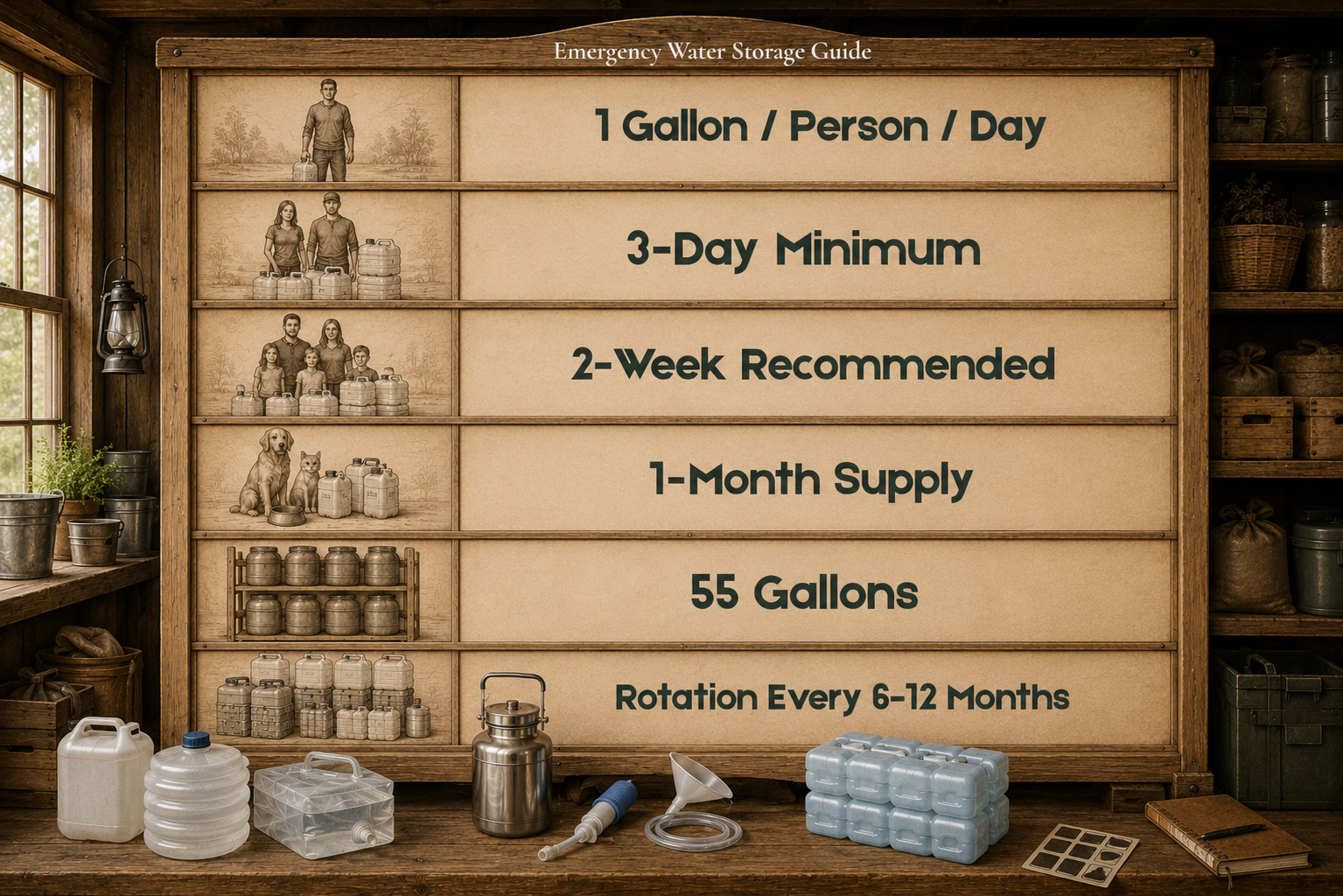
According to guidance from the U.S. Centers for Disease Control and Prevention (CDC), every household should store at least one gallon of water per person per day for emergencies. That amount covers drinking, basic food preparation, and minimal hygiene needs. While three days is considered the minimum, many families choose to prepare for two weeks or longer whenever possible.
If you’re also building your food reserves, our guide to Emergency Pantry Foods explains which shelf-stable foods pair best with an emergency water supply.
In this guide, you’ll learn:
- Exactly how much water each person needs
- A simple calculator for families of different sizes
- How long your emergency water supply should last
- The best containers for safe storage
- Where to store water to keep it fresh
- Common mistakes that shorten water quality
By the end of this article, you’ll know exactly how much water your household should have on hand—and how to store it safely for future emergencies.
Why Water Is Your First Emergency Supply
When people begin preparing for emergencies, they often focus on canned food, rice, beans, or other pantry staples. While food is certainly important, clean water should always come first.
Your body depends on water for nearly every essential function. Even mild dehydration can lead to fatigue, headaches, dizziness, and poor concentration. During an emergency—when stress levels are already high—losing access to safe drinking water can quickly become a much bigger problem than running low on food.
Clean water is needed for much more than simply drinking. You’ll also use it for:
- Preparing shelf-stable meals
- Making infant formula
- Taking medications
- Brushing teeth
- Basic hand washing
- Cleaning small wounds
- Caring for elderly family members or pets
Many emergencies can interrupt your normal water supply without warning, including:
- Hurricanes and severe storms
- Flooding
- Earthquakes
- Winter storms that freeze water lines
- Power outages affecting municipal treatment plants
- Broken water mains
- Water contamination or boil water advisories
In many of these situations, grocery stores quickly sell out of bottled water within hours. Waiting until an emergency begins is usually too late.
Building an emergency water supply is one of the simplest preparedness steps you can take—and one of the most valuable.
How Much Water Does One Person Need?
The general recommendation is straightforward:
Store at least 1 gallon (3.8 liters) of water per person per day.
This guideline comes from emergency preparedness recommendations because it provides enough water for three essential needs:
| Daily Use | Approximate Purpose |
|---|---|
| Drinking | Staying hydrated throughout the day |
| Food preparation | Cooking dehydrated or shelf-stable foods |
| Basic hygiene | Hand washing, brushing teeth, limited cleaning |
One gallon per day is considered the minimum, not the ideal amount.
Some households may need significantly more water depending on their situation. For example, additional water may be necessary for:
- Hot summer weather
- Physically demanding work
- Pregnant or breastfeeding mothers
- Babies who require formula
- Elderly adults
- People with certain medical conditions
- Pets and service animals
If you have the storage space, keeping extra water provides a helpful safety margin during longer emergencies.
Emergency Water Storage Calculator
One gallon per person per day makes calculating your emergency supply surprisingly easy.
Use the table below to estimate how much water your family should store.
| Household Size | 3 Days | 7 Days | 14 Days | 30 Days |
|---|---|---|---|---|
| 1 person | 3 gallons | 7 gallons | 14 gallons | 30 gallons |
| 2 people | 6 gallons | 14 gallons | 28 gallons | 60 gallons |
| 3 people | 9 gallons | 21 gallons | 42 gallons | 90 gallons |
| 4 people | 12 gallons | 28 gallons | 56 gallons | 120 gallons |
| 5 people | 15 gallons | 35 gallons | 70 gallons | 150 gallons |
| 6 people | 18 gallons | 42 gallons | 84 gallons | 180 gallons |
For larger families, simply multiply:
Number of people × Number of days = Total gallons needed
For example:
- A family of four preparing for two weeks:
- 4 × 14 = 56 gallons
- A couple preparing for one month:
- 2 × 30 = 60 gallons
This simple calculation helps you set realistic preparedness goals instead of guessing how much water to buy.
How Long Should You Store Emergency Water?
Not every household needs the same level of preparation.
The right amount depends on where you live, your local climate, and the types of emergencies you’re most likely to experience.
Minimum: 3 Days
A three-day supply is the minimum recommendation for most households.
This is appropriate for:
- Short power outages
- Temporary water service interruptions
- Minor storms
- Brief evacuations where you’ll return home quickly
Better: 2 Weeks
Many preparedness experts recommend aiming for at least two weeks.
A two-week supply provides a much larger safety margin during:
- Hurricanes
- Extended winter storms
- Wildfire-related disruptions
- Flood recovery
- Longer utility outages
For many families, this is a practical long-term goal because it balances preparedness with available storage space.
Best: One Month or More
If you have adequate room and the budget, storing one month or more of emergency water offers even greater resilience.
This level of preparedness can be especially useful in rural areas, regions prone to natural disasters, or households that prefer to rely less on last-minute shopping during emergencies.
Extra Water Needs Some Families Forget
The one-gallon-per-person guideline is an excellent starting point, but every household is different. Certain family members, living conditions, and daily routines may require additional water beyond the minimum recommendation.
Before deciding how much to store, consider whether any of these situations apply to your home.
Babies and Young Children
Infants who drink formula require clean water for every feeding. Parents should store enough water not only for drinking but also for safely preparing bottles and cleaning feeding equipment.
Young children also become dehydrated more quickly than adults, making a reliable water supply especially important.
Older Adults
Older adults may drink less water because they don’t always feel thirsty, yet they remain vulnerable to dehydration.
If someone in your household takes medication daily or has limited mobility, keeping additional water available is a wise precaution.
Medical Needs
Some medical conditions require increased hydration or clean water for equipment such as CPAP humidifiers or home medical devices.
If anyone in your family depends on medical equipment, consult your healthcare provider for specific emergency recommendations.
Pets
Pets need fresh water every day just like people do.
As a general guideline:
- Small dogs and cats require less than one gallon per day.
- Large dogs may drink a gallon or more daily, especially during hot weather or periods of activity.
Don’t forget to include pet water in your emergency planning.
Hot Weather and Physical Activity
If you live in a hot climate or expect to perform physically demanding tasks during an emergency—such as cleaning storm damage or carrying supplies—you’ll likely need more than the minimum one gallon per day.
Whenever possible, store extra water rather than planning for the absolute minimum.
Best Containers for Emergency Water
The quality of your stored water depends just as much on the container as the water itself.
Not every container is designed for long-term storage, and using the wrong one can affect both safety and taste over time.
Good options include:
- Commercially bottled drinking water
- Food-grade water storage containers
- BPA-free water jugs
- Stackable emergency water containers
- Large food-grade water barrels for long-term storage
If you’re building a complete preparedness pantry, choosing durable storage containers for both food and water makes organization much easier. Our guide to Best Storage Containers compares common storage options for long-term preparedness.
Avoid These Containers
Some containers should never be reused for emergency drinking water, including:
- Milk jugs
- Juice cartons
- Containers that previously held chemicals
- Thin disposable plastic bottles intended for repeated use
Milk containers, in particular, are difficult to sanitize completely and tend to break down over time.
Where Should You Store Emergency Water?
Even perfectly clean water can deteriorate if it’s stored in poor conditions.
For the longest shelf life, choose a location that is:
- Cool
- Dry
- Dark
- Away from direct sunlight
- Protected from freezing temperatures
- Separate from gasoline, pesticides, paint, and household chemicals
Basements, interior closets, utility rooms, and climate-controlled storage areas are usually better choices than hot garages or outdoor sheds.
If you’re organizing a complete emergency storage area, many of the same environmental principles discussed in our Pantry Humidity Guide also help protect stored water from unnecessary temperature fluctuations.
How Often Should You Replace Stored Water?
One of the most common questions homeowners ask is whether stored water expires.
The answer depends on the source of the water and how it is stored.
Commercial Bottled Water
Factory-sealed bottled water generally has a long shelf life when stored properly.
Although many bottles include a “best by” date, the water itself typically remains safe if the bottle stays sealed and undamaged. However, rotating your supply every year or two helps maintain the best taste and packaging quality.
Tap Water Stored at Home
If you fill clean, food-grade containers with tap water, it’s a good practice to replace the water approximately every six months.
When rotating your supply:
- Empty the container.
- Wash and sanitize it.
- Refill with fresh drinking water.
- Clearly label the new fill date.
A simple rotation schedule helps ensure your emergency water remains fresh whenever you need it.
Common Emergency Water Storage Mistakes
Even households with good intentions sometimes make simple mistakes that reduce the effectiveness of their emergency water supply.
Here are some of the most common ones.
Storing Too Little Water
Many people buy a single case of bottled water and assume they’re prepared.
In reality, that supply may only last a family of four for a day or two.
Forgetting Pets
Pet water needs are often overlooked during emergency planning.
Always calculate water for every member of the household—including animals.
Using Unsafe Containers
Old milk jugs and chemical containers can contaminate stored water.
Always use food-safe containers intended for drinking water.
Storing Water in Hot Locations
High temperatures accelerate plastic breakdown and can affect water quality over time.
Choose the coolest practical storage location available.
Never Rotating Your Supply
Emergency supplies shouldn’t be “store it and forget it.”
A simple reminder every six months makes maintenance easy.
Conclusion
Emergency preparedness doesn’t have to be complicated.
By following the simple guideline of one gallon of water per person per day, you can quickly estimate how much your household needs and begin building a reliable emergency supply.
Start with a three-day reserve if you’re just getting started. As your storage space and budget allow, gradually expand toward a two-week or even one-month supply.
Combined with shelf-stable food, proper storage containers, and a well-organized pantry, clean water gives your family one of the strongest foundations for handling unexpected disruptions with confidence.
Frequently Asked Questions
How much water should I store per person?
Store at least one gallon of water per person per day for drinking, cooking, and basic hygiene.
Is three days of water enough?
Three days is considered the minimum emergency supply. Many preparedness experts recommend storing enough water for at least two weeks whenever possible.
Does bottled water expire?
Commercial bottled water can remain safe for a long time if the bottle stays sealed and is stored properly. Rotating your supply every one to two years helps maintain the best quality.
How often should I replace stored tap water?
Replace tap water stored in food-grade containers about every six months.
Can I reuse milk jugs for water storage?
No. Milk jugs are difficult to sanitize and can degrade over time, increasing the risk of contamination.
Where is the best place to store emergency water?
Store water in a cool, dark, dry location away from direct sunlight, freezing temperatures, and household chemicals.
Should I store extra water for pets?
Yes. Pets should always be included in your emergency water calculations.
What if I don’t have room for a month’s supply?
Start with three days, then gradually increase your storage as space and budget allow. Building your emergency supply over time is more practical than trying to buy everything at once.
Quick Emergency Water Checklist
✅ Store at least one gallon of water per person per day
✅ Keep a minimum three-day supply
✅ Aim for two weeks or longer if possible
✅ Include water for pets and special medical needs
✅ Use food-grade storage containers
✅ Label containers with the fill date
✅ Store water in a cool, dark location
✅ Rotate stored tap water every six months
✅ Inspect containers regularly for leaks or damage
✅ Review your emergency water supply at least twice a year