
How Long Does Stored Water Last?
When people begin preparing an emergency water supply, one of the first questions they ask is surprisingly simple:
How long does stored water actually last?
Some people believe water never expires because it’s just H₂O. Others assume every container has a strict expiration date and should be discarded after a year. The truth lies somewhere in between.
Water itself does not spoil or “go bad” in the way food does. However, the safety and quality of stored drinking water depend on how it is collected, stored, and maintained over time. The container, storage conditions, temperature, light exposure, and even how often the container is opened all affect how long your emergency water remains safe to drink.
Whether you’re building an emergency preparedness plan, storing water for natural disasters, or simply creating a more resilient household, understanding water shelf life helps you avoid unnecessary waste while ensuring your stored water is available when you truly need it.
In this guide, you’ll learn:
- Whether stored water actually expires
- How long different types of stored water typically last
- Which storage containers keep water fresh the longest
- What factors shorten water’s shelf life
- How often you should rotate emergency water supplies
- Simple ways to extend the life of stored drinking water
If you’re still building your emergency water supply, start with our guide on How Much Water Should You Store for Emergencies? Then come back here to learn how to keep that water safe for the long term.
Does Water Actually Expire?
One of the biggest misconceptions about emergency preparedness is that water has an expiration date.
Technically, pure water does not expire.
Water molecules remain chemically stable for an extremely long time. Unlike food, water doesn’t become unsafe simply because a certain amount of time has passed.
So why do bottled water manufacturers print expiration dates?
The date usually refers to the packaging rather than the water itself. Over many years, plastic containers may slowly degrade, seals can weaken, and improper storage conditions can increase the chance of contamination or changes in taste.
For home-stored water, the water is rarely the problem. Instead, factors like dirty containers, bacteria, sunlight, heat, and repeated handling gradually reduce water quality.
Think of stored water like a clean glass. The glass doesn’t become dirty by itself—but dust, fingerprints, or contaminants introduced over time can make what’s inside less safe.
That’s why emergency preparedness experts focus on storage conditions and regular inspection, not simply the calendar.
What Determines How Long Stored Water Lasts?
No single expiration date applies to every water supply.
Instead, several factors work together to determine how long stored water remains safe.
1. Water Source
Where the water comes from matters.
For example:
- Municipal tap water is already disinfected with chlorine or chloramine, giving it a good starting point for storage.
- Distilled water contains very few impurities but still requires a clean container.
- Well water may contain naturally occurring microorganisms if it isn’t treated before storage.
- Rainwater and untreated surface water require proper purification before being stored for drinking.
Cleaner water at the beginning generally stays safer for longer.
2. Storage Container
Not every container is designed for long-term water storage.
Food-grade containers protect water from chemical contamination while creating a better seal against bacteria and airborne pollutants.
Containers commonly used for emergency storage include:
- Food-grade HDPE water containers
- Stackable water bricks
- BPA-free water jugs
- Stainless steel containers
- Large emergency water barrels
Avoid using containers that previously held milk, juice, or chemicals. Even after washing, they can leave residues or support bacterial growth.
Need help choosing a container? Read our guide to the Best Water Storage Containers for Emergency Preparedness for a detailed comparison of popular options.
3. Temperature
Heat is one of the biggest enemies of stored water.
High temperatures accelerate:
- Plastic degradation
- Bacterial growth (when contamination exists)
- Loss of chlorine residual
- Changes in taste and odor
Ideally, emergency water should be stored somewhere consistently cool.
Suitable locations include:
- Interior closets
- Basements
- Utility rooms
- Climate-controlled storage areas
Avoid:
- Hot garages
- Attics
- Outdoor sheds
- Vehicles exposed to sunlight
Even high-quality containers perform better when protected from heat.
4. Light Exposure
Sunlight can dramatically shorten the usable life of stored water.
Ultraviolet (UV) light encourages algae growth if microorganisms are present and can gradually weaken certain plastic containers.
Direct sunlight also increases water temperature, creating a less stable storage environment.
Whenever possible:
- Store containers in complete darkness.
- Cover transparent containers if necessary.
- Keep water away from windows.
A dark storage area is one of the easiest ways to preserve water quality.
5. Container Hygiene
A perfectly clean water source can still become contaminated if the storage container wasn’t properly sanitized before filling.
Before storing water:
- Wash containers with soap and water.
- Sanitize them using an appropriate food-safe sanitizing solution.
- Allow them to dry completely if recommended.
- Avoid touching the inside of the container or lid.
Small amounts of bacteria introduced during filling can multiply over time, especially in warm conditions.
How Long Different Types of Stored Water Last
Although every situation is different, the following estimates provide a practical guideline for most households.
| Water Type | Typical Storage Life* | Notes |
|---|---|---|
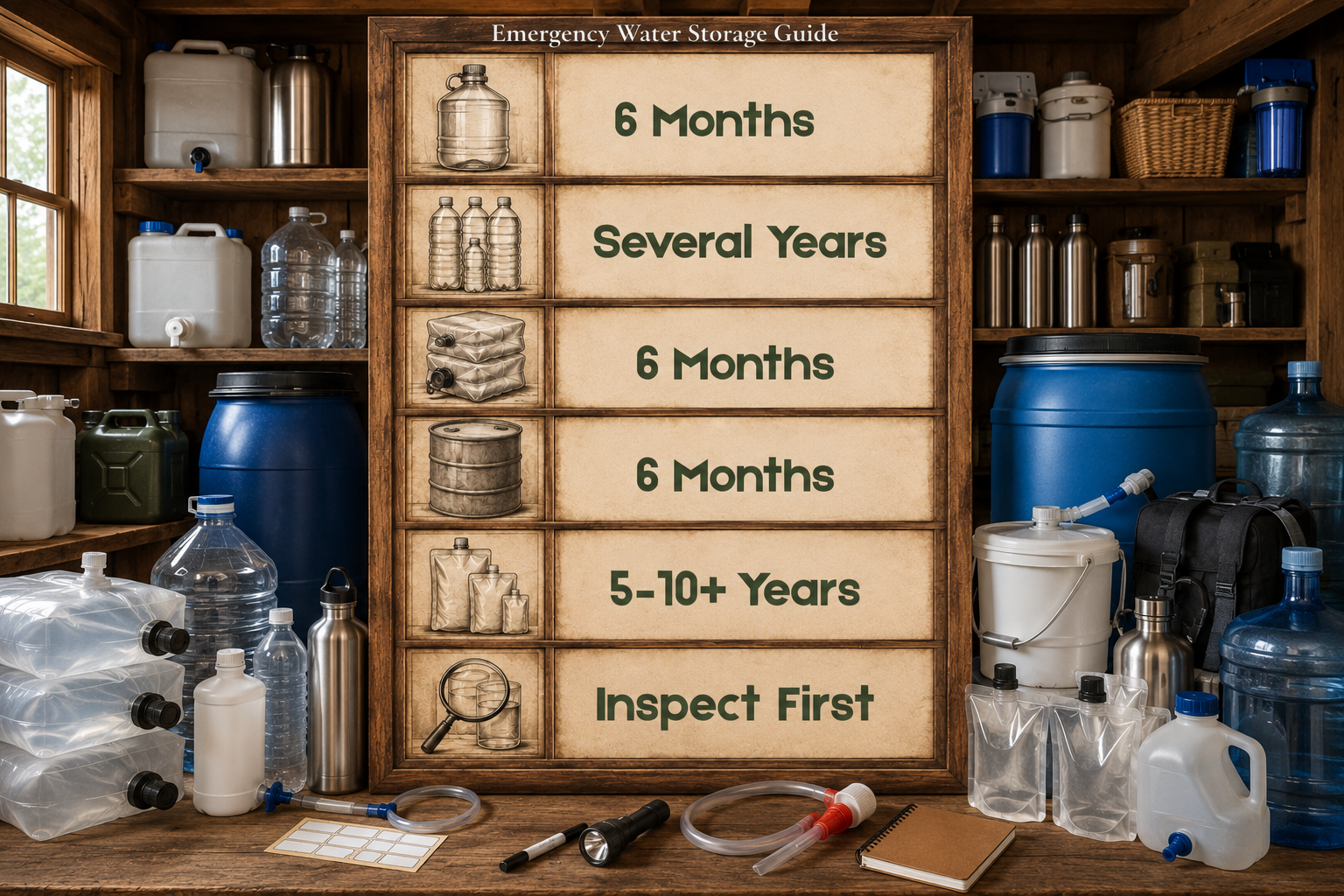
| Commercial bottled water | Several years or more (unopened) | Store according to the manufacturer’s recommendations in a cool, dark place. |
| Home-filled tap water | Rotate about every 6 months | A practical interval recommended by many emergency preparedness authorities. |
| Distilled water | Long-lasting if sealed | Quality depends largely on the container remaining uncontaminated. |
| Purified water | Similar to distilled | Store in clean, food-grade containers. |
| Well water | Varies | Treat if necessary before long-term storage. |
| Rainwater | Not recommended untreated | Purify before storing for drinking. |
| Surface water (river, lake, stream) | Treat before storage | Never rely on untreated water for emergency drinking. |
*Actual storage life depends on storage conditions, container quality, sanitation, and handling.
The important takeaway is that storage practices matter far more than simply counting months on a calendar.
Which Containers Keep Water Fresh the Longest?
The container plays a larger role than many people realize.
A good container protects water from contaminants, blocks light, seals tightly, and resists chemical breakdown.
Below is a comparison of the most common options.
| Container | Long-Term Storage | Advantages | Considerations |
|---|---|---|---|
| Food-grade HDPE container | Excellent | Durable, affordable, widely available | Keep away from sunlight |
| Water bricks | Excellent | Stackable, space-efficient | Smaller capacity |
| Large water barrels | Excellent | High volume storage | Heavy once filled |
| Stainless steel container | Excellent | Durable, light-resistant | More expensive |
| Glass container | Good | Chemically stable | Heavy and breakable |
| Thin disposable bottles | Fair | Convenient | Not intended for repeated long-term use |
Many preparedness experts prefer food-grade HDPE containers because they balance durability, affordability, and ease of storage.
If you haven’t chosen a storage system yet, our Best Water Storage Containers for Emergency Preparedness guide compares these options in greater detail.
What Shortens Stored Water’s Shelf Life?
Even properly stored water can lose quality more quickly when exposed to unfavorable conditions.
The most common causes include:
Heat
Warm temperatures accelerate chemical changes inside plastic containers and encourage microbial growth if contamination has occurred.
Sunlight
UV rays promote algae growth and gradually degrade certain plastics.
Poor Sanitation
A container that wasn’t thoroughly cleaned before filling can introduce bacteria from the very beginning.
Repeated Opening
Every time a storage container is opened, new air and microorganisms may enter.
For this reason, many households prefer storing water in multiple smaller containers instead of one very large container. Opening only what you need helps keep the remaining supply cleaner.
Damaged Containers
Cracked lids, broken seals, or worn gaskets allow contaminants to enter over time.
Inspect your stored water periodically for:
- Leaks
- Bulging containers
- Damaged lids
- Cracks
- Broken seals
Replacing a damaged container early is much easier than discovering contaminated water during an emergency.
How Often Should You Rotate Emergency Water?
One of the most common questions about emergency preparedness is whether stored water needs to be replaced on a regular schedule.
The answer depends on where the water came from, how it was stored, and whether the container has remained sealed.
For most households storing municipal tap water in sanitized food-grade containers, many emergency preparedness organizations recommend rotating the supply approximately every six months. This simple schedule helps ensure water stays fresh while giving you a chance to inspect containers for leaks, damage, or contamination.
Commercially bottled water is different. If it remains unopened and has been stored in a cool, dark location, it often stays safe well beyond the printed date because the water itself doesn’t expire. However, it’s still wise to follow the manufacturer’s recommendations and periodically inspect bottles for damage.
Rather than treating rotation as a strict expiration date, think of it as a regular maintenance routine.
A simple household schedule might look like this:
| Time | Action |
|---|---|
| Every month | Visually inspect containers for leaks or damage |
| Every 6 months | Rotate home-filled emergency water |
| Once per year | Review your total emergency water supply and household needs |
| Anytime a container is damaged | Replace or disinfect immediately |
If your family size changes, you move to a new home, or your emergency plan evolves, it’s also a good opportunity to update your stored water supply.
Need a simple system? Our Water Storage Rotation Schedule guide walks you through creating an easy reminder that fits into your household routine.
Signs Your Stored Water May No Longer Be Safe
Even if water has been stored correctly, it’s important to inspect it before drinking.
Many problems are visible long before they become serious.
Watch for these warning signs:
Cloudy appearance
Drinking water should normally be clear.
If the water appears cloudy or unusually hazy, contamination may have occurred.
Floating particles
Sediment, debris, or unknown particles can indicate contamination or deterioration of the container.
Unusual odor
Fresh drinking water should have little or no smell.
If you notice:
- musty odors
- mold-like smells
- chemical odors
- sulfur odors
avoid drinking the water until it has been properly evaluated or treated.
Color changes
Water should remain colorless.
Yellow, green, brown, or other unusual colors suggest contamination.
Algae growth
Green discoloration inside transparent containers usually indicates algae, often caused by exposure to sunlight.
Damaged containers
Inspect for:
- cracked plastic
- leaking lids
- broken seals
- swollen containers
- excessive discoloration
Sometimes the container—not the water—is the first sign that something has gone wrong.
When in doubt, don’t assume old water is automatically unsafe—but don’t ignore obvious warning signs either.
How to Make Stored Water Last Longer
The good news is that extending the life of stored water doesn’t require expensive equipment.
Most improvements come from following a few consistent habits.
Use Food-Grade Containers
Containers designed for drinking water are made with materials intended for long-term food contact.
Avoid:
- milk jugs
- juice bottles
- chemical containers
- thin disposable plastic bottles intended for single use
Quality containers dramatically reduce contamination risks.
Store Water Somewhere Cool
Heat is one of the fastest ways to shorten water quality.
Ideal storage areas include:
- interior closets
- basements
- utility rooms
- climate-controlled pantries
Avoid locations where temperatures fluctuate dramatically.
Protect Water from Sunlight
Store containers in darkness whenever possible.
If that’s not practical:
- use opaque containers
- cover transparent containers
- avoid windows
- keep water off hot concrete floors exposed to sunlight
Sanitize Containers Before Filling
Clean containers are just as important as clean water.
Before filling:
- Wash thoroughly.
- Sanitize according to recommended procedures.
- Rinse if appropriate.
- Fill immediately with safe drinking water.
Label Every Container
One of the simplest preparedness habits is adding a waterproof label showing:
- Fill date
- Rotation date
- Water source
This eliminates guesswork years later.
Avoid Opening Large Containers Frequently
Every time a container is opened, airborne microorganisms can enter.
Instead of storing all your emergency water in one barrel, many families divide it among several smaller containers.
That way, opening one container doesn’t expose your entire supply.
Can You Drink Very Old Stored Water?
This is where many people become confused.
A container of water that’s several years old is not automatically unsafe simply because of its age.
Ask yourself these questions:
- Has the container remained sealed?
- Was it stored in a cool, dark location?
- Is the container food-grade?
- Does the water look clear?
- Does it smell normal?
- Is the container undamaged?
If all of these conditions are true, the water may still be usable.
However, if you’re uncertain—or if the water will be used during an emergency after many years of storage—it’s often wise to disinfect or purify it before drinking whenever possible.
The goal isn’t to fear old water.
The goal is to evaluate it carefully before relying on it.
Common Mistakes That Shorten Water Shelf Life
Many water storage problems aren’t caused by time.
They’re caused by avoidable mistakes.
Reusing Milk Jugs
Milk proteins and fats are difficult to remove completely.
Even after washing, bacteria can remain inside.
Food-grade water containers are a much safer option.
Storing Water in Hot Garages
Garages often experience extreme temperature swings throughout the year.
Heat accelerates plastic degradation and reduces water quality.
Leaving Containers in Direct Sunlight
Sunlight increases temperature while encouraging algae growth.
Dark storage always performs better.
Using Dirty Funnels
Funnels, hoses, and transfer pumps should be cleaned before every use.
Contamination often happens during filling—not storage.
Forgetting Rotation Dates
Many households prepare emergency water once and never think about it again.
A simple label or calendar reminder prevents this problem.
Assuming Every Plastic Container Is Safe
Only containers designed for food or drinking water should be used for long-term storage.
Unknown plastics may leach unwanted chemicals over time.
Final Thoughts
Stored water doesn’t suddenly expire after a certain number of months.
Instead, its safety depends on how well it has been protected from contamination, heat, sunlight, and poor storage practices.
By using food-grade containers, keeping water in a cool, dark place, inspecting containers regularly, and following a simple rotation schedule, you can maintain a reliable emergency water supply with very little ongoing effort.
Preparedness isn’t about storing the largest amount of water possible.
It’s about storing water that you’ll feel confident using when you actually need it.
If you’re building a complete emergency water system, continue with these guides:
- How Much Water Should You Store for Emergencies?
- Best Water Storage Containers for Emergency Preparedness
- How to Store Water Long Term
- Water Storage Rotation Schedule
- Emergency Pantry Foods for Power Outages
Together, these resources provide a practical foundation for keeping your household prepared without unnecessary complexity.
Frequently Asked Questions
Does stored water really expire?
No. Water itself does not expire, but improper storage, contamination, damaged containers, or poor environmental conditions can make stored water unsafe over time.
How often should I replace emergency water?
A practical recommendation is to rotate home-filled emergency water approximately every six months while regularly inspecting containers for damage or contamination.
Can bottled water last for years?
Yes. Unopened commercially bottled water stored properly often remains safe well beyond the printed date, although manufacturers may recommend replacement for quality reasons.
Is cloudy stored water safe to drink?
Not necessarily.
Cloudiness can indicate contamination or container deterioration. If the water looks unusual, inspect it carefully and purify it if appropriate before drinking.
Can I store water in old soda bottles?
Clean PET soda bottles are generally considered a better option than milk or juice containers because they are easier to sanitize and don’t retain food residues. However, dedicated food-grade water storage containers remain the best choice for long-term emergency storage.
What’s the best place to store emergency water?
Choose a cool, dry, dark location away from sunlight, chemicals, fuel, pesticides, and large temperature fluctuations.
Quick Checklist: Is Your Stored Water Still in Good Shape?
✔ Stored in food-grade containers
✔ Kept in a cool location
✔ Protected from sunlight
✔ Container remains tightly sealed
✔ No leaks or cracks
✔ Water is clear
✔ No unusual odor
✔ Properly labeled with fill date
✔ Rotation schedule maintained
✔ Stored away from chemicals and fuel