

There’s nothing quite as exciting as seeing the first tiny sprouts poke through the soil. You check on them every morning, imagining baskets of tomatoes, peppers, cucumbers, and herbs just a few months away.
Then, almost overnight, something changes.
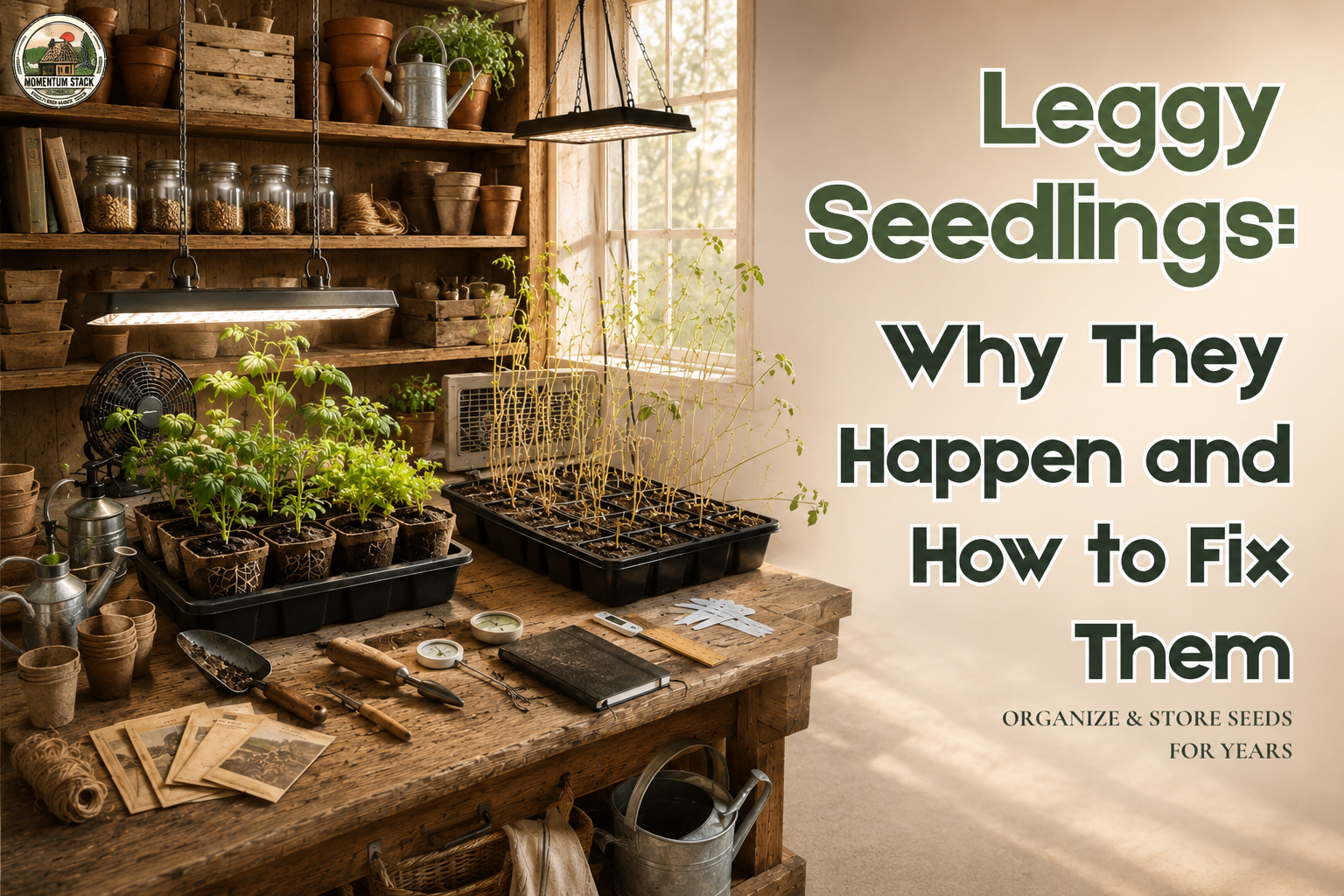
Instead of growing into short, sturdy little plants, your seedlings shoot upward. The stems become long and thin. They lean toward the nearest window as if they’re desperately reaching for something. Before long, they’re flopping over instead of standing tall.
If you’ve ever looked at a tray of seedlings and thought, “Well… that doesn’t look right,” you’re in good company.
I’ve had trays like that too.
The good news is that leggy seedlings aren’t usually caused by bad seeds or a lack of gardening skill. In most cases, they’re simply reacting to their environment. Once you understand what they’re trying to tell you, it’s much easier to prevent the problem—or even save many of the seedlings you already have.
In this guide, we’ll walk through:
- what leggy seedlings actually are
- the most common reasons they happen
- which seedlings can be saved
- simple ways to fix the problem
- and how to keep it from happening again next season
By the end, you’ll know exactly what to look for and how to grow stocky, healthy seedlings that are ready for the garden.
What Does “Leggy” Mean?
The word “leggy” simply describes seedlings that have grown tall, thin, and weak instead of short and sturdy.
Healthy seedlings don’t rush upward. They spend their early days building thick stems, strong roots, and compact growth that can support future leaves, flowers, and fruit.
Leggy seedlings do the opposite.
Instead of putting energy into strength, they stretch upward as fast as they can, producing long stems with very little support. That’s why they often bend, lean, or even collapse under their own weight.
A healthy seedling usually has:
- a short, thick stem
- evenly spaced leaves
- a deep green color
- the ability to stand upright without support
A leggy seedling often has:
- a long, skinny stem
- large gaps between leaves
- a noticeable lean toward the light
- weak stems that flop over easily
Think of it this way.
Imagine two kids learning to ride a bike.
One spends time building balance and confidence before picking up speed. The other immediately pedals as fast as possible without learning balance first.
The second one might get farther for a moment—but they’re much more likely to fall over.
Seedlings work in much the same way.
Growing taller doesn’t necessarily mean growing healthier.
Why Seedlings Become Leggy
Leggy seedlings aren’t random. They’re almost always responding to the conditions around them.
The good news?
Once you identify the cause, it’s usually easy to fix—and even easier to prevent next time.
Let’s look at the biggest reasons.
1. Not Enough Light (The Most Common Cause)
If there’s one reason gardeners end up with leggy seedlings, this is it.
Young seedlings need a surprising amount of light every day. When they don’t get enough, they begin stretching upward in search of a brighter source.
It’s their natural survival instinct.
Outdoors, seedlings receive strong sunlight from above. Indoors, however, a sunny window often isn’t nearly as bright as it looks to us.
Even a south-facing window can leave seedlings searching for more light during late winter or early spring.
Some common signs of insufficient light include:
- stems growing several inches in just a few days
- seedlings leaning toward the window
- pale green leaves
- weak stems that can’t support themselves
If your seedlings are spending their days on a windowsill, light is probably the first thing to check.
Want to know exactly how much light seedlings really need? Read our guide on How Much Light Do Seedlings Need to learn the ideal daily lighting schedule and when grow lights make a big difference.
2. The Light Is Too Far Away
Sometimes gardeners actually have enough light—but it’s simply too far from the plants.
This happens a lot with grow lights.
A common beginner mistake is hanging the light one or two feet above the seedlings and leaving it there.
The problem is that light intensity drops off quickly as the distance increases.
Even a powerful grow light becomes much less effective if it’s positioned too high.
As the seedlings stretch toward the light, they become taller every day, making the problem even worse.
A good habit is to raise the light only as the seedlings grow, keeping it just a few inches above the leaves rather than far overhead.
3. Temperatures That Are Too Warm
Warmth is wonderful for helping seeds germinate.
But once those seedlings pop through the soil, too much heat can actually encourage weak, rapid growth.
Think about what happens in nature.
Early spring days are bright, but they’re often still cool.
Indoor environments are very different.
Many seed trays spend their days in rooms that stay around 70–75°F (21–24°C), sometimes even warmer if they’re near heating vents, fireplaces, or sunny windows.
When seedlings experience warm temperatures without equally strong light, they tend to grow fast instead of growing strong.
The result is long, thin stems that struggle to support the plant.
4. Too Many Seedlings in One Cell
We’ve all done it.
You drop three or four seeds into each cell just to make sure something sprouts.
Then…
Everything sprouts.
Now several seedlings are packed together, all competing for the same light.
Instead of growing outward, they start racing upward to get above one another.
This competition often produces taller, weaker plants—even if your lighting is decent.
Once seedlings develop their first true leaves, it’s usually time to thin them so each plant has enough space to grow.
If you’re just getting started, using the right equipment can make spacing much easier from the beginning. Our guide to Best Seed Starting Trays compares the tray styles that help produce healthier, more evenly growing seedlings.
5. Still Air
Light gets most of the blame, but airflow plays a bigger role than many gardeners realize.
Outdoors, even gentle breezes cause young plants to sway slightly throughout the day.
That movement encourages stems to become thicker and stronger over time.
Inside the house, seedlings often sit in perfectly still air for weeks.
Without any movement, the stems don’t get the gentle “exercise” that helps them develop strength.
You don’t need a powerful fan blasting across the room.
A small fan set on low, creating a light breeze for a few hours each day, is usually enough to encourage sturdier stems while also improving air circulation around your seedlings.
Can You Save Leggy Seedlings?
- Here’s the answer most gardeners hope to hear:
Yes—many leggy seedlings can absolutely recover.
But the outcome depends on how leggy they are and what type of plant you’re growing.
Some vegetables are surprisingly forgiving and can bounce back with a few simple adjustments.
Others are less tolerant, and starting over may actually save you time in the long run.
Before you toss that tray into the compost, it’s worth taking a closer look. In the next section, we’ll go through which seedlings are easiest to rescue—and the simple steps that give them the best chance of becoming healthy garden plants.
- Here’s the answer most gardeners hope to hear:
Yes—but it depends on the plant.
Some vegetables recover surprisingly well, while others never quite regain their strength.
Let’s look at the most common garden crops.
Tomatoes: The Easiest to Rescue
Tomatoes are incredibly forgiving.
In fact, many gardeners intentionally plant tomato seedlings deeper than they were growing in their pots.
Why?
Because tomato stems can grow new roots along the buried portion of the stem.
If your tomato seedlings have become tall and spindly, you can usually:
- repot them into a deeper container
- bury much of the stem
- provide stronger light
- keep them watered evenly
Within a couple of weeks, they’ll often become much sturdier.
Tomatoes are probably the best example of a plant that can bounce back from legginess.
Peppers: Often Recover Well
Pepper seedlings don’t produce roots along the stem the way tomatoes do.
Still, they usually recover if you catch the problem early.
Focus on:
- better lighting
- cooler temperatures
- improved airflow
As new leaves develop, the overall plant often becomes stronger even if the lower stem remains a bit thin.
Herbs and Lettuce
Basil, lettuce, parsley, dill, and many herbs can also recover.
The key is correcting the growing conditions before the stems become so weak that they collapse.
Don’t expect the existing stem to suddenly become thick.
Instead, you’re encouraging healthier new growth from that point forward.
Cucumbers, Squash, and Pumpkins
These are a little different.
Cucurbits grow quickly and dislike root disturbance.
If they’ve stretched badly before developing their first true leaves, starting over is often the better choice.
Luckily, these crops germinate so quickly that replanting usually only costs you a week or so.
How to Fix Leggy Seedlings
Once you know what’s causing the problem, fixing it becomes much easier.
You don’t have to do everything at once.
Start with the biggest issue first.
Move Them Closer to the Light
This is almost always the first step.
If you’re using grow lights, keep them only a few inches above the tops of the seedlings.
As the plants grow taller, raise the light with them.
Don’t leave the light hanging in one position for weeks.
Give Them Enough Light Every Day
Young seedlings need long days.
Aim for roughly 14–16 hours of light followed by a period of darkness each night.
More isn’t always better.
Plants also need time to rest.
If you’re unsure whether your setup provides enough light, our guide to How Much Light Do Seedlings Need walks through simple lighting schedules that work well for most vegetables.
Thin Crowded Seedlings
This is the step many beginners hate.
It feels wrong to snip off healthy seedlings.
But overcrowding almost always creates weaker plants.
Choose the strongest seedling in each cell and remove the extras with small scissors rather than pulling them out.
That protects the remaining roots.
Lower the Temperature Slightly
Once seeds have sprouted, they usually don’t need the same warm conditions required for germination.
If possible, move trays to a cooler room or remove them from a heat mat.
Slightly cooler temperatures encourage slower, sturdier growth.
Add Gentle Airflow
A small fan on its lowest setting can make a surprising difference.
You don’t want seedlings whipping back and forth.
You’re simply trying to mimic the gentle breeze they’d experience outdoors.
The movement helps strengthen stems over time while also reducing excess humidity around the plants.
Rotate Window-Grown Seedlings
If you’re growing on a windowsill, seedlings naturally lean toward the brightest light.
Rotate the tray every day or two.
This won’t replace stronger lighting, but it can help keep growth more even.
Repot If Needed
If seedlings are becoming root-bound or are badly stretched, moving them into slightly larger containers can help.
Tomatoes benefit the most from this approach because their buried stems can produce additional roots.
If you’re transplanting, use a quality growing medium rather than regular garden soil. Our comparison of Seed Starting Mix vs. Potting Soil explains why the right mix makes a noticeable difference for young plants.
How to Prevent Leggy Seedlings Next Time
The easiest fix is avoiding the problem altogether.
Fortunately, that doesn’t require expensive equipment.
A few simple habits go a long way.
Start with enough light
Don’t rely on a bright-looking window unless you’re certain it receives enough direct sunlight.
Grow lights often produce much stronger seedlings.
Keep lights close
Raise lights as seedlings grow instead of leaving them high above the tray.
Thin seedlings early
Give each plant room to grow before they begin competing for light.
Don’t keep seedlings too warm
Heat helps seeds sprout.
Strong light helps seedlings grow.
Those aren’t always the same stage.
Provide airflow
A little movement helps build stronger stems.
Follow the right planting schedule
Starting seeds too early often means they’re forced to spend extra weeks indoors, increasing the chances they’ll become stretched before outdoor planting time.
Planning ahead makes a big difference. If you’re unsure when to begin, see our guide on When to Start Seeds Indoors.
Common Mistakes That Make Leggy Seedlings Worse
Once seedlings start stretching, it’s easy to accidentally make the problem even worse.
Here are a few mistakes worth avoiding.
Waiting Too Long
Many gardeners hope seedlings will somehow fix themselves.
Unfortunately, stems don’t usually become shorter.
The earlier you improve lighting and airflow, the better the outcome.
Feeding Them Extra Fertilizer
Weak seedlings aren’t usually hungry.
They’re looking for light.
Extra fertilizer often encourages even faster growth, making plants taller instead of stronger.
Watering Too Often
Constantly wet soil doesn’t strengthen seedlings.
Instead, it can contribute to weak growth and increase the risk of fungal diseases.
Let the surface begin drying slightly before watering again.
Depending on a Sunny Window Alone
Windows feel bright to us.
To seedlings, they’re often surprisingly dim during late winter.
If you’re consistently seeing leggy plants year after year, upgrading your lighting setup will probably make the biggest difference.
Ignoring Other Seed Starting Problems
Legginess isn’t the only issue beginners run into.
Problems like poor soil, overcrowding, incorrect watering, and weak airflow often work together.
Our guide to Common Seed Starting Mistakes covers several other issues that can quietly reduce your success before planting season even begins.
Final Thoughts
Every gardener grows a tray of leggy seedlings at some point.
It’s almost a rite of passage.
The important thing to remember is that leggy seedlings aren’t a sign you’ve failed.
They’re simply telling you something about their environment.
In most cases, the message is pretty straightforward:
“I need more light.”
Once you improve the conditions—better lighting, a little airflow, cooler temperatures, and enough space—future trays usually look dramatically different.
And don’t be discouraged if this year’s seedlings aren’t perfect.
Gardening has a funny way of teaching the same lesson until it finally sticks.
The good news?
Once you’ve solved leggy seedlings once, you’ll probably recognize the warning signs much earlier next season.
Frequently Asked Questions
Can leggy seedlings recover?
Many can, especially tomatoes, peppers, herbs, and lettuce. The sooner you improve their growing conditions, the better the chances they’ll develop into healthy plants.
Should I throw away leggy seedlings?
Not immediately.
If the stems are still standing and the leaves look healthy, they’re usually worth trying to save.
Only severely weak or collapsing seedlings may be better replaced.
Can I bury the stem deeper?
Tomatoes respond very well to deep planting because they grow roots along buried stems.
Most other vegetables should be planted at roughly the same depth they were originally growing.
Do I really need grow lights?
Not always.
If you have exceptionally bright, direct sunlight for many hours each day, a window may work.
However, many indoor gardeners find grow lights provide more consistent results, especially during late winter and early spring.
Are leggy seedlings caused by bad seeds?
Usually not.
Legginess is almost always related to growing conditions rather than seed quality.
Quick Checklist: How to Prevent Leggy Seedlings
✅ Provide 14–16 hours of light each day
✅ Keep grow lights just a few inches above seedlings
✅ Thin crowded seedlings early
✅ Reduce heat after germination
✅ Use gentle airflow from a small fan
✅ Rotate trays growing in windows
✅ Water consistently without keeping soil soggy
✅ Start seeds at the right time for your climate