
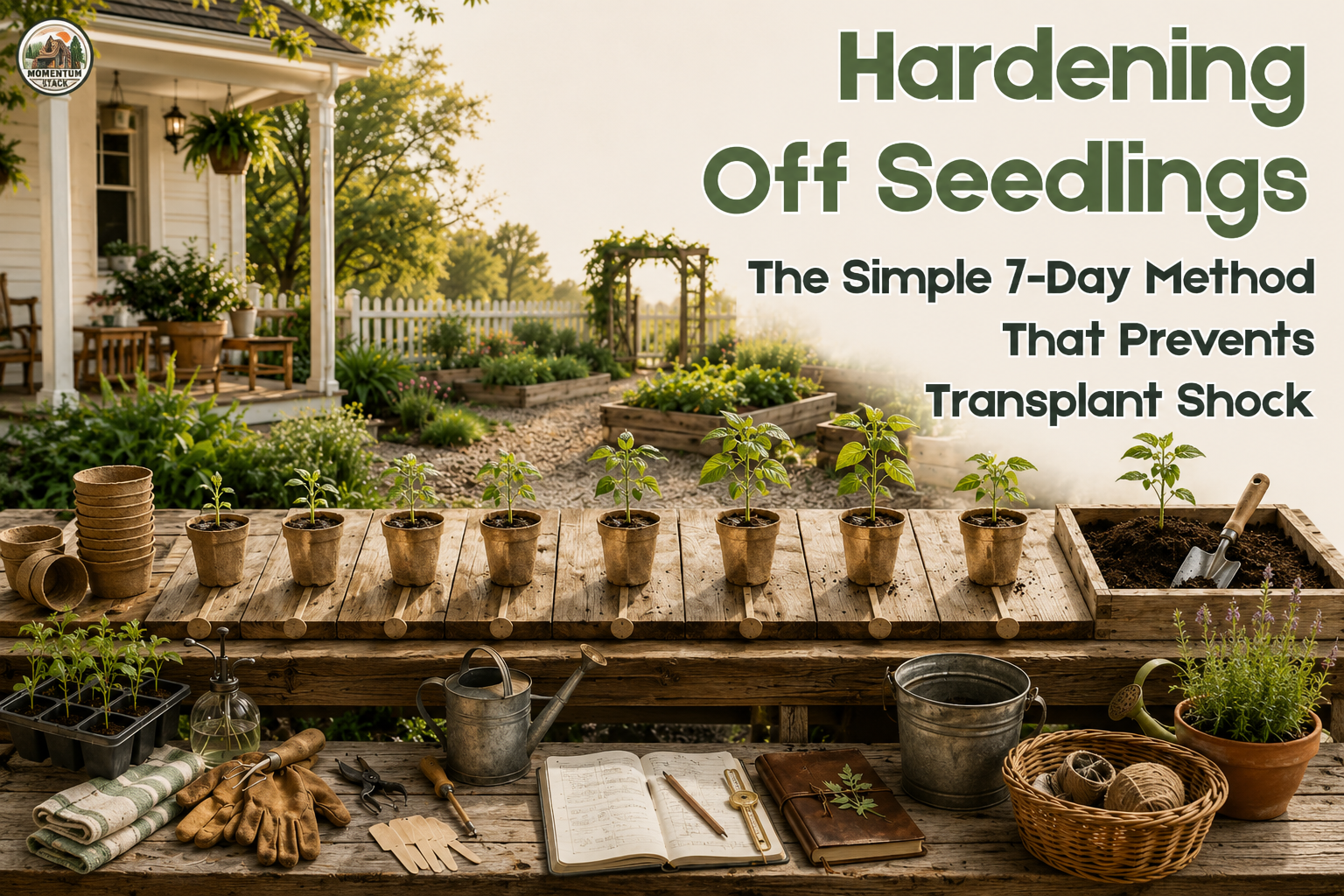

There’s a moment every gardener looks forward to.
Your seedlings are growing strong, the weather is finally warming up, and you’re ready to move those little plants into the garden.
It feels like the hard part is over.
But this is actually where many beginners lose some of their healthiest seedlings.
The leaves suddenly wilt.
The edges turn white or brown.
Growth seems to stop overnight.
Sometimes the plants never recover.
It’s frustrating because you did everything else right. You started your seeds on time, watered them carefully, and gave them plenty of light indoors.
So what happened?
In many cases, the problem isn’t the soil, the weather, or your watering routine.
The seedlings simply weren’t prepared for life outside.
That’s where hardening off comes in.
Despite the technical-sounding name, hardening off is just the process of helping young plants adjust gradually to outdoor conditions before they’re transplanted into the garden.
Think of it this way.
If you spent several weeks inside an air-conditioned house, you probably wouldn’t enjoy walking straight into blazing summer sun for eight hours.
Your seedlings feel the same way.
A few extra days of gradual exposure to sunlight, wind, and changing temperatures can make the difference between plants that struggle and plants that thrive.
In this guide, you’ll learn:
- Signs your seedlings are ready for the garden
- What hardening off actually means
- Why seedlings need it before transplanting
- A simple 7-day hardening off schedule
- Common mistakes that can damage young plants
What Does Hardening Off Mean?
Hardening off is simply the process of introducing indoor-grown seedlings to outdoor conditions a little at a time.
Instead of moving them directly from your windowsill or grow lights into full sun, you gradually expose them to the things they’ll experience in the garden.
That includes:
- Direct sunlight
- Wind
- Cooler nights
- Changing temperatures
- Natural humidity
- UV light
Each day, the plants spend a little more time outside until they can comfortably handle a full day outdoors.
The goal isn’t to make your seedlings grow faster.
It’s to make them strong enough for the transition.
Skipping this step often leads to stressed plants that need weeks to recover—or never recover at all.
Why Indoor Seedlings Need Hardening Off
Healthy-looking seedlings can be surprisingly delicate.
Inside your home, they’ve been growing in a protected environment.
There are no strong winds bending their stems.
The temperature stays fairly consistent.
The light is gentle compared to full sunshine.
Even when you’re using quality grow lights, they’re still very different from the intensity of natural sunlight.
Outdoor gardens are much tougher.
The sun is brighter.
The wind moves constantly.
Temperatures rise during the day and fall at night.
Even humidity can change from hour to hour.
Young seedlings aren’t born ready for all of that.
They need time to adapt.
As seedlings go through the hardening off process, several changes happen naturally.
Their stems become sturdier.
Their leaves develop a slightly thicker surface that helps reduce moisture loss.
They become better at handling direct sunlight without scorching.
Their root systems also begin adjusting to outdoor growing conditions.
These changes may seem small, but they play a huge role in helping seedlings establish quickly after transplanting.
What Happens If You Skip Hardening Off?
Not every seedling will die if you skip hardening off.
Some are surprisingly resilient.
Others may survive but spend weeks recovering from transplant shock instead of putting energy into new growth.
Here are the most common signs that seedlings were moved outdoors too quickly.
Sunscald
One of the first symptoms is leaf scorch.
Leaves may develop pale white patches, faded areas, or crispy brown edges after only a few hours in direct sunlight.
This happens because indoor-grown leaves haven’t yet adapted to intense UV exposure.
Wilting
Even when the soil is moist, seedlings may droop dramatically.
Strong sunlight and wind cause them to lose water faster than their young root systems can replace it.
Many gardeners mistake this for underwatering and end up adding even more water, which doesn’t solve the real problem.
Stunted Growth
Sometimes the damage isn’t obvious.
The plant stays green but simply stops growing.
You may not see any new leaves for a week or two while the seedling focuses on recovering from stress.
This is one of the classic signs of transplant shock.
Leaf Drop
Some plants respond by shedding older leaves to conserve energy.
Although they often recover, they’ll usually need extra time before they begin growing vigorously again.
Complete Plant Loss
The youngest or most tender seedlings may never recover after sudden exposure to hot sun, strong wind, or cold nighttime temperatures.
The good news is that nearly all of these problems are preventable.
Giving seedlings just one week to adjust gradually can dramatically improve their chances of thriving once they’re planted in the garden.
The Simple 7-Day Hardening Off Schedule
There’s no perfect hardening off schedule that fits every garden.
Weather changes from one region to another, and even from one week to the next.
Instead of following a rigid timetable, think of this as a simple framework you can adjust if conditions are unusually hot, windy, or cold.
The key is to increase outdoor exposure gradually—not all at once.
| Day | Time Outdoors | Conditions |
|---|---|---|
| Day 1 | 30–60 minutes | Bright shade, sheltered from wind |
| Day 2 | 1–2 hours | Shade with a gentle breeze |
| Day 3 | 2–3 hours | Morning sun, afternoon shade |
| Day 4 | 4 hours | Longer sun exposure, light wind |
| Day 5 | 6 hours | Mostly outdoors, avoid harsh afternoon sun |
| Day 6 | Most of the day | Normal outdoor conditions |
| Day 7 | All day | Ready for transplanting |
Don’t worry if you need an extra day or two because of bad weather.
A slower transition is always better than rushing your seedlings into full sun.
One trick many experienced gardeners use is placing seedlings where they’ll receive gentle morning sunshine but stay protected from the hottest afternoon rays.
It’s a simple adjustment, but it gives young plants a much easier start.
Best Time of Day to Harden Off Seedlings
Timing matters almost as much as the process itself.
The goal is to introduce seedlings to outdoor conditions without overwhelming them.
For most gardeners, morning is the best time to begin hardening off. The sun is gentler, temperatures are cooler, and plants have several hours to adjust before the heat of the day.
Late afternoon can also work well, especially during warm weather.
Try to avoid placing seedlings outside during the hottest part of the day, particularly during their first few outings. Midday sun combined with wind can stress young plants much faster than most people expect.
If temperatures are unusually high, shorten the time outdoors and return the seedlings to a sheltered spot sooner.
Remember, hardening off is a gradual process. There’s no prize for finishing it as quickly as possible.
Which Plants Need Hardening Off?
As a general rule, any seedling that has been growing indoors should be hardened off before spending full-time outdoors.
Some plants are especially sensitive because they love warm weather and grow slowly when stressed.
These include:
- Tomatoes
- Peppers
- Eggplants
- Cucumbers
- Squash
- Pumpkins
- Melons
- Basil
Cool-season vegetables are often a little more forgiving, but they still benefit from gradual exposure.
Examples include:
- Lettuce
- Spinach
- Kale
- Broccoli
- Cabbage
- Cauliflower
- Swiss chard
Even seedlings purchased from a local garden center may need hardening off if they’ve been growing inside a greenhouse.
When in doubt, it’s safer to assume your plants need a few days to adjust.
Common Hardening Off Mistakes
Hardening off isn’t difficult, but a few small mistakes can undo weeks of careful seed starting.
Here are the ones new gardeners make most often.
Moving Seedlings into Full Sun Too Soon
This is easily the biggest mistake.
Even healthy seedlings can develop sunscald after just a few hours of intense afternoon sunshine.
Start with bright shade or filtered sunlight before increasing direct sun exposure.
Forgetting About the Wind
Many people focus only on sunlight.
Wind is often just as stressful.
Strong gusts can bend stems, dry out leaves, and cause young plants to wilt surprisingly fast.
Choose a sheltered location during the first few days whenever possible.
Leaving Seedlings Outside Overnight Too Early
Warm afternoons can be misleading.
Nighttime temperatures often drop much lower than expected, especially during spring.
If frost is still possible—or nighttime temperatures are unusually cool—bring your seedlings back inside.
Letting the Soil Dry Out
Seedlings dry out much faster outdoors than they do inside.
Sunlight, wind, and warmer temperatures all increase water loss.
Check the soil daily and water when needed, but don’t leave containers sitting in water.
Trying to Rush the Process
It’s tempting to move everything outside after just a couple of days.
Unfortunately, seedlings don’t adapt overnight.
Adding one extra day is almost always safer than skipping ahead.
What If the Weather Turns Bad?
Spring weather has a habit of changing its mind.
One day feels like summer.
The next day brings cold rain and strong winds.
The good news is that you don’t have to follow a perfect schedule.
If the forecast calls for:
- Heavy rain
- Strong winds
- Frost
- Sudden cold temperatures
- Severe storms
simply pause the process for a day or two.
Move your seedlings back indoors or into a protected area until conditions improve.
Once the weather settles down, continue where you left off.
There’s usually no need to start over unless the seedlings spent several days back inside.
Hardening off is about helping plants build confidence outdoors—not testing how much punishment they can survive.
Can You Harden Off Store-Bought Seedlings?
Absolutely.
Many nursery seedlings are raised inside greenhouses where temperatures, humidity, and light are carefully controlled.
Although they may look sturdy, they often haven’t experienced full outdoor conditions yet.
If you bring home tomato plants, peppers, herbs, or flowering annuals, give them several days of gradual outdoor exposure before planting them in the garden.
It’s a small investment of time that can reduce transplant shock and improve early growth.
Some local nurseries do begin the hardening off process before selling plants, but it’s difficult to know exactly how they were grown.
When you’re unsure, spending a few extra days acclimating them yourself is never a bad idea.
Signs Your Seedlings Are Ready for the Garden
By the end of the hardening off period, your seedlings should look confident outdoors.
They don’t need to be perfect.
They simply need to handle normal garden conditions without showing signs of stress.
Look for these signs:
- Sturdy, upright stems
- Healthy green leaves with no new sunscald
- Little or no wilting during the day
- New growth continues to appear
- Plants tolerate a full day outdoors comfortably
If your seedlings still wilt heavily after only an hour or two outside, give them another day or two before transplanting.
A little patience now usually leads to healthier plants all season long.
Conclusion
Starting seeds indoors takes time.
You prepare the soil, water carefully, provide enough light, and celebrate every tiny sprout.
It would be a shame to lose those healthy seedlings during the final step.
Hardening off doesn’t require expensive equipment or special gardening skills.
It simply asks you to slow down for about a week.
Give your seedlings a little more sunshine each day.
Let them feel a gentle breeze.
Allow them to adjust before asking them to thrive in the garden.
That one week of patience can reward you with stronger plants, faster establishment, and a healthier harvest for months to come.
Frequently Asked Questions
What does hardening off mean?
Hardening off is the process of gradually introducing indoor-grown seedlings to outdoor sunlight, wind, and changing temperatures before transplanting them into the garden.
How long should I harden off seedlings?
Most seedlings are ready after 7 to 10 days, although cool weather or sensitive plants may benefit from a slightly longer transition.
Can I harden off seedlings on cloudy days?
Yes. Cloudy weather is actually a great time to begin because sunlight is less intense, allowing seedlings to adjust more comfortably.
Do tomato seedlings need hardening off?
Yes. Tomatoes are warm-season crops and should always be hardened off before transplanting outdoors to reduce transplant shock.
What if it rains during hardening off?
Light rain usually isn’t a problem for established seedlings, but heavy rain, strong wind, or storms can damage young plants. Bring them to a sheltered location and continue once the weather improves.
Can I skip hardening off if the weather is mild?
It’s not recommended. Even mild outdoor conditions are very different from life indoors, and seedlings still need time to adjust.
Quick Checklist Before Transplanting
✔ Seedlings have spent at least one week outdoors gradually.
✔ They tolerate direct morning sun without wilting.
✔ Stems are sturdy and upright.
✔ Nighttime temperatures are suitable for the crop.
✔ No frost is expected.
✔ Soil has been prepared before transplanting.
✔ Seedlings have been watered before planting.
✔ The weather forecast looks calm for the next day or two.