
If you’ve ever stood in the gardening aisle staring at a wall of seed trays, you’re not alone.
There are trays with 24 cells, 72 cells, and 128 cells. Some come with humidity domes, others promise “professional results,” and plenty of starter kits are packed with accessories you’ll probably never use.
It can make a simple purchase feel way more complicated than it needs to be.
Here’s the good news: most home gardeners only need one or two dependable trays that they’ll reuse every spring.
I’ve started seeds in everything from bargain-bin trays that cracked after one season to sturdy trays that are still going strong years later. And after enough trial and error, I’ve learned that it’s not about buying the fanciest setup—it’s about choosing something that’s practical, durable, and easy to work with.
In this guide, we’ll walk through the different kinds of seed starting trays, which features are actually worth paying for, and how to pick the right one for your garden without wasting money.
Why Your Seed Tray Matters More Than You Think
When people talk about growing healthy seedlings, they usually focus on seeds, soil, or grow lights.
Those are all important—but your seed tray quietly does a lot of heavy lifting too.
A good tray keeps moisture where it belongs, gives roots enough room to grow, and makes transplanting much less stressful. A poor-quality tray can do the exact opposite.
Let’s look at why it matters.
Better Drainage Means Healthier Seedlings
Young seedlings love consistent moisture, but they hate sitting in soggy soil.
That’s why drainage holes are one of the first things I check before buying any tray.
When excess water can drain away, roots stay healthier and you’re much less likely to run into problems like damping-off disease or root rot.
It sounds like a small detail, but it can make the difference between sturdy little seedlings and a tray full of struggling plants.
Strong Trays Are Easier to Handle
This is something you don’t really appreciate until you’ve used a flimsy tray.
Cheap plastic bends every time you pick it up. Soil shifts, seedlings wobble, and before long you’re trying to carry everything with two hands while hoping nothing spills.
A rigid tray feels completely different.
You can move it under grow lights, rotate it for even growth, or carry it outside to harden off seedlings without feeling like the whole thing is about to collapse.
If you’re planning to reuse your trays every year, sturdier plastic is money well spent.
Good Trays Make Watering Simpler
One of the biggest mistakes beginners make is watering from above every single time.
There’s nothing wrong with overhead watering once in a while, but blasting tiny seedlings with a watering can isn’t ideal.
Many reusable trays are designed to sit inside a watertight bottom tray.
Instead of pouring water onto the seedlings, you simply fill the lower tray and let the potting mix absorb moisture from below.
This method helps:
- Keep stems dry
- Encourage deeper root growth
- Reduce splashing soil
- Water more evenly across the tray
Once you try bottom watering, it’s surprisingly hard to go back.
Transplanting Doesn’t Have to Be a Struggle
If you’ve ever tried pulling a tomato seedling out of a cheap tray with a spoon or butter knife, you know how frustrating it can be.
Some trays grip the root ball so tightly that it’s almost impossible to remove seedlings without damaging them.
Well-designed cell trays usually have slightly tapered cells or flexible bottoms, making it much easier to pop seedlings out when it’s time to move them into larger pots or the garden.
That means less stress for you—and less stress for the plants.
Types of Seed Starting Trays
Walk into any garden center or browse online, and you’ll find dozens of different tray styles.
At first glance they all look pretty similar.
But each type is designed with a slightly different purpose in mind.
Here’s what you’ll run into most often.
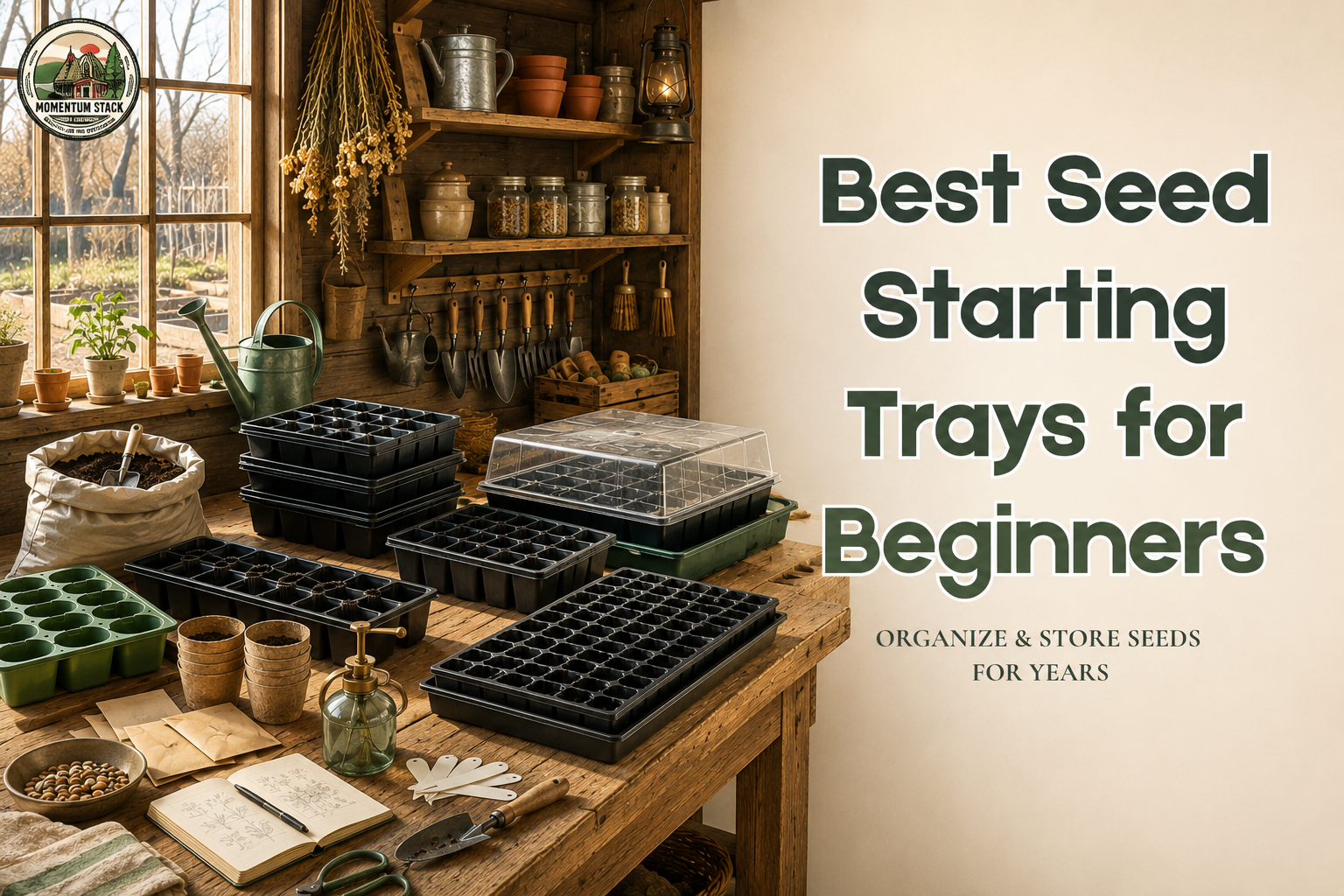
Cell Trays
These are the classic trays with individual compartments for each seedling.
Every seed gets its own little growing space, so roots stay separated and transplanting is quick and tidy.
For most backyard vegetable gardens, cell trays are the easiest option to work with.
They’re perfect for crops like:
- Tomatoes
- Peppers
- Eggplants
- Lettuce
- Broccoli
- Cabbage
- Herbs
- Most annual flowers
If you’re buying your very first seed tray, this is where I’d start.
Open Flats
Open flats don’t have separate cells.
Instead, you fill the entire tray with seed-starting mix and sow seeds across the surface.
They’re commonly used for:
- Microgreens
- Baby salad greens
- Flowers that are later pricked out
- Large batches of seedlings
They’re versatile, but they require a little more attention because seedlings grow close together and need separating later.
For beginners, individual cell trays are usually less work.
Biodegradable Pots
These include peat pots, paper fiber pots, and other containers that are designed to break down after planting.
The biggest advantage is that you can transplant the whole pot without disturbing the roots.
That can be helpful for plants that dislike transplant shock.
Pros
- Easy transplanting
- Less root disturbance
- Compostable materials
Cons
- Dry out faster than plastic trays
- Can develop mold in humid conditions
- Sometimes don’t break down as quickly as advertised
They’re useful in certain situations, but they’re not something every gardener needs.
Silicone Seed Trays
Silicone trays have become much more popular over the last few years.
Instead of pushing seedlings out from the bottom, you gently flex the tray and the entire root ball slides out with almost no effort.
If you grow a moderate number of plants each season, they’re genuinely enjoyable to use.
The trade-off?
Price.
A silicone tray often costs several times more than a traditional plastic tray.
For some gardeners that’s worth it.
For others, a sturdy reusable plastic tray offers nearly the same results at a much lower cost.
Heavy-Duty Reusable Plastic Trays
If a neighbor asked me which tray to buy without overthinking it, this is the one I’d recommend.
Heavy-duty reusable plastic trays hit the sweet spot between durability, convenience, and price.
A good one will:
- Last for years
- Stay rigid when carried
- Work with bottom-watering systems
- Clean up easily after the season
- Cost much less than premium specialty trays
For most home gardeners, this is the tray you’ll end up reaching for year after year.
What Size Seed Tray Should You Buy?
Choosing the right tray size isn’t really about finding the “best” one.
It’s about matching the tray to the way you garden.
A tray with more cells lets you start more seedlings in the same space—but each seedling gets less room for its roots.
Here’s a simple breakdown.
24-Cell Trays
These have large, roomy cells that give seedlings plenty of space before transplanting.
They’re ideal for vegetables that stay indoors for several weeks, including:
- Tomatoes
- Peppers
- Eggplants
- Cucumbers (if started indoors)
- Larger flowers
The bigger root ball also makes transplanting easier because the soil holds together well.
48-Cell Trays
Think of these as the middle ground.
You still get reasonably large cells, but you can grow twice as many seedlings in the same footprint compared to a 24-cell tray.
They’re a great choice for gardeners with medium-sized vegetable gardens.
72-Cell Trays
If I had to recommend one size for the average home gardener, this would probably be it.
A 72-cell tray offers an excellent balance between root space and growing capacity.
It works well for:
- Mixed vegetable gardens
- Herbs
- Flowers
- Spring seedlings
- Fall crops
It also fits comfortably under most standard grow lights, making it a practical all-around choice.
128-Cell Trays
A 128-cell tray is built for one thing—starting a lot of seedlings in a small space.
If you’re growing hundreds of flowers for a cutting garden or starting vegetables to sell at a local market, these trays can be incredibly efficient.
For the average backyard gardener, though, they’re often more trouble than they’re worth.
Each cell is fairly small, so seedlings outgrow them quickly. That means you’ll either need to transplant them into larger containers sooner or move them outdoors as soon as the weather allows.
Unless you’re producing seedlings by the dozens every spring, a 72-cell tray is usually the more forgiving
Features Worth Paying For
Garden stores love adding extra gadgets to seed-starting kits.
Some are genuinely useful.
Others just make the box look more impressive.
Here are the features I’d actually spend money on.
Drainage Holes
If a tray doesn’t drain well, put it back on the shelf.
Healthy seedlings need moisture—but they also need oxygen around their roots.
Without drainage holes, water collects at the bottom of each cell, creating perfect conditions for root problems and fungal diseases.
This is one feature that’s absolutely non-negotiable.
A Humidity Dome
During germination, seeds benefit from consistently warm, humid conditions.
That’s exactly what a clear humidity dome provides.
Instead of the soil drying out every few hours, moisture stays trapped inside the tray, giving seeds a much better environment for sprouting.
Just remember to remove the dome once most of the seedlings have emerged.
Leaving it on too long can reduce airflow and encourage mold.
Bottom-Watering Compatibility
If you plan to start seeds every year, buy trays that fit inside a solid bottom tray.
Bottom watering is cleaner, more consistent, and much gentler on young seedlings than pouring water over the top.
It also encourages roots to grow downward in search of moisture—a habit that helps create stronger plants.
Thick, Rigid Plastic
This is where spending a few extra dollars pays off.
A flimsy tray might survive one season.
A heavy-duty tray can last five years… sometimes ten… sometimes even longer.
The thicker plastic also makes moving trays around much less stressful.
No bending.
No cracking.
No seedlings falling onto the greenhouse floor because the tray folded in half.
UV-Resistant Materials
If your trays spend time outdoors during hardening off, sunlight can slowly weaken ordinary plastic.
UV-resistant trays hold up much better over time and are less likely to become brittle after a few seasons.
Easy to Clean
You’ll be washing these trays every year.
Smooth surfaces without lots of tiny ridges are quicker to scrub and easier to sanitize before the next planting season.
Sometimes the simplest designs are the best.
Features That Usually Aren’t Worth Paying Extra For
Not every upgrade improves your seedlings.
Some simply make the packaging look more attractive.
I’d happily skip things like:
- Bright designer colors
- Fancy branding
- Oversized starter kits with dozens of tiny accessories
- Decorative labels you’ll never reuse
- Ultra-cheap grow lights included in budget kits
Instead, spend that money on better trays or a quality seed-starting mix.
You’ll notice the difference there.
Our Favorite Choice for Most Home Gardeners
If a friend asked me what to buy without giving me a long list of requirements, I’d recommend the same setup almost every time.
A heavy-duty reusable 72-cell tray, paired with:
- A matching bottom watering tray
- A clear humidity dome
- Good-quality seed-starting mix
Why this combination?
Because it works for almost everything.
Tomatoes.
Peppers.
Lettuce.
Broccoli.
Basil.
Flowers.
It holds enough seedlings for a typical backyard garden without becoming overwhelming, and the trays are easy to store once the season is over.
Most importantly, you’ll probably still be using them years from now.
Sometimes the best gardening tool is simply the one you don’t have to replace every spring.
Common Mistakes When Buying Seed Trays
You don’t need the most expensive tray.
You just need to avoid a few common mistakes.
Buying the Cheapest Tray You Can Find
We’ve all done it.
The tray looks fine in the store…
Then you pick it up after watering and the whole thing twists like a sheet of cardboard.
If you’re only using it once, maybe that’s okay.
But if you want something that lasts, it’s usually worth spending a little more upfront.
Choosing Too Many Cells
More isn’t always better.
A tray with 128 tiny cells might look efficient, but those seedlings won’t have much room to grow.
If you’re new to seed starting, it’s often easier to manage fewer plants with larger root systems.
Forgetting About Drainage
It sounds obvious, but plenty of inexpensive trays have poor drainage.
Standing water is one of the fastest ways to create weak, unhealthy seedlings.
Always check the bottom before buying.
Buying Cells That Are Too Shallow
Some vegetables develop surprisingly long roots even while they’re still indoors.
Tomatoes, peppers, and eggplants all appreciate a little extra depth.
Tiny shallow cells can leave seedlings root-bound sooner than you’d expect.
Treating Disposable Trays Like Permanent Equipment
There’s nothing wrong with disposable trays if that’s what you’re using.
Just don’t expect them to last forever.
If you know you’ll be starting seeds every spring, reusable trays usually save money over time.
How Long Do Good Seed Starting Trays Last?
One question I hear a lot is:
“How often do I need to replace my trays?”
Honestly?
Not very often.
A well-made reusable tray can easily last five to ten years with basic care.
Some gardeners keep the same trays for much longer.
The secret isn’t complicated.
At the end of the season:
- Empty out old soil.
- Wash the trays with warm, soapy water.
- Sanitize them if disease was present.
- Let them dry completely.
- Store them somewhere out of direct sunlight.
That’s about it.
Treat them well, and they’ll be ready to go again next spring.
Final Thoughts
Choosing a seed starting tray doesn’t have to be complicated.
Ignore the flashy marketing and focus on the basics.
Look for sturdy construction, good drainage, and a tray that’s comfortable to use year after year.
For most home gardeners, a reusable 72-cell tray paired with a bottom watering tray and humidity dome offers the best balance of durability, convenience, and value.
Once you’ve got a dependable setup, you can stop thinking about equipment and get back to the fun part—watching those first tiny seedlings push through the soil.
Because honestly, that never gets old.
Frequently Asked Questions
What is the best seed starting tray for beginners?
A heavy-duty reusable plastic cell tray is the best choice for most beginners. It’s durable, easy to clean, and works well for vegetables, herbs, and flowers.
Is a 72-cell tray big enough?
For most home gardens, yes.
A 72-cell tray gives you plenty of room to grow a variety of seedlings while still fitting under standard grow lights.
Do seed trays need drainage holes?
Absolutely.
Drainage holes prevent excess water from collecting around roots, helping reduce the risk of root rot and damping-off disease.
Are biodegradable seed trays better than plastic?
Not necessarily.
Biodegradable trays reduce root disturbance during transplanting, but they dry out faster and often don’t last beyond one season.
Reusable plastic trays are generally more durable and economical.
How long do reusable seed trays last?
A quality tray can last anywhere from five to ten years—or even longer—with proper cleaning and storage.
Can I reuse old seed trays?
Yes.
As long as they’re still in good condition, simply clean and sanitize them before planting the next crop.
Quick Checklist
Before you buy your next seed tray, run through this quick checklist:
✅ Choose sturdy, reusable trays whenever possible
✅ Make sure every cell has proper drainage holes
✅ Pick a cell size that matches the crops you’re growing
✅ Buy trays that work with bottom watering
✅ Consider adding a humidity dome for faster germination
✅ Skip gimmicky accessories you’ll rarely use
✅ Clean and dry trays before storing them for the off-season