
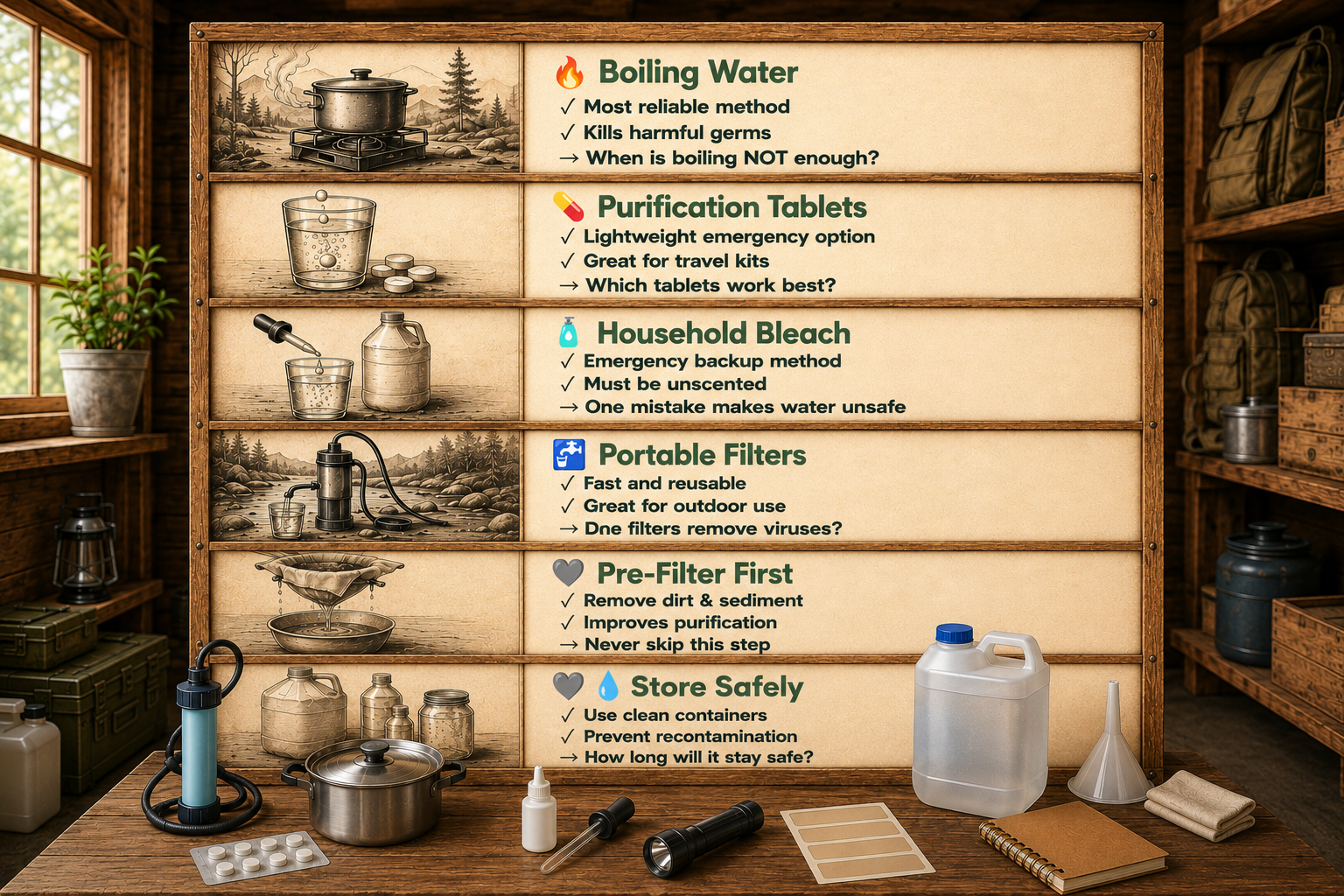

Quick Answer: The safest way to purify drinking water during an emergency is to bring it to a rolling boil for at least 1 minute (or 3 minutes at elevations above 6,500 feet / 2,000 meters). If boiling isn’t possible, you can use unscented household bleach, EPA-approved water purification tablets, or a portable water filter—depending on the situation and the quality of the source water.
Whether you’re dealing with a natural disaster, a prolonged power outage, or a boil water advisory, knowing how to make water safe to drink can help protect you from bacteria, viruses, and parasites that cause serious illness.
How to Purify Water During an Emergency (Safe Methods That Actually Work)
Clean drinking water is one of the first essentials to become difficult to access during an emergency. Floods can contaminate wells, hurricanes may damage municipal water systems, and extended power outages can interrupt treatment facilities or pumping stations. Even when water still flows from the tap, it may no longer be safe to drink without additional treatment.
Many people assume that clear-looking water is safe, but harmful microorganisms are invisible to the naked eye. Bacteria, viruses, and parasites can all be present in water that appears perfectly clean. Drinking contaminated water can lead to dehydration, gastrointestinal illness, or more serious infections—especially for children, older adults, and people with weakened immune systems.
Fortunately, you don’t need expensive equipment to make water safer in many emergency situations. Simple methods such as boiling, chemical disinfection, and portable filtration can significantly reduce the risk of waterborne diseases when used correctly. The best method depends on the water source, the supplies available, and the type of contamination you’re dealing with.
In this guide, you’ll learn the most reliable emergency water purification methods recommended by public health authorities, when to use each one, and the common mistakes to avoid.
When Do You Need to Purify Water?
Water purification isn’t only for wilderness survival. Many everyday emergencies can compromise the safety of your drinking water at home.
You should consider treating your water whenever you’re unsure whether it has been properly disinfected or protected from contamination.
Natural disasters
Floods, hurricanes, earthquakes, wildfires, and severe storms can damage water treatment plants, break water mains, or introduce contaminants into local water supplies.
After these events, local authorities may issue boil water advisories while repairs are underway. Until officials confirm the water is safe, purification is an important precaution.
Boil water advisories
Municipal water systems occasionally experience pressure loss, equipment failures, or bacterial contamination.
A boil water advisory doesn’t necessarily mean the water is unsafe, but it indicates that additional treatment is needed before drinking, cooking, brushing teeth, or preparing infant formula.
Power outages
Extended power outages can affect private wells, water pumps, and municipal treatment systems.
Even if some water remains available, treatment processes may be interrupted, increasing the possibility of contamination.
Flooded Wells and Private Water Systems
Private wells are particularly vulnerable after flooding.
Floodwater can introduce sewage, agricultural runoff, chemicals, and harmful microorganisms into groundwater, making untreated well water unsafe until it has been properly tested and disinfected.
Outdoor Emergencies
Camping, hiking, or unexpected vehicle breakdowns may leave you relying on untreated natural water sources such as rivers, lakes, or streams.
While outdoor water often looks clean, it can still contain disease-causing microorganisms that require treatment before drinking.
Step 1: Start With the Cleanest Water Available
Before choosing a purification method, start by selecting the safest water source you can find.
The cleaner the source water is, the easier and more effective the purification process becomes.
Whenever possible, use water in this order of preference:
- Commercially bottled drinking water
- Properly stored emergency water supplies
- Water collected from your home water heater (if appropriate)
- Rainwater collected in clean containers
- Water from protected wells or springs (if contamination isn’t suspected)
- Rivers and flowing streams
- Lakes and ponds
- Floodwater (only as an absolute last resort)
Avoid water that has an unusual color, odor, oily sheen, or visible chemical contamination whenever possible. Purification methods such as boiling or bleach can kill microorganisms, but they cannot remove gasoline, pesticides, heavy metals, or many industrial chemicals.
Choosing the cleanest available source greatly improves your chances of producing safe drinking water.
Step 2: Remove Dirt Before Purifying
If the water appears cloudy, muddy, or contains floating debris, remove as many particles as possible before disinfecting it.
Suspended dirt can shield microorganisms from heat or chemical disinfectants, making purification less effective.
Simple pre-filtering methods include:
- Letting sediment settle naturally for several hours
- Pouring water through multiple layers of clean cloth
- Using a coffee filter
- Filtering through a clean paper towel (if necessary)
If you allow sediment to settle, carefully pour the clearer water into another clean container without disturbing the material at the bottom.
While these methods do not make water safe to drink on their own, they help improve the effectiveness of boiling, bleach, and chemical disinfectants.
Tip: Always use the cleanest container available after filtering. A sanitized container helps prevent recontamination once the water has been treated.
Step 3: Boiling Water (The Most Reliable Emergency Purification Method)
Boiling is widely considered the most dependable way to disinfect water during an emergency because it doesn’t require specialized equipment or chemicals.
Heat effectively destroys the microorganisms responsible for most waterborne illnesses, including bacteria, viruses, and parasites.
If you have access to a stove, campfire, propane burner, or portable cooking system, boiling should generally be your first choice.
How to Boil Water Safely
- Filter cloudy water first if necessary.
- Bring the water to a full rolling boil.
- Keep it boiling for:
- 1 minute at elevations below 6,500 feet (2,000 meters)
- 3 minutes at elevations above 6,500 feet, where water boils at a lower temperature
- Remove the water from heat.
- Allow it to cool naturally before drinking.
- Store it in a clean, covered container to prevent recontamination.
Boiled water may taste slightly flat because dissolved oxygen is reduced during heating. This doesn’t affect its safety. If desired, improve the taste by pouring the cooled water back and forth between two clean containers to reintroduce air.
Advantages of Boiling
- Kills bacteria, viruses, and parasites
- Doesn’t require chemical additives
- Recommended by major public health agencies
- Simple and effective for most biological contamination
Limitations
Boiling does not remove:
- Heavy metals
- Chemical pollutants
- Fuel contamination
- Salt
- Radioactive materials
If chemical contamination is suspected, boiling alone is not enough, and a different water source should be used whenever possible.
Step 4: Using Household Bleach Safely
When boiling isn’t possible, unscented household liquid bleach can be an effective way to disinfect drinking water during an emergency.
Bleach works by killing many harmful bacteria and viruses that may be present in untreated water. However, it must be used carefully. Too little may not disinfect the water, while too much can make it unpleasant or unsafe to drink.
Important: Only use plain, unscented household bleach that contains sodium hypochlorite. Do not use scented bleach, color-safe bleach, splash-less formulas, or products with added cleaners or fragrances.
How to Disinfect Water With Bleach
- Filter cloudy water first.
- Add the amount of bleach recommended on the product label or by your local public health authority based on the bleach concentration.
- Stir thoroughly.
- Let the water stand for 30 minutes.
- Check for a slight chlorine smell.
- If there is no chlorine odor, repeat the treatment and wait another 15–30 minutes before drinking.
Because bleach concentrations vary between manufacturers and can change over time, always follow current EPA or CDC guidance rather than relying on old dosage charts.
Best For
- Short-term emergencies
- Municipal water outages
- Household emergency kits
Not Recommended For
- Water contaminated with chemicals
- Salt water
- Fuel-contaminated water
Step 5: Water Purification Tablets
Water purification tablets are lightweight, inexpensive, and easy to store, making them a popular addition to emergency kits and bug-out bags.
Most tablets use one of two disinfectants:
- Chlorine dioxide
- Iodine
Chlorine dioxide generally provides broader protection and is often preferred because it is more effective against certain parasites than iodine.
Advantages
- Lightweight
- Long shelf life
- Easy to carry
- Simple to use
Limitations
- Requires waiting time
- May leave an aftertaste
- Some products work slowly in cold water
- Follow the manufacturer’s instructions carefully
These tablets are ideal when traveling, hiking, or during emergencies where fuel for boiling is unavailable.
Step 6: Portable Water Filters
Portable filters physically remove many harmful organisms from untreated water and are one of the most useful preparedness tools for long-term emergencies.
Common types include:
Gravity Filters
Excellent for families and home emergency use.
Require no electricity.
Can produce several gallons per day.
Pump Filters
Designed for outdoor use.
Useful when collecting water from streams or lakes.
Straw Filters
Compact and lightweight.
Allow you to drink directly from a water source.
Ideal for emergency kits.
Squeeze Filters
Flexible systems using collapsible pouches.
Popular among hikers because they are lightweight and fast.
Do Water Filters Remove Viruses?
Not always.
Many consumer-grade portable filters are designed to remove:
- Sediment
- Bacteria
- Protozoa
However, some filters are not designed to remove viruses because viruses are much smaller than bacteria.
If viral contamination is possible—such as after floods or sewage contamination—combine filtration with boiling or chemical disinfection whenever practical.
Step 7: UV Water Purifiers
Ultraviolet (UV) purifiers use short-wave UV light to damage the DNA of microorganisms, preventing them from reproducing.
They are fast and convenient but require:
- Batteries or electricity
- Relatively clear water
- Proper exposure time
Pros
- Fast treatment
- No chemical taste
- Lightweight
Cons
- Doesn’t remove dirt
- Doesn’t remove chemicals
- Requires power
- Less effective in cloudy water
Emergency Water Purification Methods Comparison
| Method | Bacteria | Viruses | Parasites | Removes Dirt | Removes Chemicals |
|---|---|---|---|---|---|
| Boiling | ✅ | ✅ | ✅ | ❌ | ❌ |
| Bleach | ✅ | ✅ | Partial | ❌ | ❌ |
| Chlorine Dioxide Tablets | ✅ | ✅ | Better | ❌ | ❌ |
| Portable Filter | Usually | Some Models | ✅ | ✅ | Usually No |
| UV Purifier | ✅ | ✅ | Usually | ❌ | ❌ |
Bottom Line: If possible, boiling remains the most universally reliable emergency water purification method. Portable filters and chemical disinfectants are valuable alternatives when heat isn’t available.
What Can Each Method Remove?
| Contaminant | Boil | Bleach | Filter | UV |
|---|
| Bacteria | ✅ | ✅ | ✅ | ✅ |
| Viruses | ✅ | ✅ | ⚠ | ✅ |
| Parasites | ✅ | ⚠ | ✅ | ✅ |
| Chemicals | ❌ | ❌ | ❌ | ❌ |
| Heavy Metals | ❌ | ❌ | ❌ | ❌ |
What Purification Cannot Remove
Many people assume that any purification method makes unsafe water completely safe.
Unfortunately, that’s not always true.
Most emergency purification methods are designed to eliminate biological hazards, not chemical contamination.
Purification methods generally do not remove:
- Gasoline
- Diesel fuel
- Pesticides
- Industrial chemicals
- Heavy metals
- Salt
- Radioactive contamination
If water smells like fuel, contains an oily film, or may have been contaminated by industrial runoff, choose another water source whenever possible.
Common Water Purification Mistakes
Even the best purification method can fail if used incorrectly.
Avoid these common mistakes:
Using Scented Bleach
Only plain, unscented household bleach should be used.
Skipping Pre-Filtering
Cloudy water reduces the effectiveness of disinfectants.
Not Waiting Long Enough
Chemical disinfectants require time to work.
Using Dirty Storage Containers
Purified water can become contaminated again if stored in dirty bottles.
Assuming Clear Water Is Safe
Many dangerous microorganisms are invisible.
Relying Only on a Basic Water Filter
Some portable filters don’t remove viruses.
Build an Emergency Water Purification Kit
Having the right supplies before an emergency makes water treatment much easier.
A practical kit may include:
- Portable water filter
- Stainless steel pot for boiling
- Camping stove or backup fuel
- Water purification tablets
- Plain unscented household bleach
- Measuring dropper
- Coffee filters
- Clean cloth
- Collapsible water container
- Waterproof labels
- Permanent marker
- Food-grade storage containers
- Disposable gloves
Store everything together in an easily accessible location.
Best Water Storage Containers for Emergency Preparedness
Final Thoughts
Safe drinking water is one of the most important priorities during any emergency.
Fortunately, you don’t need expensive survival gear to protect yourself. Understanding when to boil water, when to disinfect it, and when filtration is appropriate can dramatically reduce the risk of waterborne illness.
The best emergency plan combines proper water storage, multiple purification methods, and routine preparedness before disasters occur.
Even a simple emergency kit with a portable filter, unscented bleach, and a reliable way to boil water can provide peace of mind when clean water becomes difficult to access.
Frequently Asked Questions
What is the safest way to purify water during an emergency?
Boiling water is generally considered the most reliable method because it effectively kills bacteria, viruses, and parasites without requiring chemicals.
Can I use any household bleach?
No. Only plain, unscented household bleach containing sodium hypochlorite should be used. Never use scented, splash-less, or color-safe bleach.
Are portable water filters enough?
Many filters remove bacteria and parasites, but not all remove viruses. In high-risk situations, combine filtration with boiling or chemical disinfection.
Can boiling remove chemicals from water?
No. Boiling kills microorganisms but does not remove heavy metals, pesticides, gasoline, or salt.
Is rainwater safe to drink?
Rainwater may be cleaner than many surface water sources, but it should still be purified before drinking, especially if collected from roofs or gutters.
Emergency Water Purification Checklist
✅ Choose the cleanest water source available
✅ Filter cloudy water before treatment
✅ Boil water whenever possible
✅ Use only plain, unscented bleach if boiling isn’t available
✅ Follow product directions for purification tablets
✅ Understand the limitations of portable filters
✅ Store treated water in clean, food-grade containers
✅ Never assume clear water is safe
✅ Keep multiple purification methods in your emergency kit
Purifying water is only one part of emergency preparedness. Learning how much water to store, how to rotate stored water, and which containers keep water safe for long-term storage will help ensure your household has reliable drinking water before the next emergency happens.