
Learning how to stock your pantry for a year can feel overwhelming at first, especially when you are starting from an empty shelf.
A well-stocked pantry is about more than preparing for emergencies. It gives your family peace of mind, saves money over time, and makes everyday cooking much easier.
Building a one-year pantry doesn’t mean buying a year’s worth of food in a single shopping trip. The most successful pantries are built gradually, one shelf and one grocery trip at a time.
The goal is simple: store foods your family already enjoys, protect them properly, and rotate them regularly so nothing goes to waste.
Whether you live on a homestead, in the suburbs, or in a small apartment, the same principles apply. Start with the basics, stay consistent, and let your pantry grow over time.
In this guide, you’ll learn which foods to prioritize, how much you really need, and how to organize everything for long-term storage.
How to Stock Your Pantry for a Year
Why Build a One-Year Pantry?
Many people imagine a one-year pantry as something only survivalists or off-grid families need. In reality, a well-planned pantry benefits almost every household.
Buying staple foods in bulk often costs less than purchasing small quantities throughout the year. A stocked pantry also reduces the number of grocery trips, helps you prepare meals more efficiently, and provides a buffer during unexpected events such as severe weather, temporary job loss, or supply shortages.
Perhaps the greatest benefit is peace of mind. Knowing that your family has enough food for weeks or months allows you to focus on everyday life instead of worrying about empty shelves or rising prices.
A one-year pantry is not built out of fear. It is built through preparation, organization, and smart purchasing habits.
How to Stock Your Pantry for a Year Step by Step, Start With Foods Your Family Already Eats
One of the most common mistakes beginners make is buying large amounts of food simply because someone else recommends it.
Instead, build your pantry around meals your family already enjoys.
If your household eats rice every week, storing extra rice makes sense. If you regularly cook dried beans, pasta, oats, canned vegetables, or peanut butter, those items deserve space on your pantry shelves first.
Starting with familiar foods has several advantages:
You’ll naturally rotate your food supply.
Less food will expire before it’s used.
Shopping becomes easier because you’re simply buying extra versions of products you already know.
Your pantry grows without changing your family’s eating habits.
Remember, a pantry should support your daily life—not completely replace it.
The Five Essential Pantry Categories
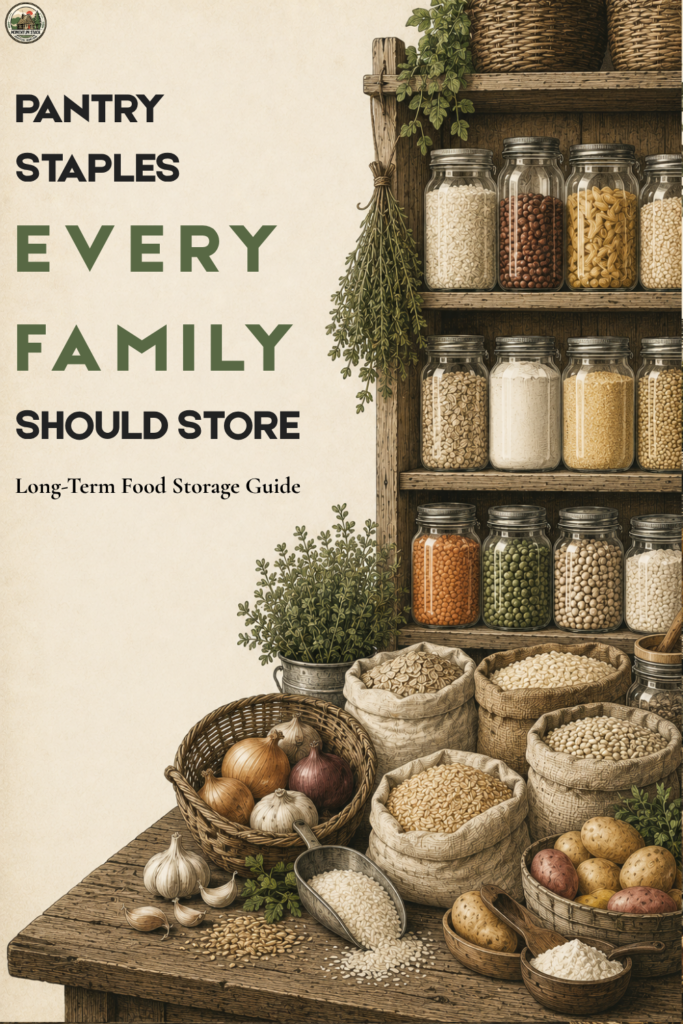
A balanced pantry isn’t built around a single food. Instead, it includes several categories that work together to provide complete meals and everyday convenience.
Grains
Grains form the foundation of most long-term food storage plans. Rice, oats, pasta, flour, and other grains are affordable, versatile, and easy to store. If you’re planning to store rice for many years rather than a few months, be sure to read our guide on How to Store Rice Long Term for proper packaging methods and storage conditions.
Protein
Protein-rich foods help create balanced, filling meals. Dry beans, lentils, canned meats, canned fish, and peanut butter are all excellent pantry staples. Dry beans deserve special attention because they store exceptionally well when packaged correctly. Our guide on How to Store Dry Beans explains how to maximize their shelf life while keeping them easy to rotate.
Fruits & Vegetables
Canned fruits, canned vegetables, dehydrated foods, and freeze-dried products add important vitamins and variety to your pantry.
Choose items your family already eats regularly so they’ll naturally become part of your food rotation.
Healthy Fats
Cooking oil, olive oil, coconut oil, shortening, and nut butters provide calories and improve the flavor of stored foods.
Because fats generally have a shorter shelf life than grains or beans, they should be rotated more frequently.
Baking & Everyday Essentials
When planning how to stock your pantry for a year, Don’t forget the ingredients that make cooking possible.
Items such as salt, sugar, baking powder, baking soda, yeast, spices, vinegar, coffee, tea, and honey are often overlooked but become invaluable in a long-term pantry.
Together, these everyday essentials transform basic ingredients into complete meals your family will actually enjoy.
How Much Food Do You Really Need?
There is no single pantry list that works for every household. The amount of food you need depends on your family size, eating habits, available storage space, and budget.
Instead of trying to buy an entire year’s supply at once, start by building a one-month pantry. Once you are comfortable managing and rotating that food, gradually expand to three months, six months, and eventually a full year.
The table below provides a simple planning example.
| Household Size | Good Starting Goal | Long-Term Goal |
| 1 person | 1 month | 12 months |
| 2 people | 1–3 months | 12 months |
| 4 people | 3 months | 12 months |
Rather than following someone else’s exact shopping list, track what your family actually eats for a few weeks. Those habits should determine what goes into your pantry.
Store Your Food Properly
Buying food is only half of the process. Proper storage is what protects your investment and extends shelf life.
The biggest enemies of stored food are:
– Heat
– Moisture
– Oxygen
– Light
– Pests
Keeping food in a cool, dry, and dark location can significantly improve how long it remains fresh.
Staples such as rice and dry beans can last for many years when packaged correctly. If you’re planning long-term storage, don’t miss our complete guides to How to Store Rice Long Term and How to Store Dry Beans.
The container you choose also matters. Food-grade buckets, glass jars, and Mylar bags each have different advantages depending on the type of food you’re storing. Learn more in Best Containers for Long-Term Food Storage.
Rotate Your Pantry Using FIFO
When planning how to stock your pantry for a yearA pantry should never become a museum where food sits untouched for years.
The simplest system is FIFO (First In, First Out).
Whenever you buy new food:
1. Place older items at the front.
2. Put newly purchased items behind them.
3. Use the oldest products first.
This simple habit reduces waste and ensures your pantry remains fresh without complicated inventory systems.
Infographic Placeholder
BUY => LABEL => STORE => USE => REPLACE
Common Pantry Storage Mistakes
Almost everyone makes mistakes when starting a pantry. Fortunately, most are easy to avoid.
Common examples include:
– Buying foods your family never eats.
– Forgetting to label storage dates.
– Storing food in hot garages or damp basements.
– Ignoring expiration dates.
– Purchasing more than your storage space can handle.
Each of these mistakes can shorten shelf life or create unnecessary waste. We cover them in greater detail in Common Pantry Storage Mistakes.
Start Small and Stay Consistent
– Building a one-year pantry is a long-term project, not a weekend challenge.
– Every grocery trip is an opportunity to add a little more to your shelves. Over time, those small purchases become a reliable food reserve that supports your family through everyday life and unexpected situations alike.
– Consistency matters far more than speed.
– A pantry built slowly with foods your family loves will always be more useful than one filled with unfamiliar products purchased all at once.
1. What foods should I buy first?
– Start with foods your family already eats regularly, such as rice, beans, pasta, oats, canned vegetables, cooking oil, and basic seasonings.
2. How long does pantry food last?
– Shelf life varies by product and storage conditions. Proper packaging, cool temperatures, and low humidity can significantly extend storage life.
3. Do I need special containers?
– Not always. However, food-grade buckets, airtight containers, and Mylar bags can greatly improve long-term storage for many pantry staples.
4. Should I rotate my pantry?
– Yes. Using the FIFO method helps reduce waste and keeps your food supply fresh.
5. How much water should I store?
– Food is only part of emergency preparedness. Be sure to plan your water storage as well. See our guide: How Much Water to Store for One Year.
Printable Pantry Starter Checklist
Use this checklist as a starting point for building your pantry over time. Add items gradually during your regular grocery trips instead of trying to buy everything at once.
✔ Rice
✔ Dry Beans
✔ Pasta
✔ Oats
✔ Flour
✔ Sugar
✔ Salt
✔ Cooking Oil
✔ Canned Meat
✔ Canned Vegetables