
How to Store Onions Long Term: 7 Proven Ways to Keep Them Fresh for Months
Whether you grow your own onions or buy them in bulk during harvest season, proper storage can make the difference between enjoying fresh onions for months or throwing away a bag full of soft, moldy bulbs just weeks later.
The good news is that onions are naturally one of the easiest vegetables to store—if you give them the right conditions. Cool temperatures, good airflow, low moisture, and a little preparation before storage can dramatically extend their shelf life while preserving their flavor and texture.
In this guide, you’ll learn how to store onions long term, how to cure freshly harvested onions, the best storage methods for different homes, and the common mistakes that cause onions to sprout, rot, or spoil prematurely.
Whether you’re building a year-round pantry or simply trying to reduce food waste, these proven storage techniques will help you keep onions fresh for months.
- Why onions spoil faster than expected
- Benefits of proper storage
- What readers will learn
Why Proper Onion Storage Matters
Onions are a pantry staple in countless recipes, making them one of the most frequently used vegetables in the kitchen. Because they’re so versatile, buying onions in larger quantities often saves money—especially during harvest season or when local markets offer discounts.
However, onions have one major weakness: improper storage.
Exposure to moisture, warmth, sunlight, or poor ventilation quickly shortens their shelf life. Instead of staying firm and flavorful, they begin to soften, sprout green shoots, develop mold, or produce unpleasant odors.
Learning how to store onions correctly offers several important benefits:
- Reduces food waste by preventing premature spoilage.
- Saves money by allowing you to buy onions in bulk.
- Maintains better flavor and texture for cooking.
- Keeps your pantry organized and efficient.
- Supports long-term food storage and emergency preparedness.
A few simple habits can often extend the storage life of onions from just a few weeks to several months.
Step 1: Cure Onions Before Storage
If you harvested onions from your own garden, proper curing is the single most important step before long-term storage.
Freshly harvested onions still contain excess moisture inside their outer layers. Storing them immediately traps that moisture, creating ideal conditions for mold, bacterial growth, and early rot.
Curing allows the outer skins to dry completely while sealing the neck of the onion. Once cured, onions become far more resistant to moisture loss and spoilage.
What Is Onion Curing?
Curing is the process of drying freshly harvested onions in a warm, dry, well-ventilated location before placing them into long-term storage.
During this time:
- Outer skins become dry and papery.
- Necks shrink and seal naturally.
- Excess moisture evaporates.
- Protective outer layers develop.
This natural drying process greatly improves storage life.
How Long Should You Cure Onions?
Most onions need about 2 to 3 weeks of curing, depending on humidity and weather conditions.
A good curing location should provide:
- Excellent airflow
- Protection from rain
- Shade instead of direct sunlight
- Warm temperatures
- Low humidity
Many gardeners cure onions in an open garage, covered porch, shed, or barn where air can circulate freely.
Signs They’re Ready for Storage
Your onions are fully cured when:
- The neck feels completely dry.
- Outer skins are crisp and papery.
- Roots are dry and brittle.
- There are no soft spots.
- The bulb feels firm and heavy.
At this stage, trim the dried tops if desired, gently brush away loose dirt, and sort out any damaged onions. Only healthy, undamaged bulbs should be placed into long-term storage.
Step 2: Create the Ideal Storage Environment
Even perfectly cured onions won’t last long if they’re stored in the wrong environment.
The goal is to slow the onion’s natural aging process while preventing moisture buildup that encourages mold and rot. Four factors have the biggest impact on long-term storage success.
Temperature
Temperature is one of the most important factors affecting storage life.
For most storage onions, the ideal range is 32–40°F (0–4°C). Cooler temperatures slow sprouting and reduce moisture loss without freezing the bulbs.
If you don’t have a root cellar, choose the coolest room in your home that stays consistently cool throughout the year. Avoid placing onions near ovens, heating vents, sunny windows, or garages that become hot during summer.
Humidity
Many people assume vegetables need high humidity, but onions are different.
The ideal relative humidity for onion storage is around 65–70%. Excess moisture encourages mold and soft rot, while extremely dry conditions may cause onions to shrivel over time.
If your storage area feels damp or has visible condensation, improve ventilation before storing onions.
Darkness
Light encourages onions to sprout.
Store onions in a dark location away from direct sunlight, bright windows, or constant artificial light. A pantry, basement, root cellar, or dark storage cabinet works much better than an open kitchen counter.
Air Circulation
Good airflow is essential for long-term onion storage.
Air circulation helps remove excess moisture around the bulbs and reduces the risk of mold growth.
Avoid sealed plastic bags, airtight containers, or tightly packed boxes that trap humidity.
Instead, choose storage methods that allow air to move freely around every onion. Mesh bags, wire baskets, wooden crates, or open shelving are all excellent options.
When stored under the right conditions, properly cured onions can remain fresh for several months with very little maintenance.
7 Best Ways to Store Onions Long Term
No single storage method works for every home. The best option depends on your available space, climate, and how many onions you’re storing. Regardless of the method you choose, always begin with healthy, fully cured onions and inspect them regularly for signs of spoilage.
1. Mesh Bags
Mesh bags are one of the best choices for long-term onion storage because they allow air to circulate around every bulb.
Hang the bags in a cool, dark location where they won’t be exposed to moisture or direct sunlight. Avoid overfilling the bags, as tightly packed onions trap heat and humidity.
Best for: Medium to large harvests
2. Wire Baskets
Wire baskets provide excellent ventilation while making it easy to check onions every few weeks.
Place the basket on a shelf instead of directly on a concrete floor, which can collect moisture over time.
Best for: Pantry or basement storage
3. Wooden Crates
Wooden crates combine good airflow with sturdy stacking, making them ideal for larger quantities.
Arrange onions in a single layer whenever possible. If stacking multiple layers, separate them with newspaper or cardboard to improve air circulation.
Best for: Bulk storage
4. Braided Onions
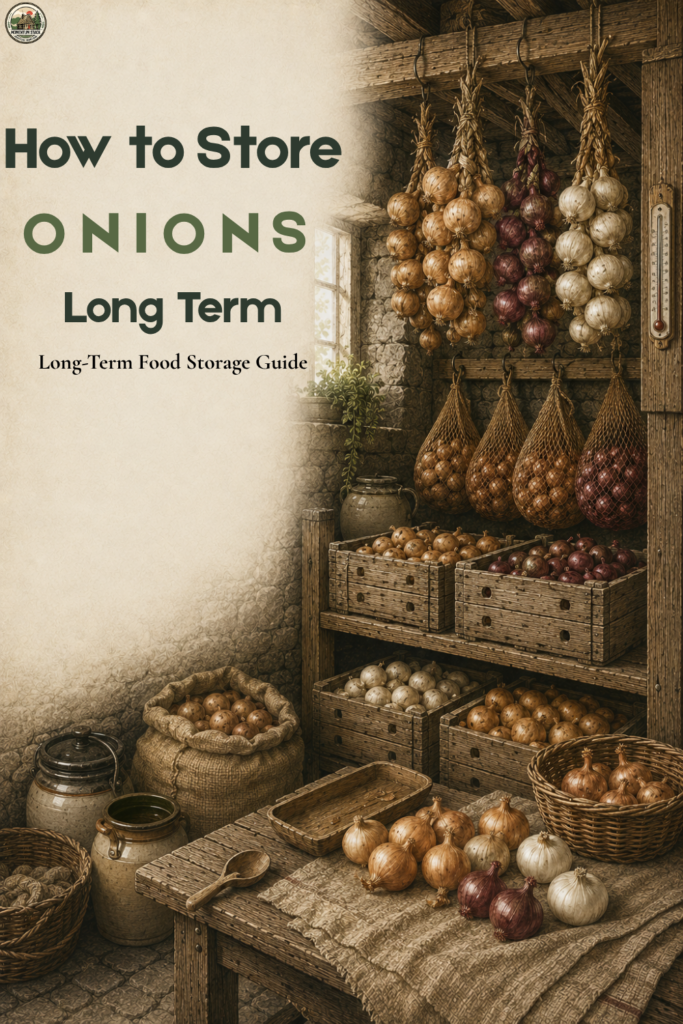
If you left the tops attached during harvest, you can braid onions together and hang them from hooks or ceiling beams.
Braiding keeps bulbs separated, promotes airflow, and creates an attractive traditional storage system.
Best for: Small harvests and farmhouse-style pantries
5. Root Cellar
A properly maintained root cellar provides nearly perfect conditions for storing onions.
Cool temperatures, stable humidity, darkness, and natural ventilation help onions remain fresh for up to eight months.
Keep onions on open shelves or in ventilated crates rather than sealed containers.
Best for: Long-term food storage
6. Cool Pantry
Even without a basement or root cellar, many homes have a pantry that stays relatively cool throughout the year.
Choose the lowest shelf away from appliances that generate heat, and avoid storing onions near windows.
Best for: Everyday household use
7. Ventilated Shelving
Open shelving made from wood or metal allows air to circulate freely around stored onions.
Avoid stacking bulbs too deeply, and leave space between rows whenever possible.
Best for: Gardeners with larger harvests
Should You Refrigerate Onions?
For whole onions, the answer is generally no.
Most refrigerators maintain high humidity, which causes whole onions to soften more quickly and increases the risk of mold.
However, once an onion has been cut, refrigeration becomes necessary. Wrap the unused portion tightly or place it in an airtight container and use it within about one week.
In general:
- Whole onions → Cool, dark, dry storage.
- Cut onions → Refrigerator.
Can You Store Onions with Potatoes?
One of the most common storage mistakes is keeping onions and potatoes together.
Although both prefer cool conditions, they release different gases and moisture levels that negatively affect one another.
Potatoes naturally release moisture and ethylene-related compounds that can encourage onions to sprout or rot sooner. At the same time, onions may shorten the storage life of potatoes.
For the best results:
- Store onions and potatoes in separate containers.
- Keep several feet apart whenever possible.
- Ensure each has good airflow.
Looking for the best way to preserve potatoes? Read our complete guide on 5 Ways to Store Potatoes So They Last for Months to learn the ideal storage conditions for long-term freshness.
How Long Do Onions Last?
Storage life depends on the onion variety, curing quality, and storage conditions.
| Storage Method | Expected Shelf Life |
|---|---|
| Kitchen Counter | 2–4 weeks |
| Cool Pantry | 2–3 months |
| Mesh Bag | 3–5 months |
| Wooden Crate | 4–6 months |
| Root Cellar | 6–8 months |
Sweet onions generally have a shorter shelf life because of their higher moisture content, while storage varieties such as yellow and red onions often last significantly longer.
No matter which method you use, inspect onions every few weeks and remove any bulbs that become soft, moldy, or begin sprouting. One spoiled onion can quickly affect those stored nearby.
7 Onion Storage Mistakes to Avoid
Even high-quality onions won’t last long if they’re stored incorrectly. Avoid these common mistakes to maximize freshness.
1. Skipping the curing process
Freshly harvested onions contain too much moisture for immediate storage.
2. Using plastic bags
Plastic traps humidity and limits airflow, creating ideal conditions for mold.
3. Storing onions near potatoes
Both vegetables release moisture and gases that shorten each other’s storage life.
4. Keeping onions in direct sunlight
Light encourages sprouting and raises storage temperatures.
5. Ignoring ventilation
Without airflow, moisture accumulates and spoilage accelerates.
6. Storing damaged onions
Bruised or cut onions deteriorate quickly and can spread decay to healthy bulbs.
7. Forgetting monthly inspections
Regularly remove any onion showing signs of softness, mold, or sprouting to protect the remaining harvest.
Frequently Asked Questions
What type of onion stores the longest?
Yellow storage onions and many red storage varieties generally last longer than sweet onions because they contain less moisture.
Do onions need to be cured before storage?
Yes. Curing allows the outer layers to dry completely and greatly improves long-term storage life.
Can I freeze onions?
Yes. Frozen onions are excellent for cooking, although they lose their crisp texture and are not suitable for fresh dishes.
Why are my onions sprouting?
Sprouting is usually caused by warm temperatures, excess light, or storing onions for too long.
How often should I check stored onions?
Inspect them about once each month and remove any bulbs that show signs of spoilage.
Printable Onion Storage Checklist
✔ Cure onions for 2–3 weeks before storing.
✔ Store only firm, undamaged bulbs.
✔ Keep temperatures between 32–40°F (0–4°C).
✔ Maintain 65–70% relative humidity.
✔ Store onions in complete darkness.
✔ Choose mesh bags, wire baskets, or wooden crates.
✔ Never store onions with potatoes.
✔ Check stored onions once each month.
Final Thoughts
Learning how to store onions long term doesn’t require expensive equipment or complicated techniques. By curing onions properly, providing cool temperatures, maintaining good airflow, and avoiding common storage mistakes, you can enjoy fresh onions for months while reducing food waste and saving money.
Whether you’re stocking a pantry for everyday cooking or preparing a long-term food supply, these simple practices will help you get the most from every harvest.
If you’re building a complete food storage system, continue with our guides on How to Stock Your Pantry for a Year and 5 Ways to Store Potatoes So They Last for Months to create a pantry that’s organized, efficient, and ready for every season.