
Most emergencies don’t begin with dramatic survival scenarios. More often, they’re the everyday disruptions that catch families off guard—a severe storm knocks out power, a snowstorm closes roads, someone in the household gets sick, or grocery store shelves empty faster than expected.
An emergency pantry isn’t about preparing for the end of the world. It’s about making sure your family has enough food to stay safe, comfortable, and well-fed when shopping isn’t an option for a few days or even a few weeks.
The good news is that building an emergency pantry doesn’t require expensive survival kits or freeze-dried meals. In fact, the best emergency pantry is usually filled with foods you already eat, stored properly, and rotated regularly.
In this guide, you’ll learn:
- What an emergency pantry really is
- How much food you should store
- The best shelf-stable foods for different situations
- Common mistakes to avoid
- How to organize and maintain your emergency food supply without wasting money
By the end, you’ll have a practical emergency pantry plan that fits your family’s needs—whether you’re preparing for a weekend power outage or building a month’s worth of food security.
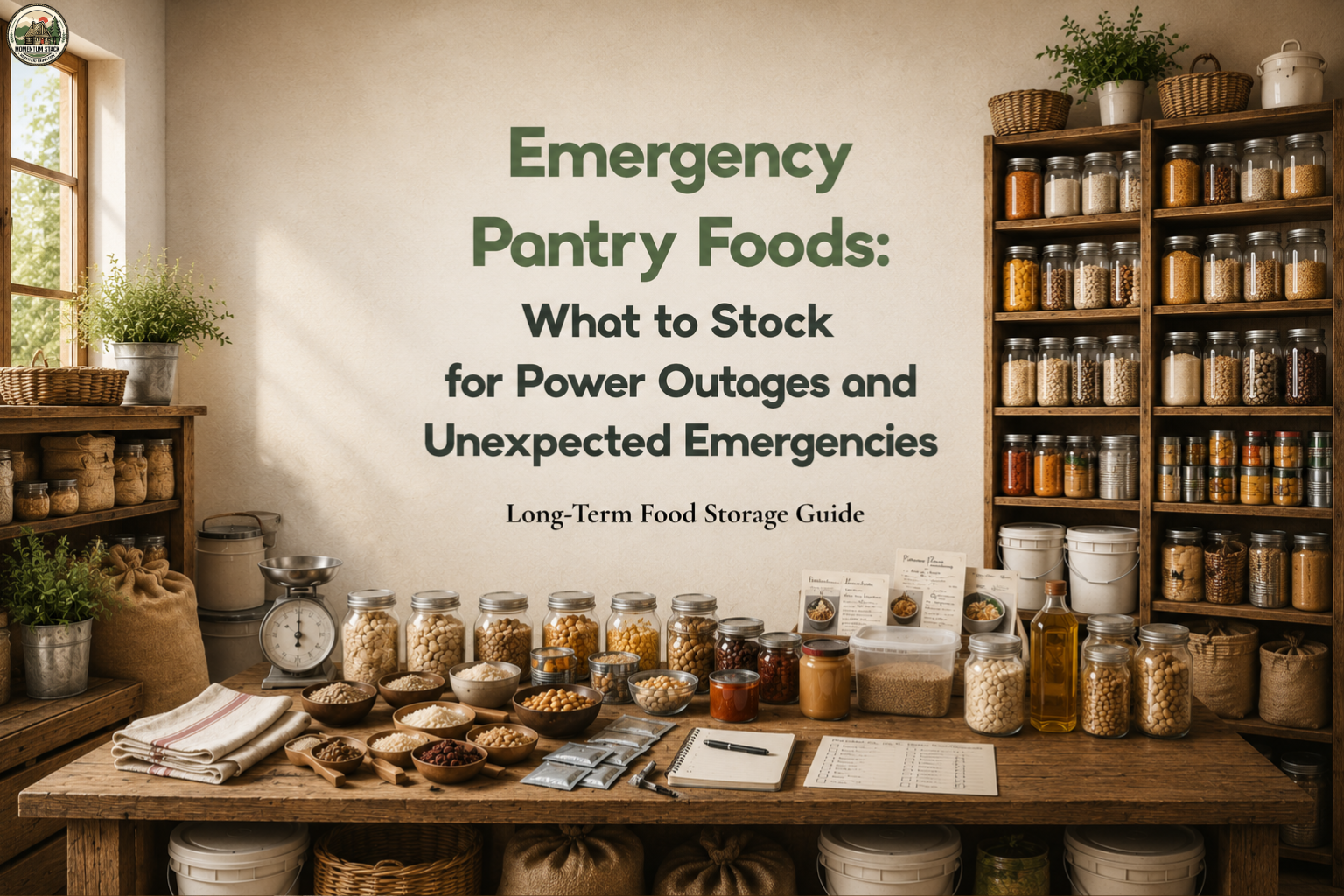
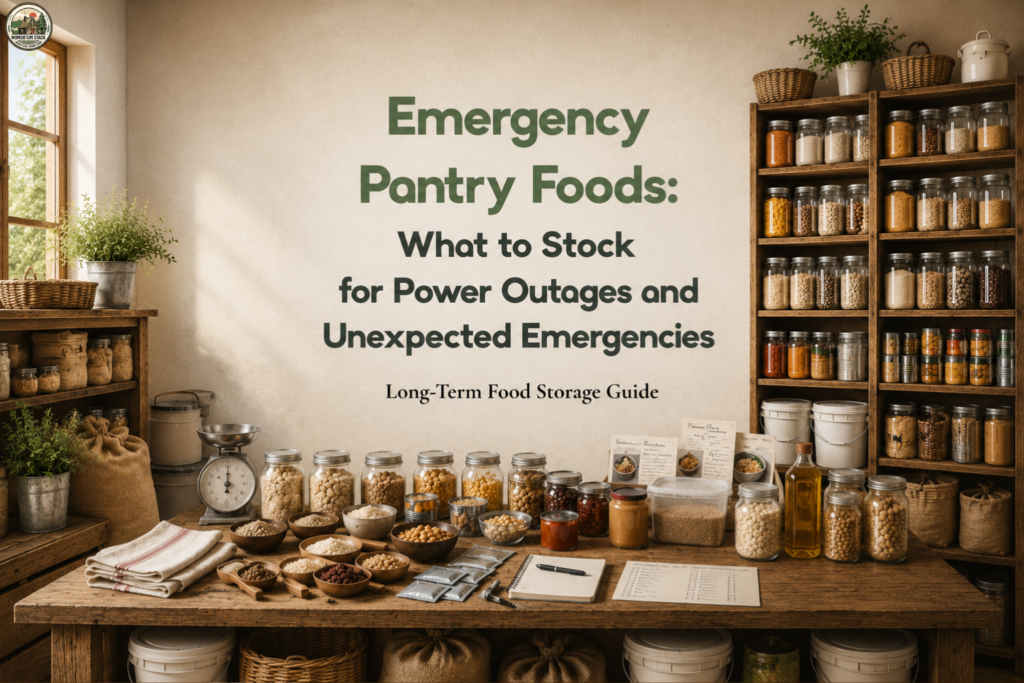
Emergency Pantry Foods: What to Stock for Power Outages and Unexpected Emergencies
What Is an Emergency Pantry?
An emergency pantry is a collection of shelf-stable foods and essential supplies that allow your household to eat safely when grocery shopping or cooking isn’t possible.
Unlike a regular pantry, which supports your day-to-day cooking, an emergency pantry is designed for unexpected situations such as:
- Severe weather
- Power outages
- Floods or hurricanes
- Winter storms
- Illness or quarantine
- Temporary financial hardship
- Supply chain disruptions
The goal isn’t to survive on unfamiliar “survival food.” Instead, it’s to continue eating meals your family already enjoys using foods that store well and require little preparation.
Momentum Tip: Build your emergency pantry around your everyday grocery list. Foods you already enjoy are easier to rotate, reduce waste, and prevent unnecessary spending.
Emergency Pantry vs Regular Pantry
| Regular Pantry | Emergency Pantry |
|---|---|
| Supports daily cooking | Supports unexpected disruptions |
| Frequently restocked | Built to last several weeks |
| Includes fresh ingredients | Focuses on shelf-stable foods |
| Doesn’t require a backup plan | Includes food that needs little or no cooking |
| Organized for convenience | Organized for quick access during emergencies |
For many households, the emergency pantry simply becomes an extension of the regular pantry—just with extra quantities of reliable foods stored separately.
How Much Emergency Food Should You Store?
There’s no single number that works for every family. The right amount depends on your household size, local weather, medical needs, and how quickly you could realistically restock groceries.
A good approach is to build your pantry in stages instead of trying to buy everything at once.
| Storage Goal | Best For |
|---|---|
| 3 Days | Basic emergency recommendations, short power outages, unexpected travel delays |
| 2 Weeks | Most households, winter storms, temporary illness, supply shortages |
| 1 Month | Families wanting extra security and better grocery flexibility |
| 3 Months | Maximum preparedness without moving into long-term food storage |
If you’re just getting started, focus on building a two-week pantry first. It’s affordable, practical, and covers the majority of common emergencies.
Instead of making one large purchase, add a few extra shelf-stable items during each grocery trip. Over time, you’ll build a dependable food reserve without putting pressure on your budget.
Momentum Tip: Buying one or two extra pantry staples every shopping trip is often easier—and more sustainable—than spending hundreds of dollars all at once.
What Makes a Good Emergency Pantry Food?
Not every shelf-stable food belongs in an emergency pantry.
The best choices provide a balance of nutrition, convenience, affordability, and long storage life. They should also be foods your family is willing to eat under normal circumstances.
When deciding what to store, look for foods that meet most of these criteria:
- Long shelf life
- Easy to prepare
- Require little or no refrigeration
- Provide good calories and nutrition
- Use minimal cooking fuel or water
- Affordable enough to replace regularly
- Easy to rotate into everyday meals
A pantry full of foods your family dislikes isn’t an emergency pantry—it’s wasted money waiting to expire.
Prioritize Everyday Foods
Many first-time preparedness guides encourage buying specialized survival meals right away.
For most households, that’s unnecessary.
Instead, stock foods like:
- Rice
- Pasta
- Oats
- Peanut butter
- Canned vegetables
- Canned beans
- Tuna
- Canned chicken
- Shelf-stable milk
- Crackers
- Pasta sauce
- Canned fruit
These foods are inexpensive, widely available, familiar, and simple to rotate into weekly meals.
The Best Emergency Pantry Foods
The strongest emergency pantry combines carbohydrates, protein, healthy fats, fruits, vegetables, and comfort foods to create balanced meals rather than isolated ingredients.
Let’s look at the categories worth stocking.
Grains and Carbohydrates
Grains form the foundation of most emergency meal plans because they’re inexpensive, calorie-dense, and versatile.
Good options include:
- White rice
- Pasta
- Rolled oats
- Instant oatmeal
- Flour
- Cornmeal
- Instant mashed potatoes
- Crackers
- Tortillas with extended shelf life
Among these, white rice remains one of the best emergency foods because it stores exceptionally well when protected from moisture, oxygen, and pests.
Beans and Legumes
Beans provide affordable protein, fiber, and long-lasting energy.
Keep a mix of both dried and canned varieties.
Good choices include:
- Dry pinto beans
- Black beans
- Kidney beans
- Lentils
- Chickpeas
- Canned baked beans
- Refried beans
Dry beans last much longer but require water and cooking fuel.
Canned beans are heavier and take up more space but can be eaten straight from the can if necessary.
Many households benefit from storing both.
Shelf-Stable Protein
Protein is often the hardest nutrient to store for long periods, making this category especially important.
Excellent emergency protein sources include:
- Canned tuna
- Canned salmon
- Canned chicken
- Spam
- Peanut butter
- Mixed nuts
- Beef jerky
- Protein bars
- Shelf-stable tofu
Aim for variety so your meals remain enjoyable even during extended disruptions.
Vegetables
Vegetables add fiber, vitamins, minerals, and variety to emergency meals. While fresh produce may spoil quickly during a prolonged power outage, shelf-stable alternatives can keep your meals balanced.
Good emergency pantry vegetables include:
- Canned green beans
- Canned corn
- Canned peas
- Canned carrots
- Mixed vegetables
- Tomatoes
- Tomato paste
- Dried mushrooms
- Freeze-dried vegetables
Choose low-sodium options when possible and rotate canned vegetables into your regular meal planning to avoid waste.
Momentum Tip: Canned tomatoes are one of the most versatile emergency pantry items. They can become soup, pasta sauce, chili, stews, or casseroles with just a few additional ingredients.
Fruits
Fruit provides natural sugars, fiber, and important vitamins that help make emergency meals feel less repetitive.
Excellent choices include:
- Canned peaches
- Canned pears
- Pineapple
- Applesauce
- Raisins
- Dried cranberries
- Dates
- Dried apricots
- Freeze-dried berries
Choose fruit packed in juice rather than heavy syrup if possible.
Dairy
Fresh milk is often one of the first foods people lose during a power outage.
Instead, keep shelf-stable alternatives available.
Recommended options include:
- Powdered milk
- Shelf-stable UHT milk
- Evaporated milk
- Powdered cheese
- Shelf-stable almond milk
- Shelf-stable oat milk
Powdered milk is particularly useful because it works for drinking, baking, oatmeal, pancakes, and cooking.
Cooking Essentials
Even a pantry full of food becomes difficult to use if basic cooking ingredients are missing.
Always keep:
- Salt
- Pepper
- Cooking oil
- Olive oil
- Sugar
- Honey
- Vinegar
- Baking powder
- Baking soda
- Dry herbs
- Spices
- Bouillon cubes
These inexpensive ingredients dramatically increase the number of meals you can prepare.
Comfort Foods
Preparedness isn’t only about calories.
During stressful situations, familiar comfort foods can improve morale and reduce anxiety.
Some worthwhile additions include:
- Coffee
- Tea
- Hot chocolate
- Chocolate
- Granola bars
- Crackers
- Cookies
- Popcorn
- Candy
- Instant pudding
These aren’t essential for survival—but they can make difficult days feel much more normal.
Foods You Shouldn’t Rely On
Some foods simply aren’t practical for emergency storage.
Avoid depending on:
- Fresh leafy vegetables
- Refrigerated dairy
- Fresh meat
- Frozen foods
- Soft bread
- Foods requiring long cooking times
- Ingredients your family never eats
Also avoid buying enormous bulk quantities simply because they’re inexpensive.
Food that expires before it’s eaten isn’t a bargain.
How to Organize Your Emergency Pantry
Building an emergency pantry is only half the job.
Keeping it organized ensures you’ll actually be able to use it when needed.
Follow these simple principles:
Store food in one dedicated location
Avoid scattering emergency food throughout your kitchen.
One organized shelf or cabinet makes inventory much easier.
Rotate food regularly
Practice FIFO (First In, First Out).
Use older products first while replacing them during normal grocery shopping.
Label everything
Write purchase dates on canned foods and containers using a permanent marker.
Protect food properly
Store food somewhere that is:
- Cool
- Dry
- Dark
- Well ventilated
Heat and humidity shorten shelf life dramatically.
Upgrade storage containers
Dry foods last longer when stored in quality airtight containers.
Good options include:
- Food-grade buckets
- Airtight plastic containers
- Glass jars
- Mylar bags with oxygen absorbers
Emergency Pantry vs Long-Term Food Storage
Although people often use these terms interchangeably, they’re designed for different purposes.
| Emergency Pantry | Long-Term Food Storage |
|---|---|
| Short-term disruptions | Extended food security |
| 3 days to 3 months | 6 months to several years |
| Foods your family already eats | Specialized long-storage foods may be included |
| Easy to rotate | Requires more planning |
| Built with grocery store foods | Often includes bulk grains and preservation methods |
If your goal is simply to prepare for storms, temporary job loss, or power outages, an emergency pantry is usually enough.
For greater resilience, many families eventually expand into long-term pantry planning and home food preservation.
Common Emergency Pantry Mistakes
Even experienced shoppers make mistakes when building their first emergency food supply.
Avoid these common problems.
Buying foods nobody likes
If your family won’t eat it today, they probably won’t enjoy it during an emergency either.
Forgetting water
Food is only one part of emergency preparedness.
Water is even more important.
Ignoring cooking requirements
Some foods require large amounts of water or fuel.
Always keep foods that can be eaten with little or no cooking.
Forgetting a manual can opener
A pantry full of canned food won’t help if the power is out and your electric can opener doesn’t work.
Never rotating food
Expired food defeats the purpose of emergency preparedness.
Build rotation into your normal grocery routine.
Storing food in hot garages
Heat dramatically reduces shelf life.
Store food inside your home whenever possible.
Final Thoughts
An emergency pantry isn’t about fear.
It’s about peace of mind.
A few extra grocery items, stored properly and rotated regularly, can help your family stay comfortable through power outages, severe weather, unexpected expenses, or temporary supply shortages.
Start small.
Add a few shelf-stable foods every grocery trip.
Within a few months, you’ll have a pantry that provides security without unnecessary expense or waste.
Remember, the best emergency pantry isn’t the biggest one.
It’s the one your family actually uses.
What foods belong in an emergency pantry?
The best emergency pantry includes shelf-stable foods such as rice, pasta, beans, canned vegetables, canned meat, peanut butter, oats, powdered milk, cooking oil, and canned fruit.
How much emergency food should I keep?
Most preparedness experts recommend keeping at least two weeks of food, although a one-month supply provides greater flexibility during longer disruptions.
Do emergency pantry foods need refrigeration?
No. An emergency pantry should focus on foods that remain safe at room temperature for extended periods.
Is canned food good for emergencies?
Yes. Canned foods are affordable, widely available, and often remain safe well beyond their printed best-by dates when stored correctly.
Should I buy freeze-dried survival meals?
Not necessarily. Most households can build an excellent emergency pantry using ordinary grocery store foods before investing in specialized emergency meals.
How often should I rotate emergency food?
Check your pantry every six months and rotate foods into everyday meals before they expire.
What’s the best emergency protein?
Canned tuna, canned chicken, peanut butter, beans, lentils, nuts, and beef jerky are all excellent choices.
Can I build an emergency pantry on a budget?
Absolutely. Buying one or two extra pantry staples during each grocery trip is one of the most affordable ways to build food security over time.
Do I need a separate emergency pantry?
Not always. Many families simply designate one section of their regular pantry for emergency supplies.
What’s the difference between an emergency pantry and a one-year pantry?
An emergency pantry prepares you for short-term disruptions, while a one-year pantry focuses on long-term food security and larger food reserves.
Quick Checklist
✅ Store at least two weeks of shelf-stable food
✅ Choose foods your family already eats
✅ Include carbohydrates, protein, fruits, vegetables, and fats
✅ Keep enough drinking water
✅ Store food in a cool, dry location
✅ Rotate older foods regularly
✅ Keep a manual can opener
✅ Label containers with purchase dates
✅ Protect dry foods from moisture and pests
✅ Review your pantry every six months