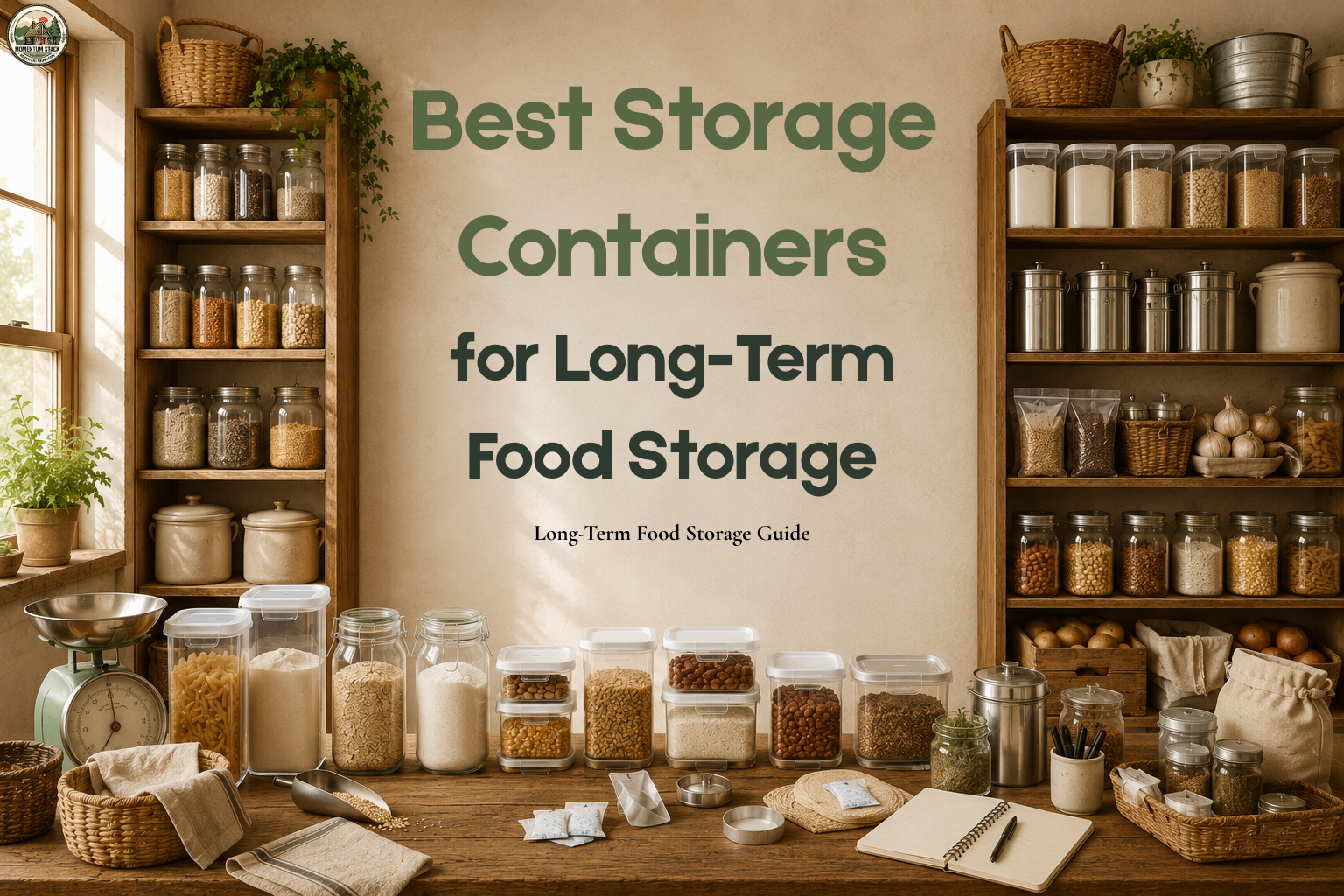

Walk into almost any pantry, and you’ll probably find a mix of original food packaging, half-open bags clipped shut with clothespins, mismatched plastic tubs, and a few glass jars scattered across the shelves. While this approach may seem harmless, the wrong storage container is one of the biggest reasons dry foods lose quality long before they should.
Exposure to moisture, oxygen, light, insects, and temperature changes slowly reduces freshness and shelf life. Even foods that naturally last for years—such as rice, beans, oats, or flour—can spoil much sooner when stored in unsuitable containers.
The good news is that you don’t need expensive equipment to build an organized pantry. The best storage container isn’t always the most expensive one—it’s the one that matches the type of food you’re storing and the length of time you plan to keep it.
In this guide, you’ll learn:
- Which storage containers work best for different pantry foods
- The advantages and disadvantages of glass, plastic, buckets, and Mylar bags
- How to choose food-safe, airtight containers
- Common mistakes that shorten food shelf life
- Practical tips for creating an organized, long-lasting pantry
Whether you’re building a one-year emergency pantry or simply trying to reduce food waste, choosing the right containers is one of the smartest investments you can make.
Related: Before organizing your containers, learn how to build a one-year pantry in our complete guide: How to Stock Your Pantry for a Year.
Best Storage Containers for Long-Term Food Storage
Why Choosing the Right Storage Container Matters
Many people focus on buying long-lasting foods but overlook what happens after bringing them home. In reality, even the highest-quality ingredients can deteriorate quickly if they’re exposed to the wrong storage conditions.
A good storage container acts as the first line of defense against the five biggest enemies of stored food:
- Moisture
- Oxygen
- Light
- Insects
- Rodents
Understanding how each factor affects your pantry will help you choose the right container for every type of food.
Moisture Is the Fastest Way to Ruin Dry Food
Dry foods stay fresh because they contain very little water. When moisture enters the container, that balance changes quickly.
High humidity can cause:
- Mold growth
- Clumping flour and sugar
- Sticky pasta
- Faster spoilage
- Increased insect activity
This is why airtight containers are especially valuable in humid climates.
For even better protection, your pantry should maintain the proper humidity level alongside airtight storage.
Learn more: Pantry Humidity Guide
Oxygen Slowly Reduces Freshness
Even when food appears perfectly dry, oxygen continues affecting it every day.
Over time, oxygen can:
- Make grains taste stale
- Reduce nutritional quality
- Cause fats to become rancid
- Shorten overall shelf life
For foods stored over several months—or even years—reducing oxygen exposure becomes increasingly important.
Simple airtight containers work well for everyday pantry use, while Mylar bags with oxygen absorbers provide additional protection for long-term emergency storage.
Light Breaks Down Food Quality
Sunlight doesn’t just warm your pantry—it also speeds up chemical changes inside food.
Continuous exposure to light may:
- Fade spices
- Reduce vitamin content
- Change flavors
- Increase oxidation
Whenever possible, store food in a dark pantry, cabinet, or root cellar. If your containers sit on open shelving, opaque containers or closed cabinets provide better protection than clear containers exposed to direct sunlight.
Pantry Pests Love Open Packaging
Paper bags, thin plastic packaging, and loosely clipped food bags are surprisingly easy for pantry insects to invade.
Common pantry pests include:
- Flour beetles
- Grain weevils
- Pantry moths
Once they enter a bag of flour or rice, they often spread throughout the pantry.
Transferring dry foods into airtight containers immediately after purchase dramatically reduces this risk while keeping shelves cleaner and easier to organize.
Rodents Can Chew Through More Than You Think
If you store food in garages, sheds, barns, or root cellars, rodents become another important concern.
Thin plastic bags and cardboard boxes offer very little protection.
Instead, choose:
- Thick food-grade buckets
- Glass jars
- Heavy-duty airtight containers
- Metal containers for high-risk locations
These options make it much harder for pests to reach stored food.
The 7 Best Types of Food Storage Containers
Not every pantry container serves the same purpose. Some excel at everyday organization, while others are designed for emergency food reserves that may remain untouched for years.
Rather than searching for one “perfect” container, it’s more helpful to understand which container matches each storage situation.
Below are the seven container types that consistently perform best for home food storage.
1. Airtight Plastic Containers
These are the most common containers found in modern kitchens—and for good reason.
They’re lightweight, stack neatly, and make pantry organization simple.
Best for
- Flour
- Sugar
- Rice
- Pasta
- Cereal
- Oats
- Baking ingredients
Advantages
- Lightweight
- Affordable
- Easy to stack
- Transparent for quick identification
- Available in many sizes
Limitations
- Lower-quality plastics may stain or absorb odors.
- Not ideal for food intended to remain untouched for several years.
- Some plastics become brittle over time.
Look for BPA-free, food-safe containers with silicone gasket lids that create a reliable airtight seal.
2. Glass Mason Jars
Glass jars remain one of the most versatile storage solutions ever made.
Because glass is non-porous, it doesn’t absorb smells, stains, or oils, making it perfect for foods with strong aromas.
Best for
- Beans
- Rice
- Herbs
- Spices
- Coffee
- Tea
- Dehydrated vegetables
- Homemade mixes
Advantages
- Completely food-safe
- Easy to sanitize
- Doesn’t retain odors
- Long lifespan
- Excellent visibility
Limitations
- Heavy
- Breakable
- More expensive than basic plastic containers
Mason jars also work exceptionally well for ingredients you use frequently because they’re easy to open, refill, and clean.
3. Borosilicate Glass Food Containers
While similar to Mason jars, borosilicate glass containers are designed for daily kitchen use.
They’re especially useful if pantry foods often move between storage, preparation, and serving.
Best for
- Baking ingredients
- Leftover dry ingredients
- Snacks
- Meal prep items
- Frequently accessed pantry staples
Advantages
- Extremely durable
- Resistant to temperature changes
- Dishwasher safe
- Odor resistant
- Attractive pantry appearance
Limitations
- Higher cost
- Less space-efficient than cylindrical jars
- Heavier than plastic alternatives
Unlike standard storage containers, borosilicate glass is engineered to resist thermal shock, making it an excellent long-term investment for busy kitchens.
4. Food-Grade Buckets
If you’re storing large quantities of dry foods for months or years, few options are as practical as food-grade buckets.
Unlike ordinary hardware-store buckets, food-grade buckets are manufactured using food-safe plastics that won’t contaminate stored food. When paired with airtight gasket lids or gamma seal lids, they provide excellent protection against moisture, insects, and rodents.
Best for
- White rice
- Dry beans
- Wheat berries
- Corn
- Oats
- Flour (when packaged inside Mylar bags)
- Emergency food supplies
Advantages
- Excellent for bulk storage
- Stackable and space-efficient
- Rodent resistant
- Affordable for large quantities
- Long lifespan
Limitations
- Not convenient for foods used every day
- Large and heavy when full
- Often require smaller containers for daily use
Pro Tip: Many homesteaders store bulk food in food-grade buckets and refill smaller pantry containers as needed. This keeps frequently used ingredients accessible while protecting the majority of the food supply.
5. Mylar Bags
For truly long-term food storage, Mylar bags are one of the most effective solutions available.
When sealed with oxygen absorbers and stored inside food-grade buckets, Mylar bags dramatically slow oxidation and help preserve dry foods for years.
Best for
- White rice
- Dry beans
- Wheat berries
- Rolled oats
- Lentils
- Pasta
- Freeze-dried foods
Advantages
- Excellent oxygen barrier
- Blocks light completely
- Moisture resistant
- Ideal for emergency preparedness
- Extremely long shelf life
Limitations
- Single-use
- Requires a heat sealer
- Less convenient for everyday cooking
Important: Mylar bags are generally unnecessary for foods you use every week. Reserve them for long-term emergency storage.
6. Vacuum Storage Containers
Vacuum containers remove much of the air from inside the container, helping foods stay fresh longer.
They’re especially useful for ingredients that lose flavor quickly.
Best for
- Coffee beans
- Nuts
- Dried herbs
- Tea
- Specialty grains
Advantages
- Slows oxidation
- Maintains flavor
- Easy to reuse
- Excellent for premium ingredients
Limitations
- Higher cost
- Smaller capacity
- Not required for most pantry staples
7. Stainless Steel Containers
Although less common, stainless steel containers offer exceptional durability.
They are especially useful for outdoor kitchens, cabins, campers, or locations where breakable glass isn’t practical.
Best for
- Pet food
- Flour
- Rice
- Camping supplies
- Outdoor storage
Advantages
- Nearly indestructible
- Rust resistant
- Long lifespan
- Doesn’t absorb odors
Limitations
- Cannot see contents
- Usually more expensive
- Less common in home pantries
Best Containers by Food Type
| Food | Best Container | Storage Notes |
|---|---|---|
| White Rice | Food-grade bucket + Mylar | Best for multi-year storage |
| Dry Beans | Mylar + Bucket | Excellent long-term choice |
| Flour | Airtight plastic container | Refill from bulk storage |
| Sugar | Airtight plastic or glass | Avoid moisture completely |
| Pasta | Airtight plastic container | Keep dry and dark |
| Rolled Oats | Mylar or airtight plastic | Depends on storage length |
| Coffee Beans | Vacuum container | Preserves aroma |
| Herbs | Glass Mason jars | Protect from light |
| Spices | Glass jars | Keep away from heat |
| Pet Food | Airtight plastic or metal | Prevent insects and moisture |
Glass vs Plastic Containers
Choosing between glass and plastic isn’t about finding a winner—it’s about choosing the right tool for the job.
| Feature | Glass | Plastic |
|---|---|---|
| Airtight | Excellent | Excellent |
| Durability | Can break | Impact resistant |
| Weight | Heavy | Lightweight |
| Odor Resistance | Excellent | Varies by quality |
| Cost | Higher | Lower |
| Everyday Use | Excellent | Excellent |
| Bulk Storage | Less practical | Better |
Choose Glass If You:
- Store herbs or spices
- Want long-lasting containers
- Prefer chemical-free materials
- Frequently wash containers
Choose Plastic If You:
- Organize large pantries
- Need lightweight storage
- Store large quantities
- Want affordable options
For many households, a combination of both works best.
What Makes a Good Food Storage Container?
Before buying a new set of containers, check for these features:
✅ Airtight silicone seal
✅ Food-safe material
✅ BPA-free plastic (if applicable)
✅ Easy to clean
✅ Stackable design
✅ Transparent or easy to label
✅ Durable lid
✅ Wide opening
Remember, an expensive container isn’t automatically better if it doesn’t suit the food you’re storing.
Storage Container Mistakes
Even quality containers can’t compensate for poor storage habits.
Avoid these common mistakes:
Leaving Food in Original Packaging
Thin paper and plastic bags provide little protection from moisture and insects.
Buying Cheap Containers That Don’t Seal Properly
An airtight seal is more important than appearance.
Mixing Old Food With New Food
Always use the First In, First Out (FIFO) method.
Forgetting Labels
Every container should include:
- Food name
- Purchase date
- Packaging date (if applicable)
Storing Containers Near Heat
Avoid placing pantry containers beside:
- Ovens
- Dishwashers
- Sunny windows
- Water heaters
Heat dramatically reduces shelf life.
Ignoring Pantry Humidity
Even the best containers can’t overcome a damp pantry.
How to Organize Your Pantry Using Containers
Organization isn’t just about appearance—it also helps reduce waste and makes meal preparation easier.
A simple system works best:
Zone 1 – Everyday Foods
Store frequently used ingredients like flour, sugar, pasta, oats, and cereal in airtight containers on easily accessible shelves.
Zone 2 – Bulk Storage
Keep food-grade buckets, Mylar bags, or large backup supplies on lower shelves or in a cool storage area.
Zone 3 – Baking Station
Group baking ingredients together:
- Flour
- Sugar
- Baking powder
- Cocoa
- Chocolate chips
Zone 4 – Herbs & Spices
Store herbs and spices in glass jars away from direct light.
Label Everything
Clear labels reduce confusion and encourage proper stock rotation.
Final Thoughts
The best storage container isn’t necessarily the most expensive—it’s the one that protects your food from moisture, oxygen, light, and pests while fitting your daily routine.
For most households, a combination of airtight plastic containers, Mason jars, food-grade buckets, and Mylar bags provides the flexibility needed for both everyday cooking and long-term food storage.
Start by protecting the foods you use most often, then gradually build a pantry system that matches your family’s needs.
Over time, the right containers will save money, reduce food waste, and make your pantry easier to maintain.
What is the best container for storing dry food?
Airtight food-safe containers with reliable seals are ideal for most dry foods. Bulk staples benefit from food-grade buckets and Mylar bags.
Are glass containers better than plastic?
Glass is excellent for durability, odor resistance, and cleanliness, while plastic is lighter, more affordable, and easier to organize in large pantries.
Should I transfer food out of its original packaging?
Yes. Original paper and thin plastic packaging provide limited protection against moisture and insects.
Are Mylar bags necessary?
Only if you’re storing food for several years. For everyday pantry use, airtight containers are usually sufficient.
Do airtight containers prevent pantry bugs?
They greatly reduce infestations by blocking insects from reaching stored food.
Are food-grade buckets safe?
Yes. Food-grade buckets are designed specifically for storing food and are widely used for long-term pantry storage.
Can I store flour in plastic containers?
Absolutely. Airtight BPA-free plastic containers are one of the most practical choices for flour.
Should I refrigerate dry pantry foods?
Most dry foods last longer in a cool, dry pantry. Refrigeration is unnecessary unless humidity or pests are a concern.
How often should I replace storage containers?
Replace containers if they crack, lose their airtight seal, or become difficult to clean.
What’s the best way to organize pantry containers?
Group similar foods together, label everything clearly, and rotate supplies using the FIFO method.
Pantry Storage Container Checklist
Use this checklist when organizing your pantry:
- □ Choose food-safe containers
- □ Ensure every lid seals tightly
- □ Transfer foods from original packaging
- □ Label each container with the purchase or packaging date
- □ Store containers away from sunlight
- □ Keep pantry humidity under control
- □ Rotate foods using FIFO
- □ Separate everyday supplies from bulk storage
- □ Inspect containers regularly for cracks or damaged seals
- □ Clean containers before refilling