
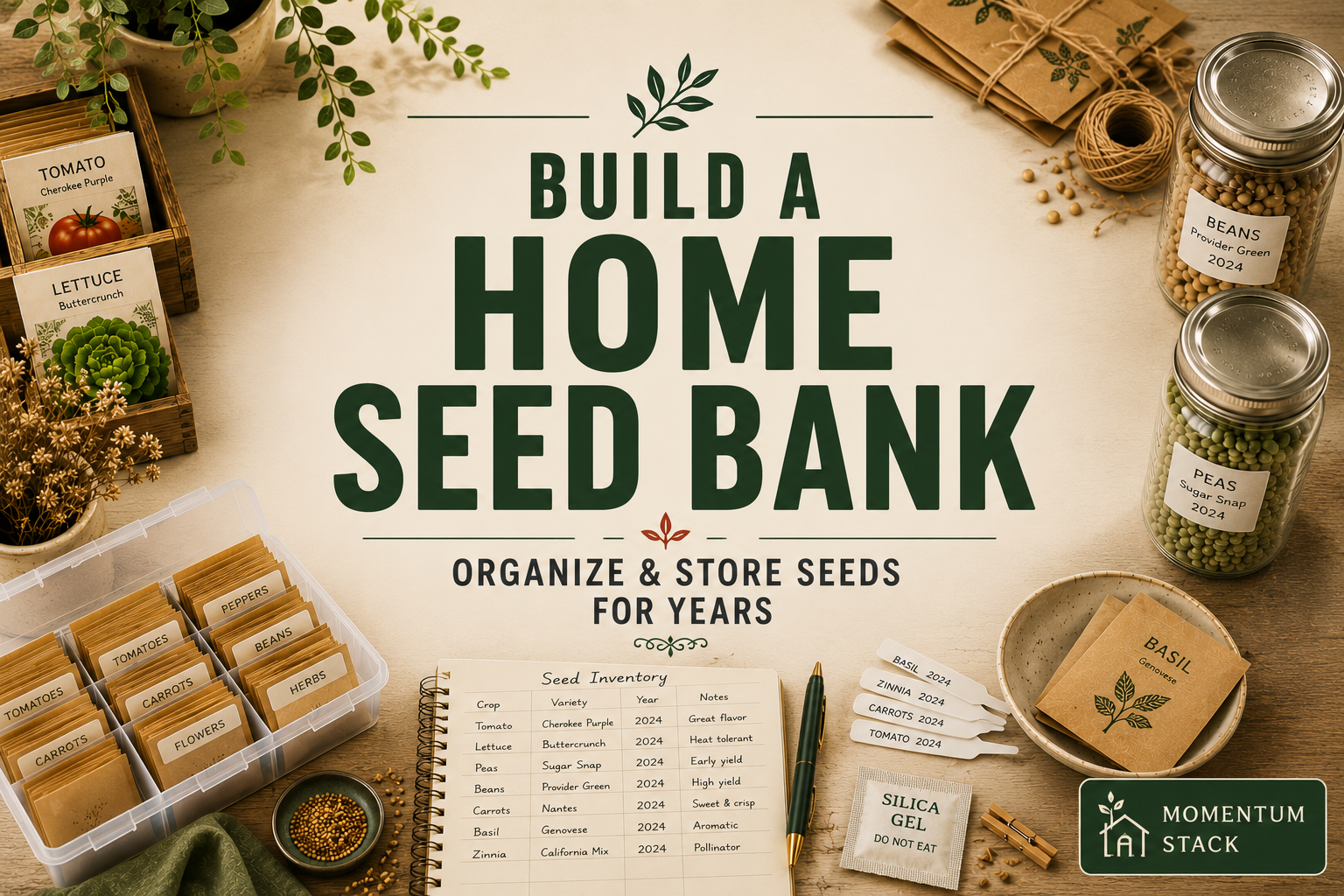

Build a Home Seed Bank: A Practical Guide to Storing Seeds for Years
A well-stocked pantry helps you prepare for tomorrow’s meals, but a well-organized seed bank helps you prepare for tomorrow’s harvests.
Whether you’re growing a few raised beds or working toward greater self-reliance, saving and storing seeds gives you more control over what you plant, when you plant it, and how much you spend each season. Instead of buying the same seed packets year after year, you can gradually build a collection that fits your climate, your favorite crops, and your gardening goals.
The good news is that building a home seed bank doesn’t require expensive equipment or a large collection. With proper organization and a few simple storage practices, even a small selection of seeds can remain healthy and ready for planting for years.
In this guide, you’ll learn how to choose the right seeds, organize them efficiently, create an easy inventory system, and store everything under the conditions that maximize longevity. Whether you’re starting your very first seed collection or improving an existing one, these practical steps will help you build a seed bank you can rely on season after season.
What Is a Home Seed Bank?
A home seed bank is a carefully organized collection of seeds that are stored for future planting. Unlike a simple box of leftover seed packets, a true seed bank is designed to keep seeds healthy, easy to find, and ready to use when the growing season arrives.
Think of it as the gardening equivalent of a well-organized pantry. Every packet has a purpose, every variety has a place, and everything is stored in conditions that help preserve its viability.
A home seed bank may include:
- Vegetable seeds
- Herb seeds
- Flower seeds
- Pollinator-friendly plants
- Cover crop seeds
- Seeds you’ve saved from previous harvests
- High-quality commercial seed packets
Many gardeners begin with only a handful of seed packets, but over time the collection naturally grows. Without a system, it’s easy to accumulate duplicate varieties, lose track of expiration dates, or forget what you already own. A seed bank solves these problems by keeping everything organized in one place.
It’s also important to understand that a home seed bank is different from simply storing seeds in a drawer.
| Simple Seed Storage | Home Seed Bank |
|---|---|
| Random packets | Organized collection |
| Little or no labeling | Clear labels and dates |
| Difficult to inventory | Easy to track |
| Inconsistent storage | Stable storage conditions |
| Higher risk of seed loss | Better long-term preservation |
The goal isn’t to collect hundreds of seed varieties. Instead, it’s to build a reliable collection of seeds you actually grow and trust.
Why Every Gardener Should Build a Home Seed Bank
A home seed bank offers benefits far beyond saving a few dollars on seed packets. It helps you become more organized, reduces waste, and ensures you’re prepared whenever planting season begins.
Save Money Over Time
Buying fresh seed packets every spring can become surprisingly expensive, especially if you grow a wide variety of vegetables, herbs, and flowers.
A well-managed seed bank allows you to:
- Reuse unopened seed packets
- Save seeds from open-pollinated crops
- Avoid buying duplicates
- Purchase seeds in larger, more economical quantities
Even modest savings each season can add up over several years.
Preserve Favorite Varieties
Every gardener eventually discovers varieties that perform exceptionally well in their local climate.
Perhaps it’s a tomato that consistently produces large harvests or a bean variety that thrives despite hot summers.
Keeping these trusted varieties in your seed bank ensures you won’t have to search for them again if they become temporarily unavailable or sell out during peak planting season.
Improve Garden Planning
Having a complete inventory of your seeds makes planning much easier.
Instead of wondering what you already own, you can quickly check your collection before ordering new seeds or designing next season’s garden layout.
This reduces unnecessary purchases and helps you rotate crops more effectively.
Support Emergency Preparedness
For households interested in food security and self-reliance, a seed bank is another layer of preparedness.
While stored food provides short-term security, stored seeds support future harvests.
A home seed bank won’t replace an emergency pantry, but it complements one by helping you continue growing fresh food year after year.
If you’re building a more resilient household, consider pairing your seed bank with a well-stocked pantry. Our guide on How to Stock Your Pantry for a Year explains how long-term food storage and garden planning work together.
Reduce Waste
Many gardeners accidentally waste seeds because they:
- Forget where packets are stored
- Buy duplicates
- Leave seeds exposed to heat or moisture
- Allow packets to become damaged
An organized seed bank helps prevent these common problems and makes better use of every packet you purchase.
Decide Which Seeds Belong in Your Seed Bank
One of the biggest mistakes beginners make is trying to store every seed they come across.
A practical seed bank is built around seeds you’ll actually plant, not the largest possible collection.
Start with crops you grow regularly, then expand as your garden grows.
Excellent choices include:
Vegetable Seeds
Vegetables are the foundation of most home seed banks.
Good options include:
- Tomatoes
- Beans
- Peas
- Lettuce
- Carrots
- Cucumbers
- Squash
- Radishes
- Spinach
- Kale
Many of these crops are available from both commercial suppliers and home seed-saving efforts.
Herb Seeds
Herbs are inexpensive to grow and often produce large numbers of seeds.
Popular choices include:
- Basil
- Dill
- Cilantro
- Parsley
- Chives
- Oregano
- Thyme
Keeping herb seeds on hand makes it easy to refresh kitchen gardens every year.
Flower Seeds
Flowers aren’t just decorative—they also attract pollinators and beneficial insects.
Consider storing seeds for:
- Marigolds
- Zinnias
- Sunflowers
- Calendula
- Cosmos
- Nasturtiums
These flowers help support healthier vegetable gardens while adding color throughout the growing season.
Cover Crop Seeds
If you improve soil health naturally, keeping cover crop seeds in your seed bank is worthwhile.
Examples include:
- Clover
- Buckwheat
- Winter rye
- Field peas
These crops help reduce erosion, suppress weeds, and build healthier soil between growing seasons.
Focus on Quality, Not Quantity
Resist the temptation to collect every interesting variety you see.
Instead, ask yourself:
- Will I realistically plant this within the next few years?
- Does it perform well in my climate?
- Is it a crop my family actually eats?
- Can I store it properly?
A smaller collection of carefully chosen seeds is far more useful than hundreds of neglected packets scattered throughout the house.
Choose the Right Storage Containers
Once you’ve decided which seeds belong in your collection, the next step is selecting storage containers that protect them from their three biggest enemies: moisture, heat, and light.
The best container isn’t necessarily the most expensive—it’s the one that keeps seeds dry, organized, and easy to access. In the next section, we’ll compare the most popular storage options, from simple paper envelopes to airtight jars and dedicated seed organizers, so you can choose the system that fits your budget and gardening style.
The right storage container protects seeds from their three biggest enemies: moisture, heat, and light. It should also make your collection easy to organize and access throughout the year.
Paper Envelopes
Paper envelopes are inexpensive, breathable, and ideal for freshly dried seeds.
Pros
- Low cost
- Easy to label
- Good airflow
- Great for saved seeds
Cons
- Not waterproof
- Tear easily
- Require a protective outer container
Coin Envelopes
Small coin envelopes are one of the most popular choices among home gardeners because they’re compact and easy to sort.
They’re especially useful for:
- Tomato seeds
- Pepper seeds
- Lettuce
- Herbs
- Flowers
Store them upright inside small boxes or photo cases for quick access.
Glass Mason Jars
Glass jars provide excellent protection against humidity when sealed properly.
Best for:
- Long-term storage
- Large seed collections
- Bulk seed purchases
For extra protection, add a small food-safe silica gel packet to absorb any remaining moisture.
Tip: Only seal seeds in airtight containers after they are completely dry. Trapped moisture can reduce viability or encourage mold.
Plastic Photo Storage Cases
Many gardeners use photo storage organizers because each small box can hold one crop or category.
Benefits include:
- Easy organization
- Portable
- Stackable
- Excellent for inventory systems
Label each compartment clearly to make seasonal planting faster.
Metal Tins
Metal tins protect seed packets from light and physical damage.
While they aren’t always airtight, they’re a good option when stored inside a cool, dry cabinet.
Vacuum-Sealed Bags
Vacuum sealing is useful for long-term backup storage of bulk seed supplies.
However, avoid opening and resealing these bags frequently. Keep a smaller working supply separate from your long-term reserve.
Which Container Is Best?
There isn’t one perfect solution.
Many gardeners combine several methods:
- Paper envelopes for individual varieties
- Mason jars for moisture protection
- Photo cases for organization
- Inventory sheet for tracking everything
The best system is the one you’ll actually maintain year after year.
Label Every Seed Clearly
Good labels save time and prevent confusion years later.
At a minimum, every packet should include:
- Crop name
- Variety name
- Harvest or purchase year
- Seed source
- Estimated planting season
You may also want to include:
- Germination rate
- Notes about performance
- Days to maturity
- Favorite growing conditions
For example:
Tomato – Cherokee Purple
Saved: 2026
Source: Home Garden
Spring Planting
Consistent labels make rotating older seeds much easier.
Organize Your Seed Bank
As your collection grows, organization becomes just as important as storage.
There are several effective ways to categorize seeds.
By Plant Type
- Tomatoes
- Beans
- Peppers
- Herbs
- Flowers
- Root crops
- Greens
By Planting Season
- Early spring
- Late spring
- Summer
- Fall
- Winter cover crops
This system works especially well when planning seasonal planting schedules.
Alphabetically
Ideal for larger collections.
Everything becomes easy to locate without searching through multiple containers.
By Container Number
Some gardeners assign every storage box a number.
Example:
Box A
- Beans
- Peas
Box B
- Tomatoes
- Peppers
Box C
- Flowers
This method works well alongside an inventory spreadsheet.
Create a Seed Inventory
A seed inventory helps answer one simple question:
“What do I already have?”
Without an inventory, it’s easy to buy duplicates or overlook older packets that should be planted first.
Your inventory might include:
| Category | Example |
|---|---|
| Crop | Tomato |
| Variety | Roma |
| Quantity | 3 packets |
| Harvest Year | 2026 |
| Location | Box A |
| Notes | High germination |
Some gardeners prefer notebooks, while others use spreadsheets or gardening apps. Choose whichever system you’ll update consistently.
Review your inventory once or twice a year—typically before ordering new seeds and again after harvest.
Best Storage Conditions
Even high-quality seeds lose viability quickly if stored in poor conditions.
Aim to keep your seed bank:
- Cool
- Dry
- Dark
- Stable year-round
Temperature
Cooler temperatures generally extend seed life.
Avoid storing seeds in places that experience frequent temperature swings, such as garages, sheds, or attics.
Humidity
Moisture is one of the fastest ways to shorten seed longevity.
Protect your collection by:
- Using airtight containers when appropriate
- Adding silica gel packs
- Avoiding damp basements unless humidity is controlled
Light
Direct sunlight can gradually reduce seed quality.
Opaque containers, drawers, or closed cabinets provide better protection than open shelving.
Where Should You Store Your Seed Bank?
Several household locations work well.
Pantry or Closet
A cool interior closet is often the simplest solution.
Pros:
- Stable temperature
- Convenient
- Easy access
Basement
Suitable only if the space remains dry year-round.
Avoid unfinished basements with high humidity.
Refrigerator
Many gardeners successfully store seeds in a refrigerator.
Advantages:
- Cool
- Stable temperature
- Excellent longevity
Potential drawbacks:
- Moisture from condensation if containers aren’t sealed properly
- Frequent opening and closing of the refrigerator
Allow containers to reach room temperature before opening them to prevent condensation from forming on the seeds.
Freezer
Freezing is generally reserved for long-term storage of thoroughly dried seeds.
For most home gardeners, refrigeration or a cool closet is simpler and carries less risk.
Rotate Your Seed Bank Every Year
A seed bank isn’t something you build once and forget.
Instead, treat it like a pantry:
Use older seeds first.
Each year:
- Check expiration dates
- Test older seeds for germination
- Replace poor-performing varieties
- Remove damaged packets
- Update your inventory
Following a simple first in, first out (FIFO) approach keeps your collection fresh and reduces waste.
Common Home Seed Bank Mistakes
Even experienced gardeners occasionally make mistakes that shorten seed life or create unnecessary confusion.
Storing Seeds Before They’re Fully Dry
Residual moisture can lead to mold or poor germination.
Always dry saved seeds thoroughly before sealing them in containers.
Poor Labeling
A packet labeled only “Tomatoes” won’t be very helpful two years from now.
Include enough information to identify the variety and age.
Buying Too Many Seeds
A large collection may look impressive, but unused packets eventually lose viability.
Build your collection gradually.
Ignoring Storage Conditions
Leaving seeds in a hot garage or sunny windowsill can significantly shorten their lifespan.
Choose a location with stable conditions year-round.
Never Testing Older Seeds
Older doesn’t always mean unusable.
Before throwing seeds away, perform a simple germination test to see whether they’re still viable.
A Simple Beginner Seed Bank Setup
You don’t need expensive equipment to get started.
A practical beginner setup might include:
- Small paper envelopes
- Waterproof labels
- Permanent marker
- Plastic photo storage case
- Two Mason jars
- Silica gel packets
- Basic inventory notebook
This affordable system can comfortably organize dozens of seed varieties and grow with your collection over time.
Final Thoughts
A home seed bank is more than just a place to store leftover seed packets—it’s a simple system that helps you stay organized, reduce waste, and become more self-reliant in the garden.
Whether you’re saving seeds from your own harvests or purchasing quality varieties for future seasons, proper storage makes all the difference. By keeping seeds cool, dry, clearly labeled, and well organized, you’ll always know what you have and be ready when planting season arrives.
Start small, build your collection gradually, and update it each year. Over time, your seed bank will become one of the most valuable tools in your gardening routine.
Frequently Asked Questions
How long do vegetable seeds last?
It depends on the crop and storage conditions. Many vegetable seeds remain viable for several years when stored in a cool, dry, and dark location.
Should I refrigerate my seeds?
A refrigerator can be an excellent storage location if seeds are kept in airtight containers and protected from moisture.
Can I freeze seeds?
Some gardeners freeze thoroughly dried seeds for long-term storage, but for most home gardeners, a cool closet or refrigerator is sufficient.
What’s the best container for storing seeds?
There isn’t a single best option. Many gardeners combine paper envelopes with airtight Mason jars or photo storage cases to balance organization and protection.
How often should I organize my seed bank?
Review your collection at least once a year before planting season. Remove damaged packets, test older seeds, and update your inventory.
Can I store store-bought and home-saved seeds together?
Yes. As long as both are dry, clearly labeled, and stored under the same proper conditions, they can be organized in the same seed bank.
Quick Checklist: Build a Home Seed Bank
✅ Choose seeds you actually grow regularly
✅ Dry home-saved seeds completely
✅ Store seeds in labeled envelopes or containers
✅ Protect seeds from moisture, heat, and light
✅ Organize by crop, season, or category
✅ Keep an up-to-date inventory
✅ Store in a cool, dry location
✅ Rotate older seeds first (FIFO)
✅ Test germination on older seeds
✅ Review and update your collection annually
A home seed bank becomes even more valuable when paired with good seed-saving habits. Once your storage system is in place, learn how to collect and preserve seeds from your own garden in our complete How to Save Seeds from Vegetables guide.