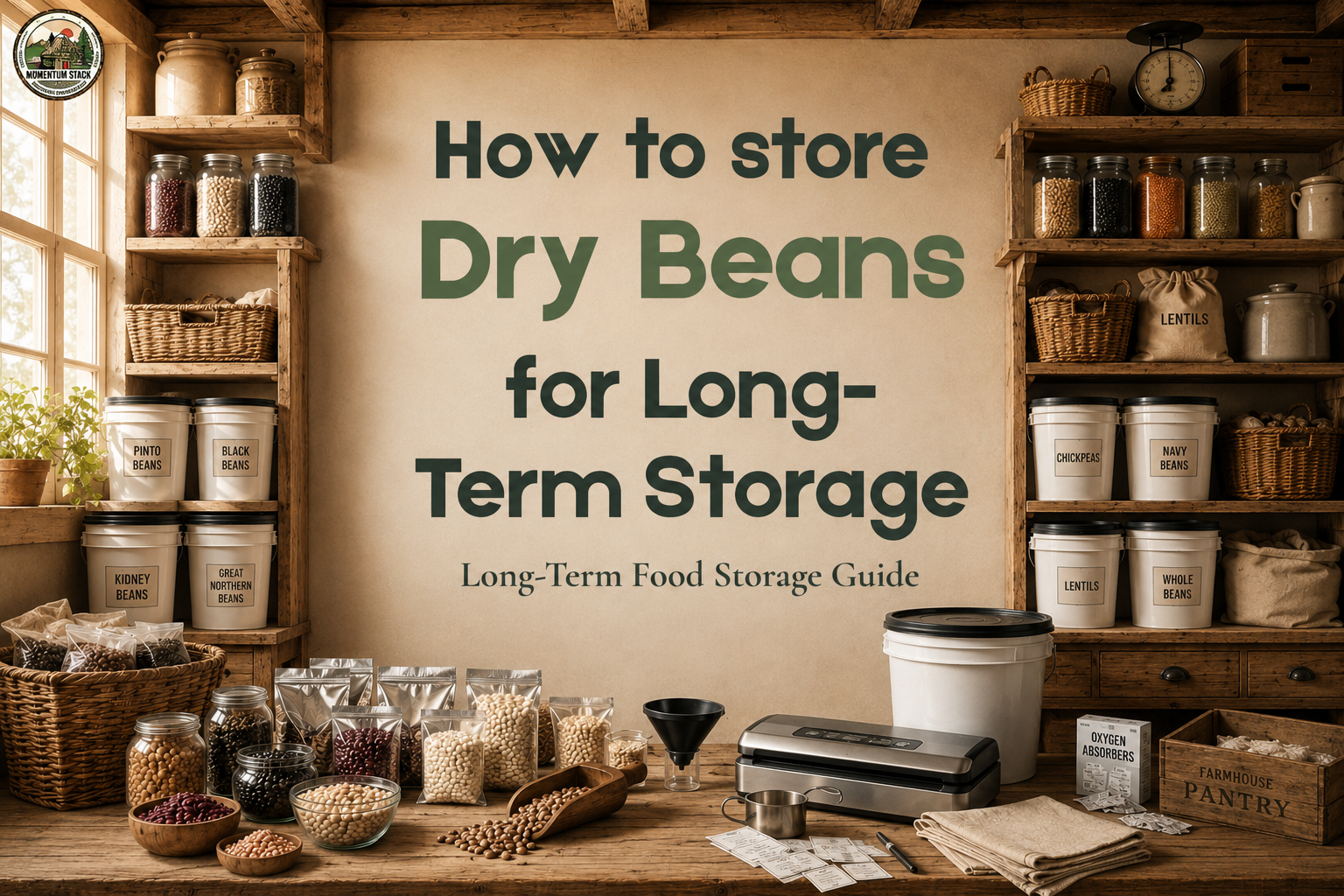

How to Store Dry Beans for Long-Term Storage
Dry beans are one of the most affordable, nutritious, and shelf-stable foods you can keep in your pantry. Whether you’re building an emergency food supply, stocking a homestead pantry, or simply buying groceries in bulk to save money, properly stored dry beans can remain usable for many years.
However, simply leaving bags of beans on a pantry shelf isn’t the best long-term strategy. Heat, moisture, oxygen, and insects can gradually reduce quality, shorten shelf life, or even ruin an entire supply if storage conditions aren’t ideal.
The good news is that storing dry beans correctly doesn’t require expensive equipment. A few simple steps—such as choosing airtight containers, controlling humidity, and labeling your food—can dramatically extend freshness while protecting your investment.
In this guide, you’ll learn:
- The best containers for storing dry beans
- How long dry beans actually last
- Whether Mylar bags and oxygen absorbers are worth using
- Common storage mistakes to avoid
- A simple step-by-step storage method anyone can follow
Whether you’re storing a few pounds for everyday cooking or building a long-term emergency pantry, these practical tips will help keep your beans in excellent condition for years.
Why Dry Beans Are Perfect for Long-Term Food Storage
Few pantry staples offer the same combination of nutrition, affordability, and longevity as dry beans. They’re inexpensive to buy in bulk, naturally shelf stable, and provide an excellent source of plant-based protein, fiber, and essential minerals.
Unlike many processed convenience foods, dry beans require no refrigeration and can be stored successfully using simple household supplies. They’re also incredibly versatile in the kitchen, making them a reliable ingredient for soups, stews, chili, casseroles, salads, and side dishes.
Some of the most popular varieties include:
- Pinto beans
- Black beans
- Kidney beans
- Navy beans
- Great Northern beans
- Chickpeas (garbanzo beans)
- Lentils
- Black-eyed peas
Each variety stores in much the same way, although smaller legumes like lentils typically cook faster after long-term storage than larger beans.
Another advantage is cost. Buying dry beans in bulk often costs significantly less than canned beans while providing more servings per dollar. For families looking to stretch their grocery budget or prepare for unexpected emergencies, beans remain one of the highest-value foods available.
Dry beans also pair naturally with long-term pantry staples such as rice, oats, wheat berries, and pasta, making them a foundational ingredient in many emergency food storage plans.
Related: Pair your bean supply with our guide on How to Store Rice Long Term to build one of the most practical long-term pantry combinations.
What Causes Dry Beans to Go Bad?
Dry beans don’t spoil quickly, but improper storage can significantly reduce their quality and shorten their useful life. Understanding the biggest threats makes it much easier to protect your food supply.
Heat
Warm temperatures accelerate the natural aging process of dry beans. Beans stored in hot garages, attics, or sheds may become extremely difficult to soften during cooking, even after soaking overnight.
For the best results, store beans in a cool location where temperatures remain relatively stable throughout the year.
Moisture
Moisture is one of the fastest ways to ruin dry beans.
Even small amounts of humidity can encourage mold growth, cause beans to swell prematurely, or create conditions where spoilage organisms thrive.
Always choose completely dry containers and avoid storing beans anywhere exposed to condensation or frequent temperature swings.
Air (Oxygen)
Oxygen slowly degrades food quality over time.
Although dry beans don’t contain as much fat as foods like nuts or seeds, reducing oxygen exposure still helps preserve flavor, color, and overall freshness during long-term storage.
That’s why many long-term food storage enthusiasts use airtight Mylar bags with oxygen absorbers for supplies intended to last several years.
Insects
Pantry pests such as bean weevils can occasionally be present inside commercially packaged dry beans as microscopic eggs. While this isn’t common with properly processed beans, infestations may develop months later if conditions are favorable.
Using airtight containers prevents new insects from entering your food supply, while many experienced home food preservers choose to freeze newly purchased beans for several days before packaging them for long-term storage as an extra precaution.
The Four Biggest Enemies of Dry Bean Storage
| Threat | Why It Matters | Prevention |
|---|---|---|
| Heat | Speeds up aging and increases cooking time | Store below 70°F (21°C) whenever possible |
| Moisture | Encourages mold and spoilage | Keep beans completely dry and store in low-humidity areas |
| Oxygen | Gradually reduces freshness | Use airtight containers or Mylar bags with oxygen absorbers |
| Insects | Can contaminate stored beans | Inspect beans, optionally freeze before storage, and seal containers tightly |
How Long Do Dry Beans Last?
One of the biggest reasons dry beans are popular for food storage is their impressive shelf life.
Under normal pantry conditions, unopened bags of dry beans often remain in good cooking condition for several years. When stored properly in airtight containers away from heat and moisture, they can maintain their quality much longer.
It’s important to understand that dry beans rarely become unsafe simply because they’re old. Instead, they gradually lose moisture over time, which can make them take much longer to soften during cooking. Very old beans may require extended soaking, longer simmering times, or even pressure cooking to achieve the desired texture.
Storage method plays a major role in preserving both quality and cooking performance.
| Storage Method | Expected Best Quality* |
|---|---|
| Original store packaging | 1–2 years |
| Airtight glass or plastic container | 2–5 years |
| Vacuum-sealed bags | 5–10 years |
| Mylar bags with oxygen absorbers | 10–25+ years |
| Food-grade buckets with Mylar liners | 20–30 years under ideal conditions |
*Approximate ranges assume cool, dry storage. Beans may remain safe beyond these periods but can require significantly longer cooking times as they age.
Long-term food storage is about preserving quality as much as shelf life. Even when beans are expected to last decades, it’s still a good idea to rotate your oldest stock into everyday meals and replace it with fresh supplies.
Related: Learn how a simple FIFO Food Rotation System helps keep long-term pantry foods fresh without unnecessary waste.
The Best Containers for Storing Dry Beans
Not all storage containers provide the same level of protection. The best choice depends on how long you plan to store your beans, how much space you have, and whether you’re preparing for everyday pantry use or long-term emergencies.
For short-term storage, airtight glass jars or food-grade plastic containers work well and make it easy to see what you have on hand. They’re convenient for everyday cooking and protect beans from humidity and pantry pests.
For medium-term storage, vacuum-sealed bags reduce oxygen exposure and save space, making them a practical option for households that regularly rotate their food supply.
For long-term storage measured in years or even decades, many preparedness experts recommend sealing beans inside Mylar bags with oxygen absorbers before placing them inside food-grade buckets. This combination offers excellent protection against light, oxygen, moisture, and insects while making large quantities easier to organize.
| Container | Best For | Advantages | Considerations |
|---|---|---|---|
| Glass Mason Jars | Everyday pantry | Reusable, airtight, easy to inspect | Heavy and breakable |
| Airtight Food-Grade Plastic Containers | Bulk pantry storage | Lightweight, stackable | Choose BPA-free, food-safe containers |
| Vacuum-Sealed Bags | Medium-term storage | Saves space and reduces oxygen | Less protection from punctures |
| Mylar Bags + Oxygen Absorbers | Long-term storage | Excellent barrier against oxygen, light, and pests | Single-use bags once opened |
| Food-Grade Buckets with Mylar Liners | Large emergency reserves | Durable, protects bulk quantities | Requires more storage space |
Choosing the right container is only part of the equation. Proper sealing, labeling, and storing your beans in a cool, dry location are equally important for maximizing shelf life.
Related: Compare the pros and cons of different storage options in our guide to Best Containers for Long-Term Food Storage.
How to Store Dry Beans Step by Step
Storing dry beans for years doesn’t require complicated equipment. By following a few simple steps, you can protect your food from moisture, insects, and unnecessary quality loss while making future pantry rotation much easier.
Step 1: Buy Fresh, High-Quality Beans
Start with beans from a reputable retailer that have no signs of moisture damage, broken packaging, or insect activity.
Fresh beans generally cook more evenly and retain their quality longer than beans that have already spent years sitting in storage.
If purchasing in bulk, inspect the beans before packaging them.
Look for:
- Cracked or split beans
- Small stones or debris
- Moisture
- Unusual odors
- Signs of insects
Step 2: (Optional) Freeze Beans Before Long-Term Storage
Many experienced home food preservers place newly purchased beans in the freezer for 3–7 days before long-term storage.
This optional step can help eliminate any insect eggs that may already be present inside the packaging.
After freezing:
- Allow beans to return to room temperature.
- Ensure no condensation forms before sealing.
- Package only completely dry beans.
While freezing isn’t required, it’s an inexpensive precaution for large food storage projects.
Step 3: Choose the Right Storage Container
Select a container based on how long you intend to store your beans.
Everyday Pantry
- Glass Mason jars
- Airtight pantry containers
Medium-Term Storage
- Vacuum-sealed bags
Long-Term Emergency Storage
- Mylar bags
- Oxygen absorbers
- Food-grade buckets
For storage measured in decades, the combination of Mylar bags inside food-grade buckets provides excellent protection against oxygen, light, moisture, rodents, and insects.
Step 4: Label Everything
One of the simplest habits is also one of the most important.
Every container should include:
- Bean variety
- Packaging date
- Estimated rotation date
Waterproof labels or permanent markers work well for buckets, jars, and Mylar bags.
Good labeling makes FIFO rotation effortless and prevents forgotten food from sitting untouched for years.
Step 5: Store in the Right Location
The ideal storage location is:
- Cool
- Dry
- Dark
- Stable temperature
- Low humidity
Good locations include:
- Interior pantry
- Basement (if dry)
- Climate-controlled storage room
- Dedicated food storage closet
Avoid storing beans in:
- Garages with extreme heat
- Attics
- Garden sheds
- Damp basements
- Near water heaters or furnaces
Keeping temperatures below 70°F (21°C) whenever possible helps preserve quality for the longest time.
Should You Freeze Dry Beans Before Storage?
For everyday pantry storage, oxygen absorbers are optional.
However, if you’re storing beans for 10 years or longer, oxygen absorbers provide several benefits.
They help:
- Reduce oxygen inside the package
- Slow quality deterioration
- Reduce insect activity
- Preserve color and flavor
When paired with Mylar bags, oxygen absorbers create one of the most reliable long-term food storage systems available for home use.
Keep in mind that oxygen absorbers remove oxygen—not moisture. Beans must already be completely dry before sealing.
Common Dry Bean Storage Mistakes
Even quality beans won’t last if they’re stored incorrectly. Avoid these common mistakes to maximize shelf life and cooking quality.
Leaving Beans in Thin Store Packaging
Retail bags protect beans during shipping but aren’t designed for years of storage.
Transfer beans into airtight containers if you plan to keep them long term.
Storing Beans in Hot Locations
Heat accelerates aging and can make beans much harder to cook.
Choose the coolest practical storage area inside your home.
Forgetting to Label Containers
Without dates, it’s impossible to know which beans should be used first.
A simple label prevents unnecessary waste.
Ignoring Food Rotation
Long shelf life doesn’t mean you should forget about your stored food.
Practice First In, First Out (FIFO) by regularly cooking older beans and replacing them with fresh purchases.
Related: Read FIFO Food Rotation Explained for a simple system that keeps your pantry organized.
Using Non-Food-Safe Containers
Buckets or containers not designed for food storage may transfer odors or unwanted chemicals over time.
Always choose food-grade storage containers for long-term pantry supplies.
Storing Near Moisture Sources
Humidity is the enemy of dry food.
Avoid storing beans near:
- Washing machines
- Water heaters
- Leaky pipes
- Exterior walls with condensation
Discard beans if you notice:
✓ Mold
✓ Water damage
✓ Strong sour odor
✓ Active insect infestation
✓ Rodent contamination
✓ Container seal failure
Frequently Asked Questions
Do dry beans expire?
Dry beans don’t spoil quickly if kept dry, but they gradually lose quality and may require longer cooking times as they age.
Can you store beans in Mason jars?
Yes.
Glass Mason jars are excellent for pantry storage and medium-term food storage when sealed tightly and kept in a cool, dry place.
Are Mylar bags necessary?
Not for everyday pantry use.
However, they’re one of the best options for storing beans for 10–25 years when used with oxygen absorbers.
Should I refrigerate dry beans?
No.
Dry beans store best in a cool pantry.
Refrigeration isn’t necessary unless humidity inside your home is unusually high.
Can insects appear in stored beans?
Occasionally.
Some insect eggs may already be present inside commercially packaged beans.
Freezing beans before storage and using airtight containers greatly reduces this risk.
Which beans last the longest?
Most varieties—including pinto, black, kidney, navy, and chickpeas—have similar storage potential when stored under ideal conditions.
Printable Dry Bean Storage Checklist
✔ Buy fresh, dry beans
✔ Inspect for debris or insects
✔ Freeze for 3–7 days (optional)
✔ Allow beans to return to room temperature
✔ Package only completely dry beans
✔ Use airtight containers
✔ Add oxygen absorbers for long-term storage
✔ Label every container
✔ Store in a cool, dry, dark location
✔ Rotate older beans into everyday meals
Conclusion
Dry beans are one of the smartest foods you can add to any pantry. They’re affordable, nutritious, easy to cook, and capable of lasting for many years when stored correctly.
By protecting beans from heat, moisture, oxygen, and insects—and by using airtight containers with a simple rotation system—you can build a pantry that’s both practical for everyday cooking and dependable during unexpected emergencies.
Whether you’re storing a few jars in your kitchen or organizing a year’s worth of emergency food, a little preparation today can help your beans stay fresh and ready to use for years to come.
If you’re building a complete long-term pantry, continue with our guides on How to Store Rice Long Term, Best Containers for Long-Term Food Storage, and Emergency Pantry Foods to create a well-rounded food storage system.
Quick Storage Tips
Best temperature: Below 70°F (21°C)
Best humidity: Below 60% RH
Best long-term method: Mylar bag + oxygen absorber + food-grade bucket
Avoid: Heat • Moisture • Air • Insects