
What to Do During a Boil Water Advisory
A boil water advisory can happen with little warning. One moment your tap water appears perfectly normal, and the next your local water utility or public health department advises everyone to boil it before use.
Seeing this type of notice often raises immediate questions:
- Is it still safe to drink?
- Can I brush my teeth?
- What about cooking dinner?
- Is it safe to shower?
- Do I need bottled water?
The good news is that a boil water advisory doesn’t necessarily mean your water is visibly contaminated or permanently unsafe. Instead, it’s a precaution issued whenever there’s a possibility that harmful microorganisms could enter the drinking water system.
Knowing what to do—and what not to do—can greatly reduce the risk of illness while the advisory remains in effect.
This guide explains exactly how to respond during a boil water advisory, which household activities require boiled water, which ones are generally safe, and how to prepare your family until normal water service is restored.
What Is a Boil Water Advisory?
A boil water advisory is a public health notice issued by local water authorities when there is concern that drinking water may contain disease-causing microorganisms.
The advisory is usually temporary and serves as a precaution while water quality is being tested or the problem is corrected.
Authorities may issue a boil water advisory after events such as:
- Water main breaks
- Loss of water pressure
- Flooding
- Treatment equipment failures
- Repairs to the municipal water system
- Positive bacterial test results
These situations can allow bacteria, viruses, or parasites to enter the water distribution system before the water reaches your home.
It’s important to understand that water involved in a boil water advisory may still look clear, smell normal, and taste fine. Unfortunately, dangerous microorganisms are invisible, so appearance alone cannot determine whether water is safe to drink.
Until officials officially lift the advisory, you should assume untreated tap water is not safe for consumption.
Why Authorities Issue Boil Water Advisories
Many people assume a boil water advisory means the city’s water supply has become heavily contaminated. In reality, advisories are often issued before contamination is confirmed as a preventive measure.
Public water systems operate under strict safety standards, and even a temporary interruption in normal operations can increase the risk of microbial contamination.
Common reasons include:
Water Main Breaks
When a water main breaks, pressure inside the distribution system can drop suddenly. Low pressure may allow contaminated groundwater or surrounding soil to enter damaged pipes through small cracks.
Power Outages
Water treatment plants rely on pumps, filtration systems, and disinfection equipment. Extended power failures can interrupt normal treatment processes or reduce water pressure.
Flooding
Floodwater can overwhelm infrastructure and introduce bacteria, sewage, or other contaminants into the drinking water system.
Treatment Equipment Problems
Mechanical failures, chemical dosing issues, or filtration problems may temporarily reduce the effectiveness of water treatment.
Routine Testing
Sometimes laboratory testing detects bacteria such as total coliforms. Even before more detailed testing is completed, authorities may issue a precautionary advisory to protect public health.
The important takeaway is that a boil water advisory is a preventive safety measure, not necessarily evidence that your drinking water has already caused illness.
What You Should Do Immediately
The first few minutes after learning about a boil water advisory are the most important. Taking a few simple steps can help protect everyone in your household.
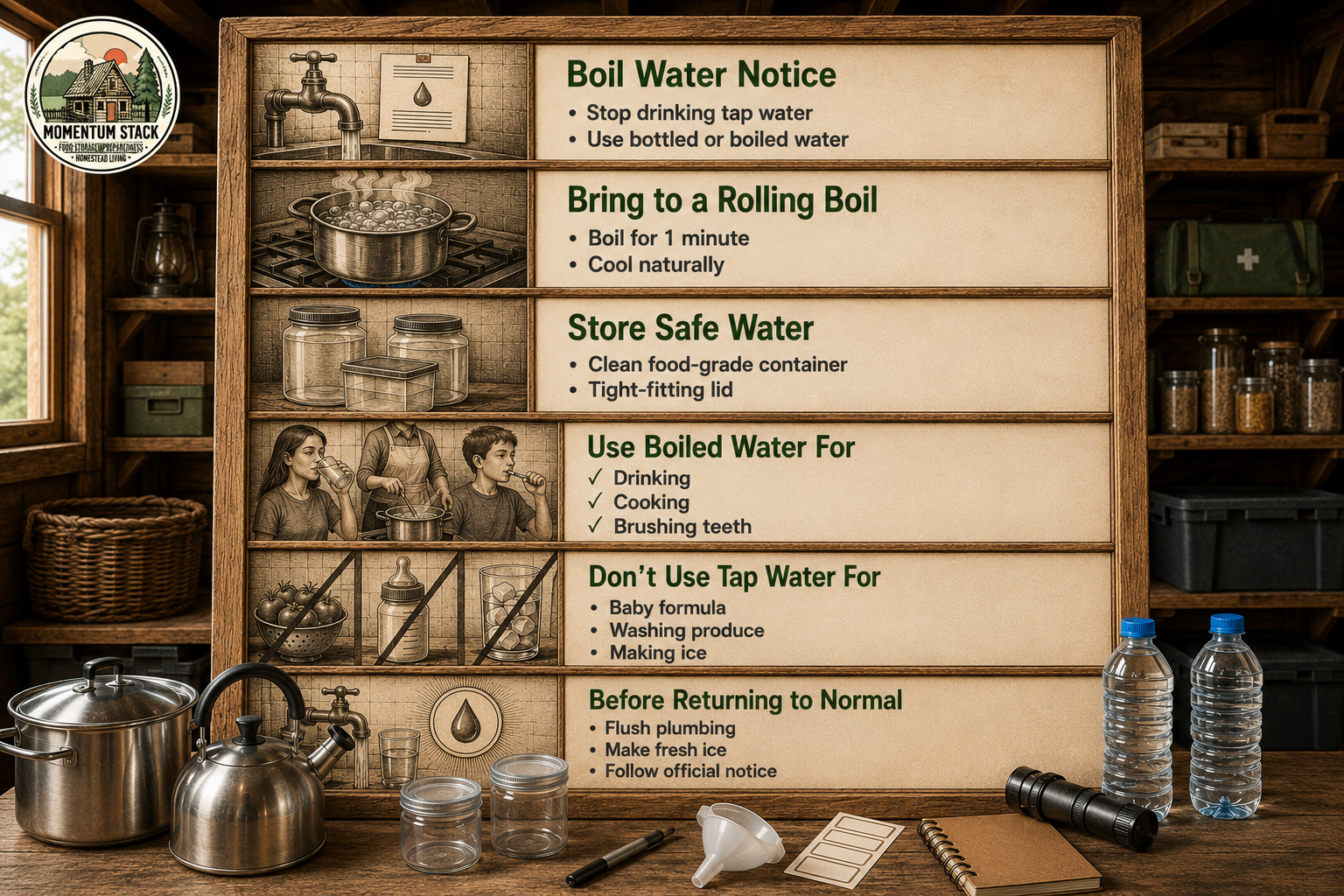
Stop Drinking Tap Water
Do not drink water directly from the tap until it has been properly boiled or the advisory has ended.
If you have bottled water available, use it for drinking until the advisory is lifted.
Start Boiling Water
Bring tap water to a rolling boil and keep it boiling for at least one minute (or longer if recommended by your local health authority).
Allow the water to cool naturally before storing it in clean, food-grade containers.
If you’re unsure about proper boiling techniques, see our guide on How to Purify Water During an Emergency, which compares boiling with other emergency water treatment methods.
Set Aside Safe Water
Boil enough water for:
- Drinking
- Cooking
- Coffee and tea
- Brushing teeth
- Washing fruits and vegetables
- Preparing infant formula
- Giving water to pets
Preparing a larger batch at one time reduces the need to repeatedly boil water throughout the day.
Turn Off Ice Makers
Any automatic refrigerator ice maker connected to your home’s water supply should be turned off during the advisory.
Discard:
- Existing ice cubes
- Ice made after the advisory began
- Drinks containing potentially contaminated ice
Once the advisory ends, clean the ice storage bin and make a fresh batch.
Notify Everyone in the Household
Children, elderly family members, guests, and caregivers may not be aware of the advisory.
Place a simple reminder near kitchen sinks or water dispensers so no one accidentally drinks untreated tap water.
If you care for infants, older adults, or people with weakened immune systems, extra attention is especially important because they face a higher risk of illness from contaminated water.
How to Boil Water Safely
Boiling is one of the simplest and most reliable methods for making water microbiologically safe during a boil water advisory.
When water reaches a rolling boil, the high temperature destroys most harmful bacteria, viruses, and parasites that may be present.
Follow these steps:
- Fill a clean pot with tap water.
- Heat the water until it reaches a vigorous rolling boil.
- Keep the water boiling for at least one full minute.
- Remove the pot from the heat and allow the water to cool naturally.
- Transfer the cooled water into clean, sanitized, food-grade containers with tight-fitting lids.
Avoid adding ice to cool boiled water quickly unless the ice was made from previously boiled or bottled water.
Remember that boiling only addresses microbiological contamination. It does not remove chemicals, heavy metals, or other non-biological pollutants. However, during a typical municipal boil water advisory, the concern is almost always harmful microorganisms rather than chemical contamination.
Tip: Boil a day’s worth of water at once and label the containers with the preparation date. This saves time and ensures your household always has a safe supply ready to use.
Can You Drink Tap Water During a Boil Water Advisory?
No. Unless the tap water has been properly boiled or replaced with bottled water, it should not be consumed.
Use boiled or bottled water for:
- Drinking
- Making coffee or tea
- Mixing powdered drinks
- Taking medications
- Making ice
- Preparing baby formula
- Brushing your teeth
Even if the water looks, smells, and tastes normal, harmful microorganisms cannot be detected without laboratory testing.
If boiling isn’t immediately possible, bottled water is the safest temporary alternative.
Can You Brush Your Teeth?
No.
Brushing your teeth involves a high chance of accidentally swallowing small amounts of water. For that reason, always use:
- Boiled water
- Bottled water
This recommendation applies to adults, children, and anyone wearing dentures or retainers.
Even rinsing your toothbrush under untreated tap water should be avoided until the advisory has ended.
Can You Cook with Tap Water?
It depends on how the water will be used.
Safe if the water is boiled first
Use boiled water for:
- Soups
- Pasta
- Rice
- Vegetables
- Oatmeal
- Coffee
- Tea
If tap water is an ingredient in the recipe, it should first be brought to a rolling boil for at least one minute.
Foods that don’t require additional cooking
Avoid using untreated tap water for:
- Smoothies
- Salad dressings
- Protein shakes
- Cold beverages
- Gelatin
- Instant drinks
For these foods, use bottled or previously boiled water instead.
Can You Wash Fruits and Vegetables?
Fresh produce should not be rinsed with untreated tap water during a boil water advisory.
Instead:
- Wash produce with boiled and cooled water.
- Use bottled water if available.
- Peel fruits whenever practical.
- Thoroughly cook vegetables when possible.
These simple precautions reduce the chance of transferring microorganisms onto foods that may be eaten raw.
Can You Make Baby Formula?
Infants are among the most vulnerable during a boil water advisory.
Whenever possible:
- Use commercially bottled water that is safe for infant feeding.
- Or prepare formula using properly boiled water that has cooled to a safe temperature.
Do not prepare infant formula using untreated tap water.
If your infant has special medical needs, follow guidance from your pediatrician or local health department.
Can Pets Drink Tap Water?
No.
Dogs, cats, birds, and other household pets can also become ill from contaminated drinking water.
Provide pets with:
- Boiled water
- Bottled water
Remember to replace water in:
- Pet bowls
- Aquariums (only if recommended for the species)
- Automatic pet fountains
If you own fish or aquatic animals, consult species-specific guidance before changing aquarium water.
Can You Shower or Bathe?
For most healthy adults, yes.
Showering and bathing are generally considered safe because healthy skin acts as a protective barrier.
However, keep these precautions in mind:
- Avoid swallowing water.
- Keep water away from your eyes, nose, and mouth.
- Supervise young children carefully.
- Give infants sponge baths if they may drink bathwater.
People with open wounds, recent surgery, or severely weakened immune systems should follow advice from their healthcare provider.
Can You Wash Clothes?
Yes.
Laundry can usually continue as normal during a boil water advisory.
Modern washing machines use detergent and multiple rinse cycles, making clothing safe for everyday use.
There is generally no need to boil water for washing:
- Clothes
- Bedding
- Towels
However, always follow any additional recommendations issued by your local water authority.
Can You Wash Dishes?
Dishwashing depends on how your dishes are cleaned.
Dishwasher
A dishwasher is generally safe if it has:
- A sanitizing cycle
- Or a final rinse temperature of at least 150°F (66°C)
Check your manufacturer’s instructions if you’re unsure.
Washing by Hand
If washing dishes manually:
- Wash with hot water and dish soap.
- Rinse using boiled water.
- Allow dishes to air dry completely.
Avoid towel drying, as towels may reintroduce bacteria.
What Should You Do with Ice Makers and Water Filters?
Many people forget that refrigerator appliances continue using tap water throughout the advisory.
Ice Makers
Discard:
- Existing ice
- Ice produced after the advisory began
Once the advisory has ended:
- Empty the ice bin.
- Clean the storage compartment.
- Produce a fresh batch of ice.
Refrigerator Water Dispensers
Do not use water dispensers connected directly to your home’s plumbing unless the water has been declared safe again.
Water Filters
Most household water filters—including pitcher filters and refrigerator filters—are not designed to remove harmful microorganisms that may be present during a boil water advisory.
Continue boiling filtered water unless the filter is specifically certified for microbiological purification.
When Is the Water Safe Again?
Continue following the boil water advisory until your local water utility or public health authority officially announces that it has been lifted.
Once the advisory ends, it’s a good idea to:
- Flush cold-water taps for several minutes.
- Empty and remake ice.
- Run water through refrigerator dispensers.
- Replace or clean water filters if recommended by the manufacturer.
- Wash reusable water storage containers before refilling.
Following these simple steps helps ensure your household water system returns to normal safely.
How to Prepare for Future Advisories
While most boil water advisories are short-lived, being prepared can make the situation far less stressful.
Consider keeping:
- Bottled drinking water
- Food-grade water storage containers
- Portable water filter
- Camping stove or backup heat source
- Permanent marker for labeling stored water
- Water storage rotation schedule
- Emergency preparedness checklist
Having these supplies on hand allows your household to respond immediately instead of rushing to stores during an emergency.
For long-term readiness, you may also find these guides helpful:
- How Much Water Should You Store for Emergencies?
- Best Water Storage Containers for Emergency Preparedness
- How Long Does Stored Water Last?
- How to Purify Water During an Emergency (Safe Methods That Actually Work)
- How to Sanitize Water Storage Containers Before Filling Them
Final Thoughts
A boil water advisory is a precaution designed to protect public health—not a reason to panic.
The most important steps are straightforward:
- Boil water before drinking or cooking.
- Use boiled or bottled water for brushing teeth and preparing infant formula.
- Avoid untreated tap water for food preparation.
- Continue following official guidance until the advisory is lifted.
With a small amount of preparation and a clear understanding of safe household practices, most families can navigate a boil water advisory with confidence while reducing the risk of waterborne illness.
Frequently Asked Questions
How long should I boil water during a boil water advisory?
Bring water to a rolling boil for at least one full minute, unless your local health authority recommends otherwise.
Can I shower during a boil water advisory?
Yes. Most healthy adults can shower safely, provided they avoid swallowing the water. Young children should be supervised closely.
Can I brush my teeth with tap water?
No. Use boiled or bottled water for brushing your teeth until the advisory has ended.
Can I wash dishes by hand?
Yes. Wash with hot soapy water, rinse with boiled water, and allow dishes to air dry.
Can I use my refrigerator’s water dispenser?
No. Avoid using refrigerator water dispensers connected to the household plumbing until officials declare the water safe.
Should I throw away ice?
Yes. Discard all ice made before or during the advisory and make a fresh batch after the advisory has been lifted.
What should you not do during a boil water advisory?
During a boil water advisory, do not drink untreated tap water, brush your teeth with tap water, make ice, prepare infant formula, or wash fresh produce unless the water has been properly boiled or replaced with bottled water.
Does boiling water remove bacteria?
Yes. Bringing water to a rolling boil for at least one minute destroys most disease-causing bacteria, viruses, and parasites commonly associated with boil water advisories.
Quick Household Checklist
✅ Stop drinking untreated tap water
✅ Boil water for at least one minute
✅ Use boiled water for cooking
✅ Brush teeth with boiled or bottled water
✅ Prepare infant formula using safe water
✅ Give pets boiled or bottled water
✅ Throw away existing ice
✅ Turn off automatic ice makers
✅ Wash produce with boiled water
✅ Wait for official notice before using tap water normally again