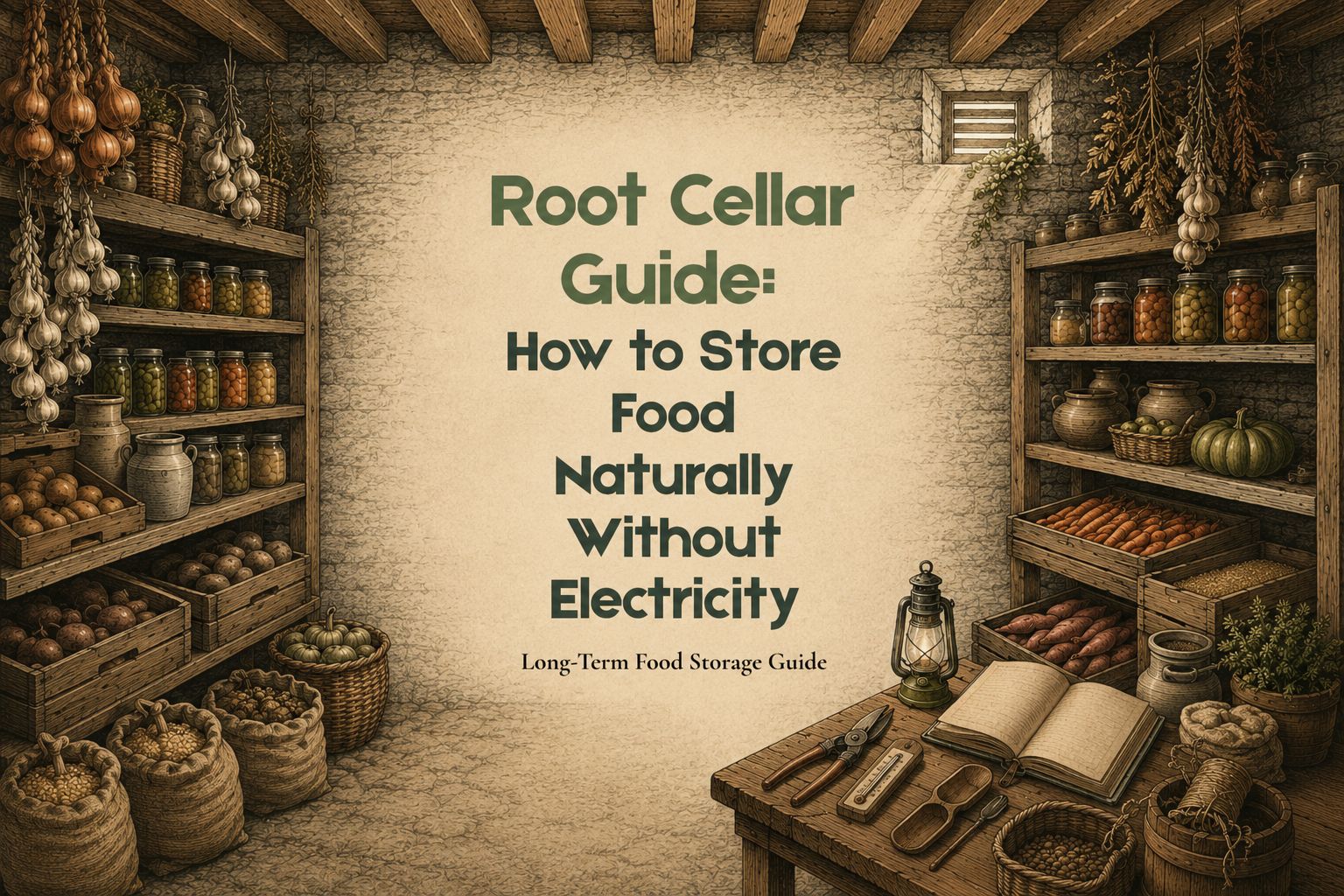

Root Cellar Guide: How to Store Food Naturally Without Electricity
For generations, families stored fresh vegetables for months without refrigerators, freezers, or electricity. They relied on a simple but highly effective solution: the root cellar.
Today, rising food costs, interest in homesteading, and emergency preparedness have brought this traditional storage method back into focus. A properly designed root cellar creates a cool, dark, and humid environment where many fruits and vegetables can stay fresh far longer than they would in a typical kitchen or pantry.
Whether you have a large underground cellar or are simply exploring low-cost alternatives, understanding how a root cellar works can help reduce food waste, extend harvests, and improve long-term food storage.
In this guide, you’ll learn:
- What a root cellar is
- The ideal temperature and humidity
- Different types of root cellars
- Which foods store best
- Common mistakes to avoid
- Practical alternatives if you don’t have one
What Is a Root Cellar?
A root cellar is a naturally cooled storage space that uses the stable temperature of the surrounding earth to keep fruits and vegetables fresh for months without electricity.
Unlike a refrigerator, a root cellar depends on passive cooling rather than mechanical refrigeration. The surrounding soil acts as natural insulation, helping maintain consistent temperatures throughout the year while also preserving the humidity that many root crops need.
Traditional homesteads often built root cellars underground or into hillsides because these locations naturally stay cool even during summer. Modern homeowners may create similar conditions using a basement, crawl space, insulated garage corner, or other naturally cool areas.
The primary goal is simple:
- Slow the aging process of harvested produce
- Reduce moisture loss
- Prevent freezing
- Protect food from sunlight
- Allow gentle air circulation
When these conditions are balanced correctly, many vegetables remain crisp and usable for several months.
Why Use a Root Cellar?
A root cellar is more than just a place to store vegetables—it’s one of the simplest ways to extend the life of homegrown or bulk-purchased produce while using little to no energy.
Some of the biggest benefits include:
Store Food Naturally
Root cellars rely on stable underground temperatures instead of electricity. Once properly set up, they work continuously with minimal maintenance.
Reduce Food Waste
Fresh vegetables often spoil because they are stored in kitchens that are too warm and dry. A root cellar creates conditions that slow spoilage naturally, helping you get more value from every harvest or grocery trip.
Save Money
Buying seasonal produce in bulk is often much cheaper than purchasing small amounts throughout the year. Proper storage allows you to take advantage of those lower prices.
Prepare for Emergencies
Because a root cellar doesn’t depend on electricity, it continues working during power outages. For many homesteaders, it serves as an important part of long-term food security.
Preserve Flavor and Texture
Many root vegetables stay firmer and fresher in cool, humid storage than they do inside a refrigerator, where dry air can cause them to shrivel over time.
Ideal Root Cellar Conditions
A successful root cellar isn’t defined by its size—it’s defined by its environment. Temperature, humidity, airflow, and darkness all work together to keep produce fresh for as long as possible.
| Condition | Ideal Range | Why It Matters |
|---|---|---|
| Temperature | 32–40°F (0–4°C) | Slows spoilage without freezing most crops |
| Humidity | 85–95% | Prevents vegetables from drying out |
| Light | Complete darkness | Reduces sprouting and preserves quality |
| Ventilation | Gentle airflow | Removes excess moisture and gases |
| Air circulation | Consistent | Helps maintain even conditions throughout the space |
Even small changes can significantly affect storage life. Temperatures that are too warm encourage sprouting and decay, while conditions that are too dry cause vegetables to lose moisture and become soft or shriveled.
Proper ventilation is equally important. Fresh air helps remove excess humidity and gases released by ripening produce, creating a healthier storage environment overall.
Types of Root Cellars
Not every root cellar looks the same. The best option depends on your climate, available space, budget, and the amount of food you plan to store.
Underground Root Cellar
An underground cellar offers the most stable storage conditions because it’s surrounded by insulating soil year-round.
Best for:
- Large harvests
- Long-term food storage
- Serious homesteaders
Advantages
- Very stable temperatures
- Excellent humidity
- Large storage capacity
- Minimal energy use
Limitations
- Highest construction cost
- Requires proper drainage and ventilation
- Not practical for every property
Basement Root Cellar
Many homeowners can convert one corner of a cool basement into a functional root cellar with relatively little work.
A basement root cellar typically uses insulated walls, shelving, and adjustable vents to create cooler conditions than the rest of the house.
Best for:
- Existing homes
- Moderate food storage
- Budget-friendly projects
Hillside Root Cellar
Built directly into a slope, hillside root cellars naturally maintain cool temperatures while offering easy access.
These structures have been used for generations because they combine natural insulation with convenient entry.
Garage or Crawl Space Storage
If a traditional root cellar isn’t possible, a cool garage, crawl space, or insulated utility room may provide acceptable conditions for certain vegetables during colder months.
While temperatures tend to fluctuate more, these spaces can still extend storage life when managed carefully.
Buried Container Root Cellar
For beginners or gardeners with limited space, a buried trash can or insulated storage barrel can function as a simple mini root cellar.
Although storage capacity is smaller, this method demonstrates the same principles of cool, dark, humid storage at a fraction of the cost.
Best Foods to Store in a Root Cellar
Not every fruit or vegetable belongs in a root cellar. The crops that perform best are generally those that naturally prefer cool, humid conditions after harvest.
The following foods are among the most reliable choices for long-term storage:
| Food | Typical Storage Life* | Related Guide |
|---|---|---|
| Potatoes | 4–8 months | How to Store Potatoes Long Term |
| Carrots | 4–6 months | Store Carrots in Sand |
| Beets | 3–5 months | — |
| Turnips | 3–5 months | — |
| Parsnips | 4–6 months | — |
| Cabbage | 3–4 months | — |
| Winter squash | 2–6 months | Store Sweet Potatoes (compare curing techniques) |
| Apples | 2–5 months | Store separately from vegetables |
| Pears | 1–3 months | Store separately from vegetables |
| Garlic | 4–7 months | — |
| Onions | 5–8 months | How to Store Onions Long Term |
*Storage life varies depending on the variety, harvest maturity, and storage conditions.
While these crops share similar temperature preferences, some release ethylene gas as they ripen. Apples and pears, for example, should be stored away from potatoes, carrots, onions, and other vegetables whenever possible to avoid shortening their storage life.
Foods You Should Never Store Together
A root cellar works best when you understand that different fruits and vegetables have different storage needs. Some produce releases gases that speed up ripening, while others absorb odors or require different humidity levels.
Separating certain foods can dramatically increase their storage life.
| Avoid Storing Together | Why |
|---|---|
| Apples + Potatoes | Apples release ethylene gas that encourages potatoes to sprout. |
| Apples + Carrots | Carrots may develop a bitter flavor after prolonged exposure to ethylene. |
| Onions + Potatoes | Onions prefer drier conditions, while potatoes need higher humidity. Together, both spoil faster. |
| Garlic + Potatoes | Similar humidity conflict as onions. |
| Strong-smelling vegetables + Apples | Apples can absorb odors during long storage. |
A simple rule is to group foods by their preferred temperature, humidity, and sensitivity to ethylene rather than placing everything in one room.
How to Organize a Root Cellar
A well-organized root cellar is easier to maintain and helps produce last longer.
Use shelves, crates, and bins to separate crops while allowing good airflow around every container.
A practical layout might look like this:
| Area | Best Use |
|---|---|
| Upper shelves | Canned goods, dried herbs, empty jars |
| Middle shelves | Apples, pears, winter squash |
| Wooden crates | Potatoes, onions, garlic (stored separately) |
| Sand boxes | Carrots, beets, parsnips |
| Lowest level | Large storage bins for root vegetables |
| Entrance | Thermometer and hygrometer for quick monitoring |
Avoid stacking produce too deeply. Air circulation between vegetables reduces the risk of mold and allows you to inspect food more easily.
Labeling harvest dates on each crate also helps ensure older produce is used first.
Common Root Cellar Mistakes
Even a well-built root cellar won’t perform well if basic storage practices are overlooked.
Here are some of the most common mistakes.
Storing Damaged Produce
One bruised or rotten vegetable can quickly spread mold to the rest of the crate.
Always inspect produce before storage.
Washing Vegetables Before Storage
Most root vegetables store better with a thin layer of dry soil still attached.
Brush off loose dirt instead of washing unless you’re preparing the vegetables for immediate use.
Ignoring Temperature Changes
A root cellar isn’t completely maintenance-free.
Monitor temperatures during seasonal changes to prevent freezing in winter or excessive warmth during summer.
Poor Airflow
Without ventilation, moisture and gases build up, increasing the risk of mold and spoilage.
Mixing Different Crops
Each crop has different storage requirements.
Separating produce by humidity and ethylene sensitivity extends storage life significantly.
Forgetting Regular Inspections
Check stored food every week or two.
Remove anything beginning to soften, mold, or rot before it affects nearby vegetables.
Can You Build a Root Cellar Yourself?
Yes—many homeowners build simple root cellars without major construction.
The best approach depends on your available space, budget, and climate.
DIY Options
- Basement corner conversion
- Buried storage barrel
- Hillside root cellar
- Concrete block cellar
- Insulated crawl space
- Underground shipping container (advanced)
For many families, converting part of a basement is the easiest and most affordable starting point.
A simple setup often includes:
- Wooden shelving
- Ventilation pipes
- Insulated walls
- Temperature monitor
- Humidity monitor
You don’t need an elaborate underground structure to benefit from natural food storage.
What If You Don’t Have a Root Cellar?
Not everyone has the space to build one.
Fortunately, several alternatives provide similar conditions.
Cool Basement
Often the closest substitute.
Unheated Garage
Works well during cooler months in many climates.
Crawl Space
Can provide stable temperatures if protected from moisture problems.
Buried Trash Can
A popular low-cost option for gardeners storing smaller harvests.
Outdoor Root Clamp
A traditional method that stores vegetables beneath layers of straw and soil during winter.
Cool Pantry
While not suitable for every crop, a consistently cool pantry may extend the life of onions, garlic, squash, and some cured vegetables.
If none of these options are available, consider storing crops using methods designed for each individual vegetable.
For example:
- Learn How to Store Potatoes Long Term using breathable containers.
- Store carrots in damp sand for extended freshness.
- Cure onions properly before placing them into mesh bags.
Seasonal Maintenance Checklist
Keeping a root cellar in good condition requires only a few seasonal tasks.
Spring
- Remove remaining produce
- Clean shelves and bins
- Inspect for mold
- Check drainage
Summer
- Test ventilation
- Repair cracks
- Control pests
- Monitor humidity
Fall
- Harvest mature vegetables
- Cure crops that require curing
- Prepare storage containers
- Organize shelving
- Install thermometer and hygrometer
Winter
- Inspect produce every one to two weeks
- Remove spoiled vegetables immediately
- Monitor freezing temperatures
- Rotate stored food
Final Thoughts
A root cellar isn’t just a storage room—it’s a simple system that uses nature to preserve food.
Whether you build a traditional underground cellar or adapt a cool basement, maintaining the right combination of temperature, humidity, darkness, and ventilation can dramatically reduce food waste and extend the life of your harvest.
Start small if you’re new to root cellaring. Even modest improvements to your storage conditions can make a noticeable difference.
As your experience grows, you’ll better understand which crops perform best and how to organize your space for maximum efficiency throughout the year.
Root cellar performance depends on local climate, the crops you’re storing, and how consistently you maintain temperature and humidity. Small adjustments based on observation often produce better results than following any single storage rule.
What temperature should a root cellar be?
Most root vegetables store best between 32–40°F (0–4°C).
How humid should a root cellar be?
Most crops prefer 85–95% relative humidity, although onions and garlic benefit from slightly drier conditions.
Does a root cellar need electricity?
No.
A properly designed root cellar relies on natural insulation and passive ventilation rather than mechanical cooling.
Can I build a root cellar in a warm climate?
Yes.
Many people use insulated basement rooms, partially underground structures, or other naturally cool spaces to reduce temperature fluctuations.
Can canned food be stored in a root cellar?
Yes.
If temperatures remain above freezing and humidity is well controlled, root cellars can also store many home-preserved foods.
Which vegetables last the longest?
Potatoes, carrots, beets, parsnips, turnips, onions, garlic, and winter squash are among the longest-lasting crops when stored correctly.
Quick Root Cellar Checklist
✅ Temperature between 32–40°F (0–4°C)
✅ Humidity around 85–95%
✅ Complete darkness
✅ Good ventilation
✅ Store only healthy, undamaged produce
✅ Keep apples away from potatoes
✅ Separate onions from potatoes
✅ Inspect produce every 1–2 weeks
✅ Label harvest dates
✅ Rotate older produce first
Link To these articles