
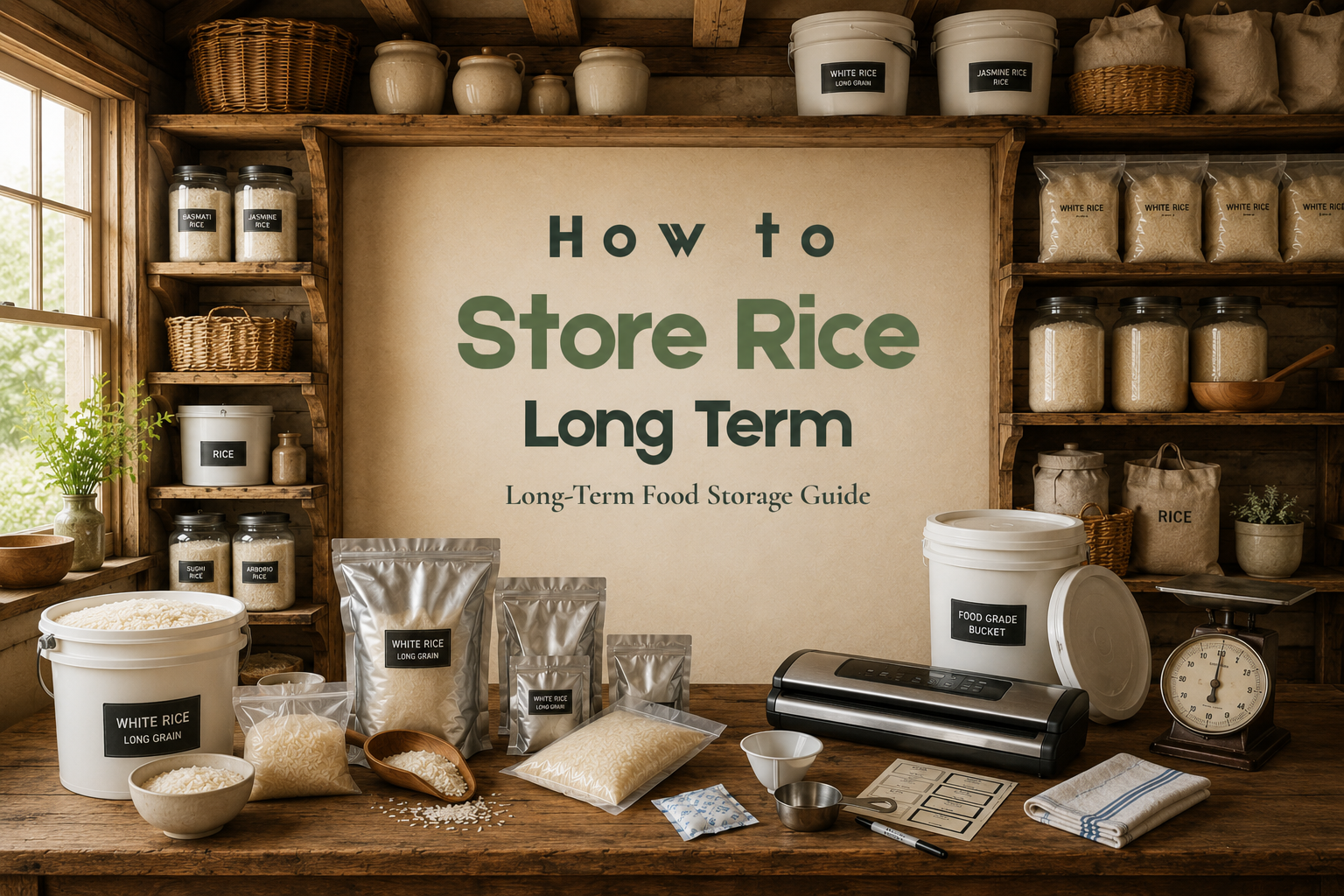

How to Store Rice Long Term
Keep White Rice Fresh for Years With the Right Storage Methods
Rice is one of the most affordable, versatile, and dependable foods you can keep in your pantry. Whether you’re building a long-term emergency food supply, stocking up during sales, or simply reducing grocery trips, properly stored rice can provide a reliable source of calories for years.
However, simply leaving bags of rice on a pantry shelf isn’t enough if your goal is long-term storage. Heat, moisture, oxygen, insects, and poor packaging can significantly shorten its shelf life and lead to spoilage or pest infestations.
The good news is that storing rice for the long term is straightforward once you understand a few basic principles. Choosing the right type of rice, using proper storage containers, and controlling environmental conditions can dramatically extend how long it stays fresh and safe to eat.
In this guide, you’ll learn:
- Which types of rice store the longest
- The best containers for long-term storage
- How to package rice step by step
- Ideal storage conditions
- Common mistakes to avoid
- How to tell when stored rice is no longer good
Whether you’re storing enough rice for a few months or building a multi-year emergency pantry, these methods can help protect your investment and reduce food waste.
Quick Answer: White rice stores the longest when sealed in Mylar bags with oxygen absorbers and placed inside food-grade buckets. Stored in a cool, dry location below 70°F (21°C), it can remain fresh for 20–30 years or more.
Why Rice Is One of the Best Foods for Long-Term Storage
Few pantry staples offer the same combination of affordability, versatility, and exceptional shelf life as rice. It has been a dietary staple for thousands of years and remains one of the easiest foods to store in large quantities.
When packaged correctly and kept in cool, dry conditions, white rice can remain fresh for decades, making it one of the most valuable foods for emergency preparedness and long-term food storage.
Here are a few reasons why rice deserves a permanent place in your pantry:
Extremely Long Shelf Life
Properly packaged white rice can remain edible for 20 to 30 years or even longer when stored in airtight containers with oxygen absorbers. Few everyday foods offer this level of longevity.
Affordable and Easy to Buy in Bulk
Rice is widely available and often sold in large bags at warehouse clubs and grocery stores. Buying in bulk typically reduces the cost per pound, making it one of the most economical pantry staples.
High in Calories and Filling
Rice provides a concentrated source of carbohydrates, making it an excellent foundation for emergency meals. Combined with beans, canned meat, vegetables, or freeze-dried foods, it creates balanced and satisfying meals.
Versatile for Everyday Cooking
Unlike some emergency foods that are only used during disasters, rice is part of everyday cooking in many households. Rotating your stored rice becomes much easier because you’re already using it regularly.
Easy to Pair With Other Pantry Staples
Rice complements countless shelf-stable foods, including:
- Dry beans
- Lentils
- Canned vegetables
- Canned chicken or tuna
- Freeze-dried meals
- Dehydrated vegetables
- Powdered seasonings
If you’re building a complete emergency pantry, rice is often one of the first foods experts recommend storing. Pair it with other long-lasting staples from our Beginner’s One-Year Pantry Checklist and Emergency Pantry Foods guides to create a balanced food reserve.
How Much Rice Should You Store?
| Household | Suggested Minimum Rice |
|---|---|
| 1 Adult | 25–50 lbs |
| Couple | 50–100 lbs |
| Family of 4 | 100–200 lbs |
| Long-Term Emergency Supply | Based on your meal plan and storage goals |
The right amount depends on how often your household eats rice, how many calories you plan to store, and whether rice is your primary grain. Start with what your family will realistically use and rotate regularly.
White Rice vs Brown Rice: Which Stores Longer?
Not all rice has the same storage life. While many varieties appear similar on the grocery shelf, their nutritional composition greatly affects how long they remain fresh.
The biggest difference comes down to the presence of natural oils.
Brown rice still contains the bran layer, which is rich in healthy fats. Over time, these oils oxidize and become rancid, significantly shortening its shelf life.
White rice, on the other hand, has had the bran and germ removed during processing. With fewer natural oils, it remains stable for much longer and is the preferred choice for long-term food storage.
| Rice Type | Typical Shelf Life | Best For Long-Term Storage |
|---|---|---|
| White Rice | 20–30+ years (properly packaged) | ⭐⭐⭐⭐⭐ |
| Jasmine Rice | Similar to white rice | ⭐⭐⭐⭐⭐ |
| Basmati Rice | Similar to white rice | ⭐⭐⭐⭐⭐ |
| Sushi Rice | Long shelf life | ⭐⭐⭐⭐ |
| Brown Rice | About 6–12 months | ⭐⭐ |
White Rice
White rice is considered the gold standard for long-term storage. It stores exceptionally well when protected from oxygen, moisture, insects, and excessive heat.
Popular varieties include:
- Long-grain white rice
- Jasmine rice
- Basmati rice
- Medium-grain rice
- Short-grain white rice
All of these can be excellent choices for long-term storage when packaged correctly.
Brown Rice
Brown rice offers additional fiber, vitamins, and minerals, but its higher oil content greatly limits its storage life.
Even under ideal conditions, brown rice generally stays fresh for only about 6 to 12 months. Refrigeration or freezing can extend its life somewhat, but it still isn’t recommended for multi-year storage.
If your goal is building a long-term emergency food supply, white rice is usually the better investment.
Can You Store Instant Rice?
Instant rice can also be stored for extended periods, but it generally doesn’t last as long as uncooked white rice because it has already been partially cooked during processing.
Always check the manufacturer’s packaging and rotate instant rice more frequently than traditional dry rice.
The Best Containers for Long-Term Rice Storage
Choosing the right container is just as important as choosing the right type of rice. Even the highest-quality rice can spoil if it’s exposed to moisture, oxygen, insects, or fluctuating temperatures.
The ideal storage system protects rice from all four of these threats while remaining practical for your household.
Mylar Bags (Best for Maximum Shelf Life)
Mylar bags are widely considered the best option for storing rice for decades.
When paired with oxygen absorbers and properly heat sealed, they create an environment that dramatically slows oxidation while helping prevent insect activity.
Pros
- Excellent oxygen barrier
- Very long shelf life
- Lightweight and inexpensive
- Great for emergency storage
Cons
- Requires heat sealing
- Once opened, bags should be resealed or transferred to another airtight container
Food-Grade Buckets
Food-grade plastic buckets provide an extra layer of protection around sealed Mylar bags.
They help prevent punctures, keep rodents away, and make stacking easier for large food reserves.
Many people use 5-gallon buckets because they hold a substantial amount of rice while remaining manageable to move.
Pros
- Strong physical protection
- Stackable
- Pest resistant
- Excellent for bulk storage
Cons
- Larger and heavier than other options
- Not completely airtight unless paired with sealed bags or gasket lids
Glass Jars
Glass jars work well for smaller quantities that you’ll rotate regularly.
They’re easy to inspect for moisture or insect activity and don’t absorb odors over time.
However, glass is better suited for everyday pantry storage than multi-decade emergency storage.
Pros
- Airtight with quality lids
- Easy to organize
- Reusable
- Ideal for pantry rotation
Cons
- Heavy
- Breakable
- Less practical for storing large quantities
Vacuum-Sealed Bags
Vacuum sealing removes much of the surrounding air and works well for medium-term storage.
While vacuum bags help reduce oxygen exposure, they aren’t as durable as Mylar bags for very long-term storage and can eventually allow some oxygen to pass through.
They’re an excellent option if you plan to rotate your rice within a few years.
Everyday Pantry Containers
Airtight plastic or glass pantry containers are convenient for rice that will be used regularly.
They keep rice organized, reduce clutter, and provide adequate protection for everyday household use.
For rice intended to last decades, however, Mylar bags combined with food-grade buckets remain the preferred solution.
Related: If you’re comparing storage options for other dry staples, see our Best Containers for Long-Term Food Storage guide for a detailed breakdown of the strengths and weaknesses of each container type.
Step-by-Step: How to Store Rice for Years
If you want rice to last for decades instead of months, proper packaging matters far more than simply placing the original bag on a shelf. Follow these steps to maximize shelf life while minimizing the risk of moisture, insects, and spoilage.
Step 1: Choose Dry White Rice
Start with clean, dry white rice from a trusted source. Long-grain white rice, jasmine rice, basmati rice, and other polished white rice varieties are all excellent choices for long-term storage.
Avoid storing rice that:
- Has a damaged package
- Feels damp
- Shows signs of insects
- Has an unusual odor
If your goal is multi-year storage, skip brown rice because its natural oils shorten its shelf life.
Step 2: Fill Mylar Bags
Pour rice into food-grade Mylar bags, leaving a few inches of space at the top for sealing.
Using several smaller bags instead of one large bag can be more convenient because you only expose a portion of your rice each time you open one.
Step 3: Add Oxygen Absorbers
Place the appropriate oxygen absorber inside each Mylar bag immediately before sealing.
Oxygen absorbers help:
- Slow oxidation
- Reduce insect activity
- Extend shelf life
- Preserve food quality
Use the size recommended by the manufacturer for your bag volume.
Note: Oxygen absorbers are not the same as moisture absorbers. Never substitute one for the other.
Step 4: Heat Seal the Bags
Seal the Mylar bags using a household clothes iron, hair straightener, or dedicated heat sealer.
Double-check the seal before storing. Even a small opening can allow oxygen and moisture to enter over time.
Step 5: Place Bags Inside Food-Grade Buckets
Although Mylar bags provide the primary barrier, placing them inside food-grade buckets adds valuable protection against:
- Rodents
- Physical damage
- Light exposure
- Accidental punctures
Many people also use gasket lids or gamma seal lids if buckets will be opened regularly.
Step 6: Store in a Cool, Dry, Dark Place
Choose a storage location that remains relatively stable year-round.
Good locations include:
- Interior closets
- Basement storage rooms (if dry)
- Climate-controlled pantries
- Utility rooms inside the home
Avoid:
- Garages with extreme summer heat
- Damp basements
- Outdoor sheds
- Attics
Ideal Storage Conditions
Even perfectly packaged rice can lose quality if stored in poor environmental conditions.
| Factor | Best Condition |
|---|---|
| Temperature | Below 70°F (21°C) |
| Humidity | Under 60% |
| Light | Dark storage |
| Oxygen | As little as possible |
| Moisture | Keep completely dry |
| Pests | Airtight containers |
Temperature
Cooler temperatures dramatically extend shelf life. Every increase in temperature speeds up food degradation.
Humidity
Moisture is one of the biggest enemies of stored rice. High humidity encourages mold, clumping, and insect activity.
For more information, see our Pantry Humidity Guide.
Light
Direct sunlight gradually warms containers and accelerates deterioration. Store rice away from windows whenever possible.
Oxygen
Oxygen slowly reduces food quality and supports insect survival. Properly sealed Mylar bags with oxygen absorbers greatly reduce this problem.
Pests
Rodents and pantry insects can chew through paper and thin plastic packaging. Using sealed Mylar bags inside sturdy food-grade buckets provides excellent protection.
Should You Freeze Rice Before Storage?
Some people freeze rice for several days before packaging to kill any insect eggs that may already be present.
While opinions differ, freezing can provide additional peace of mind when purchasing bulk rice.
Potential Benefits
- Kills insect eggs
- Helps prevent future infestations
- Useful for bulk purchases
Important Considerations
Allow rice to return completely to room temperature before sealing it in airtight packaging.
Packaging cold rice too quickly may cause condensation, introducing unwanted moisture.
Freezing is optional—not required—when using high-quality rice and proper long-term storage methods.
Common Rice Storage Mistakes
Even experienced home food preservers sometimes make mistakes that shorten rice’s shelf life.
Avoid these common problems.
Leaving Rice in the Original Bag
Paper and thin plastic bags offer little protection against moisture, insects, or rodents.
Using Brown Rice for Multi-Year Storage
Brown rice is nutritious but simply doesn’t last as long due to its natural oils.
Storing Rice in Hot Areas
High temperatures significantly reduce storage life.
Avoid storing rice in:
- Garages
- Attics
- Outdoor sheds
- Vehicles
Forgetting to Label Containers
Always record:
- Rice variety
- Packaging date
- Estimated rotation date
Proper labeling prevents confusion years later.
Ignoring Moisture
Even small amounts of moisture can lead to mold and spoilage.
Never package rice that has become damp.
Skipping Oxygen Absorbers
If you’re aiming for decades of storage, oxygen absorbers make a substantial difference in preserving quality.
Never Rotating Your Pantry
Although white rice stores exceptionally well, rotating pantry foods ensures you’re always using the oldest supplies first.
If you’re organizing a larger pantry, our Common Pantry Storage Mistakes guide explains several easy ways to improve food rotation.
How Long Does Rice Last?
Shelf life depends heavily on packaging and storage conditions.
| Storage Method | Approximate Shelf Life |
|---|---|
| Original package | 1–2 years |
| Airtight pantry container | 2–5 years |
| Vacuum sealed | 5–10 years |
| Mylar bag + oxygen absorbers | 20–30+ years |
| Brown rice | About 6–12 months |
Remember that these are general estimates. Cooler temperatures and proper storage can significantly extend food quality.
How to Tell If Rice Has Gone Bad
Although properly stored white rice rarely spoils quickly, inspect it before cooking if it has been stored for an extended period.
Discard rice if you notice:
- Mold
- Moisture
- Strong sour smell
- Rancid odor
- Insect infestation
- Significant discoloration
When in doubt, it’s safer to replace questionable food than risk foodborne illness.
Frequently Asked Questions
Can rice really last 30 years?
Yes. Properly packaged white rice stored in Mylar bags with oxygen absorbers inside food-grade buckets and kept in cool, dry conditions can remain edible for 20 to 30 years or even longer.
Is brown rice good for emergency food storage?
Brown rice is nutritious but not ideal for long-term storage because its natural oils eventually become rancid.
Do I need oxygen absorbers?
They’re highly recommended for long-term storage because they greatly reduce oxygen, helping preserve food quality and discourage insect activity.
Can I store rice in plastic containers?
Yes, airtight food-grade plastic containers work well for everyday pantry storage. For multi-decade storage, Mylar bags inside food-grade buckets provide better protection.
Should rice be refrigerated?
Not usually. Dry white rice stores very well at room temperature if kept cool, dry, and protected from moisture.
Can insects survive inside stored rice?
Small insect eggs may already be present in dry grains. Proper packaging with oxygen absorbers greatly reduces the chance of future infestations.
What’s the best rice for long-term storage?
Plain white rice—including jasmine, basmati, and long-grain varieties—is generally considered the best choice.
Conclusion
Rice remains one of the smartest foods to include in any long-term pantry. It’s affordable, versatile, easy to cook, and—when packaged correctly—can stay fresh for decades.
The key is protecting it from its biggest enemies: moisture, oxygen, heat, light, and pests. Using Mylar bags, oxygen absorbers, and food-grade buckets provides one of the most reliable storage systems available for home food preservation.
Whether you’re preparing for emergencies or simply building a more resilient pantry, taking the time to store rice properly today can save money, reduce waste, and provide dependable meals for years to come.
If you’re expanding your long-term food storage, continue with our guides on Best Containers for Long-Term Food Storage, Pantry Humidity Guide, Food Preservation Methods, and How to Store Dry Beans to build a pantry that’s organized, practical, and ready for everyday life or unexpected situations.
Quick Rice Storage Checklist
✅ Choose white rice for long-term storage
✅ Inspect rice for damage or moisture
✅ Package in food-grade Mylar bags
✅ Add oxygen absorbers
✅ Heat seal bags securely
✅ Place sealed bags inside food-grade buckets
✅ Label every container
✅ Store below 70°F (21°C)
✅ Keep away from sunlight
✅ Keep storage area dry
✅ Inspect periodically for damage