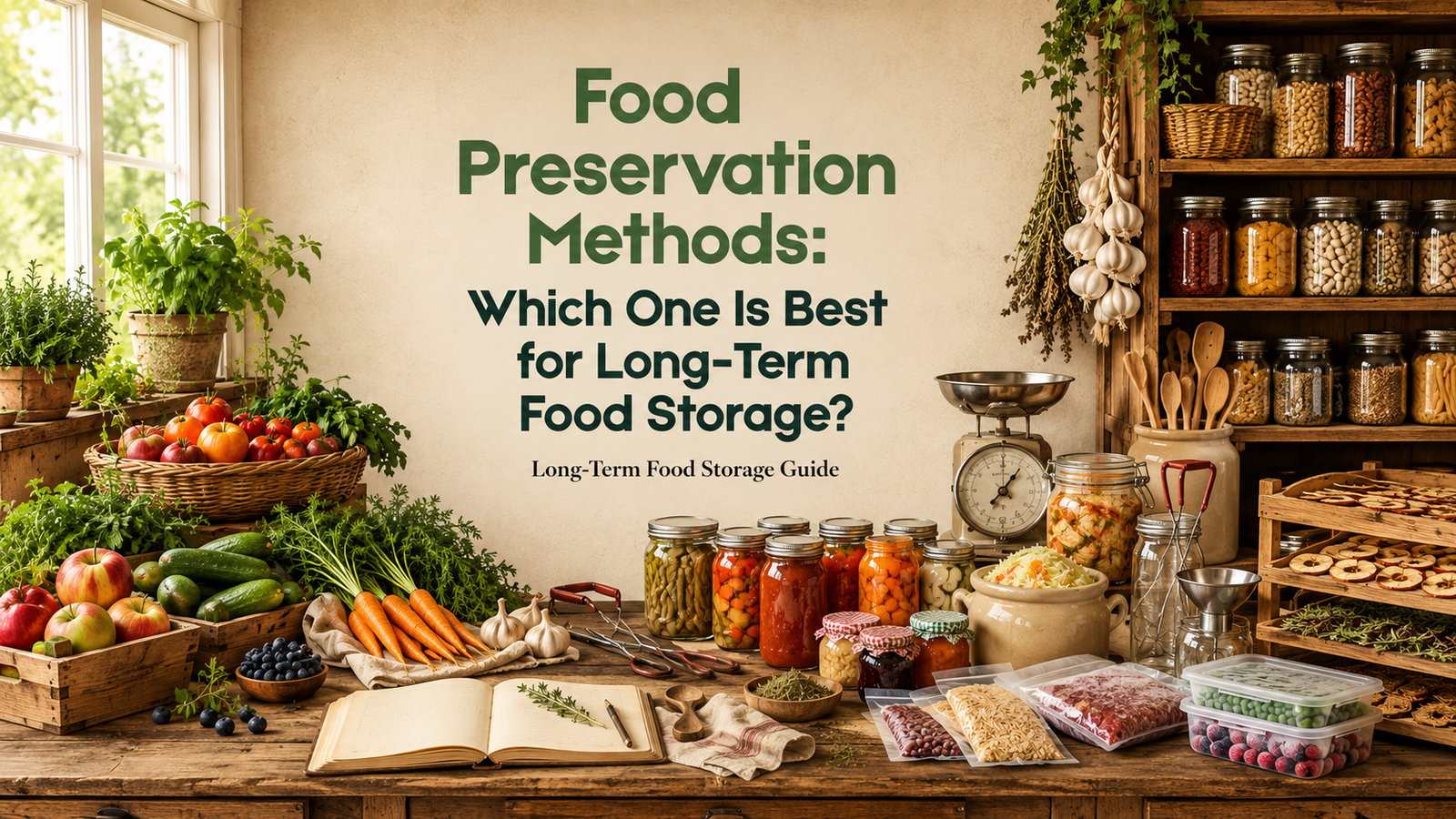

Food Preservation Methods: Which One Is Best for Long-Term Food Storage?
If you’ve ever watched fresh tomatoes turn soft on the counter, found mold growing on forgotten berries, or wondered how previous generations stored food without modern refrigerators, you’ve already seen why food preservation matters.
Learning how to preserve food isn’t just about extending shelf life. It’s about reducing waste, saving money, making the most of garden harvests, and building a pantry that can support your family through every season. Whether you’re stocking up during grocery sales, harvesting vegetables from your backyard, or preparing for unexpected emergencies, the right preservation method helps protect both your food and your investment.
The good news is that there isn’t a single “best” way to preserve food. Some methods work better for high-moisture fruits, while others are ideal for root vegetables, meats, herbs, or pantry staples. Understanding the strengths and limitations of each approach makes it much easier to choose the right one for every situation.
In this guide, you’ll learn the seven most common food preservation methods, compare their advantages and disadvantages, and discover which technique works best for different types of food.
Why Food Preservation Still Matters Today
Modern grocery stores make fresh food available year-round, but food preservation remains just as valuable today as it was generations ago.
For many families, preserving food has become less about survival and more about making smarter use of time, money, and seasonal abundance.
Here are a few reasons why food preservation continues to matter:
- Reduce food waste. Proper storage keeps fruits, vegetables, and leftovers from spoiling before they can be eaten.
- Save money. Buying food in bulk or preserving seasonal produce often costs less than purchasing fresh items out of season.
- Extend your garden harvest. Home gardeners frequently produce more vegetables than they can eat immediately. Preservation allows those harvests to last for months.
- Build emergency preparedness. A well-preserved food supply provides peace of mind during power outages, severe weather, or unexpected disruptions.
- Enjoy better quality food year-round. Home-preserved foods often retain better flavor than many commercially processed alternatives.
Food preservation doesn’t require living off-grid or owning a large homestead. Even simple habits—such as freezing excess vegetables, drying herbs, or storing onions correctly—can significantly reduce waste over the course of a year.
Related reading: If you’re just starting to build a long-term food supply, begin with How to Stock Your Pantry for a Year, then return to this guide to choose the best preservation methods for each type of food.
How Food Preservation Works
Every preservation method is built on the same basic principle: slow down or stop the natural processes that cause food to spoil.
Fresh food begins to deteriorate as soon as it’s harvested or prepared. Several factors contribute to this process:
- Bacteria multiply and break down food.
- Mold and yeast grow when moisture and oxygen are available.
- Natural enzymes continue to ripen and eventually degrade fruits and vegetables.
- Moisture encourages microbial growth.
- Oxygen accelerates oxidation, causing changes in color, flavor, and texture.
Different preservation methods control these factors in different ways.
| Preservation Method | Primary Control |
|---|---|
| Freezing | Low temperature slows bacteria and enzymes |
| Dehydrating | Removes moisture |
| Freeze Drying | Removes nearly all moisture while preserving structure |
| Canning | Heat destroys microorganisms and airtight seals prevent contamination |
| Fermentation | Beneficial bacteria outcompete harmful microbes |
| Root Cellaring | Cool temperatures and high humidity slow natural aging |
| Pantry Storage | Stable temperature, low humidity, and proper containers reduce spoilage |
No single technique eliminates every cause of spoilage. Instead, each method targets the conditions that affect specific foods.
For example:
- Potatoes stay fresh because cool temperatures slow sprouting.
- Dried herbs last because nearly all moisture has been removed.
- Frozen berries remain safe because bacterial growth is dramatically slowed.
- Fermented vegetables stay edible because beneficial bacteria create an acidic environment that prevents harmful microbes from growing.
Understanding these basic principles makes it much easier to decide which preservation method is best for your pantry.
The 7 Most Common Food Preservation Methods
Each preservation method has its own strengths. Some require specialized equipment, while others have been used successfully for centuries with little more than a cool room or good airflow.
The best choice depends on:
- The type of food you’re preserving
- How long you want it to last
- The equipment you already own
- Available storage space
- Your budget and lifestyle
Let’s compare the seven most common methods used in home food preservation today.
1. Canning
Canning is one of the most reliable methods for preserving food for long-term shelf storage. The process uses heat to destroy microorganisms before sealing food inside airtight jars, allowing many foods to remain shelf stable for one to several years when stored properly.
Two main canning methods are used:
- Water bath canning for naturally acidic foods such as fruits, jams, jellies, pickles, and many tomato products.
- Pressure canning for low-acid foods including vegetables, beans, soups, poultry, and meats, which require higher temperatures to safely eliminate harmful bacteria.
Best For
- Tomatoes
- Fruit preserves
- Applesauce
- Pickles
- Green beans
- Broths
- Soups
- Meat
Advantages
- Excellent long-term shelf life
- No electricity required after processing
- Saves freezer space
- Ideal for large harvests
Disadvantages
- Requires canning equipment
- Can be time-consuming
- Safe procedures must be followed carefully
- Texture changes for some foods
Typical Shelf Life
1–2 years for best quality, although many properly canned foods remain safe beyond that when seals remain intact.
Future Guide: Water Bath Canning vs. Pressure Canning
2. Freezing
Freezing is often the easiest preservation method for beginners. By keeping food at consistently low temperatures, bacterial growth slows dramatically while much of the food’s original flavor, color, and nutritional value is maintained.
Unlike canning, freezing requires very little preparation for most foods, making it a practical option for busy households.
Many fruits, vegetables, meats, breads, and prepared meals freeze exceptionally well, although some foods—such as lettuce or cucumbers—lose texture after thawing.
Best For
- Meat
- Poultry
- Fish
- Berries
- Corn
- Peas
- Bread
- Prepared meals
Advantages
- Beginner friendly
- Excellent flavor retention
- Minimal equipment required
- Fast preparation
Disadvantages
- Requires continuous electricity
- Freezer space is limited
- Risk of freezer burn
- Texture changes after thawing for certain foods
Typical Shelf Life
Most frozen foods maintain their best quality for 6–12 months, depending on the food and packaging.
3. Dehydrating
Dehydrating removes most of the moisture from food, making it difficult for bacteria, mold, and yeast to grow. Because water accounts for much of a food’s weight, dehydrated foods are lightweight, compact, and easy to store.
Modern electric dehydrators produce the most consistent results, but many foods can also be dried using an oven or, in suitable climates, the sun.
Best For
- Herbs
- Apples
- Bananas
- Mushrooms
- Tomatoes
- Peppers
- Beef jerky
Advantages
- Long shelf life
- Lightweight storage
- No electricity needed after drying
- Great for snacks and backpacking
Disadvantages
- Some nutrient loss
- Changes texture
- Drying can take several hours
- Requires airtight storage afterward
Typical Shelf Life
6–12 months, or longer when vacuum sealed and stored in a cool, dark place.
4. Freeze Drying
Freeze drying removes almost all moisture while preserving much of the food’s original shape, flavor, and nutritional value. Unlike standard dehydration, the food is frozen first, then moisture is removed through a vacuum process.
The result is an extremely lightweight product that can often last 20–30 years when packaged correctly.
However, freeze dryers are expensive, making this method less accessible for beginners.
Best For
- Complete meals
- Fruits
- Vegetables
- Meat
- Dairy products
- Emergency food storage
Advantages
- Extremely long shelf life
- Excellent flavor retention
- Lightweight
- Rehydrates well
Disadvantages
- High equipment cost
- Longer processing times
- Requires specialized equipment
Typical Shelf Life
20–30 years with proper packaging and oxygen absorbers.
5. Fermentation
Fermentation preserves food by encouraging beneficial bacteria to produce acids that naturally prevent harmful microorganisms from growing.
Unlike other preservation methods, fermentation doesn’t simply stop microbial activity—it promotes the right microbes.
Many fermented foods also contain probiotics that may support digestive health.
Best For
- Cabbage
- Cucumbers
- Carrots
- Radishes
- Peppers
Common Examples
- Sauerkraut
- Kimchi
- Naturally fermented pickles
Advantages
- No special equipment
- Unique flavors
- May support gut health
- Low energy requirement
Disadvantages
- Learning curve
- Flavor isn’t for everyone
- Requires careful sanitation
Typical Shelf Life
Usually several months when refrigerated after fermentation.
6. Root Cellaring
Long before refrigerators existed, families relied on cool underground storage spaces to preserve fresh produce through the winter.
A root cellar creates an environment with:
- Cool temperatures
- High humidity
- Darkness
- Good airflow
These conditions slow sprouting, moisture loss, and natural aging without freezing the food.
Best For
- Potatoes
- Carrots
- Beets
- Parsnips
- Turnips
- Onions
- Garlic
- Winter squash
- Apples (stored separately)
Advantages
- No electricity
- Low operating cost
- Keeps produce fresh for months
- Excellent for homesteads
Disadvantages
- Requires suitable storage conditions
- Not practical in every climate
- Doesn’t work for every food
Typical Shelf Life
Many vegetables last 3–8 months, depending on the crop and storage conditions.
Related guides
7. Proper Pantry Storage
Not every food needs an elaborate preservation method.
Many dry pantry staples naturally have long shelf lives when stored correctly.
The key is protecting them from:
- Moisture
- Heat
- Oxygen
- Pests
- Direct sunlight
Simple improvements—such as using airtight containers, maintaining proper humidity, and storing foods in a cool location—can dramatically increase shelf life.
Best For
- Rice
- Dry beans
- Lentils
- Pasta
- Flour
- Oats
- Sugar
- Salt
- Baking supplies
Advantages
- Lowest cost
- Easy for beginners
- No special equipment
- Perfect everyday solution
Disadvantages
- Only suitable for dry goods
- Pest control is important
- Humidity management matters
Typical Shelf Life
Varies from 1 year to 30+ years, depending on the food and storage method.
Related Guides
Food Preservation Comparison Table
| Method | Best For | Shelf Life | Electricity | Difficulty | Cost |
|---|---|---|---|---|---|
| Pantry Storage | Dry goods | 1–30+ years | No | Easy | Low |
| Root Cellaring | Root vegetables | 3–8 months | No | Easy | Low |
| Freezing | Meat, vegetables | 6–12 months | Yes | Easy | Low |
| Dehydrating | Herbs, fruit | 6–12 months | During drying | Medium | Medium |
| Canning | Fruits & vegetables | 1–2 years | During processing | Medium | Medium |
| Fermentation | Vegetables | Several months | No | Medium | Low |
| Freeze Drying | Nearly everything | 20–30 years | During processing | Medium | Very High |
Which Method Should You Choose?
Choosing the right method depends more on what you’re preserving than on which technique seems most popular.
| Food | Recommended Method |
|---|---|
| Potatoes | Root cellar |
| Onions | Root cellar |
| Garlic | Pantry or root cellar |
| Tomatoes | Canning |
| Herbs | Dehydrating |
| Berries | Freezing |
| Meat | Freezing or pressure canning |
| Emergency meals | Freeze drying |
| Rice & Beans | Dry pantry storage |
Many experienced homesteaders don’t rely on just one method—they combine several throughout the year.
Can You Combine Preservation Methods?
Absolutely.
In fact, the most efficient home food storage systems use multiple preservation techniques together.
A typical garden harvest might look like this:
- Eat fresh produce first.
- Freeze excess berries.
- Can tomatoes for sauces.
- Ferment cabbage into sauerkraut.
- Dry herbs for cooking.
- Store potatoes and carrots in a root cellar.
- Keep rice, beans, and flour organized in the pantry.
By matching each food to the most suitable preservation method, you maximize both shelf life and food quality.
Common Food Preservation Mistakes
Even the best preservation method can fail if basic principles are ignored.
Avoid these common mistakes:
- Using the wrong preservation method for the food.
- Ignoring recommended storage temperatures.
- Storing dry foods in humid environments.
- Forgetting to label containers with dates.
- Overfilling freezers and restricting airflow.
- Skipping proper sanitation during canning or fermentation.
- Assuming every food stores well in the same conditions.
Small improvements in storage habits often have a bigger impact than buying expensive equipment.
Final Thoughts
Food preservation isn’t about choosing one perfect technique—it’s about building a flexible system that fits your home, your harvest, and your lifestyle.
For most beginners, the best approach is to start simple. Learn how to store pantry staples correctly, freeze foods you’ll use regularly, and preserve seasonal produce as your confidence grows. Over time, you can add more advanced methods such as canning, fermentation, or freeze drying.
The more preservation methods you understand, the easier it becomes to reduce waste, save money, and enjoy home-stored food throughout the year.
Frequently Asked Questions
What is the best food preservation method?
There isn’t a single best method. The ideal choice depends on the type of food, your storage goals, available equipment, and how long you want the food to last.
Which preservation method lasts the longest?
Freeze drying generally offers the longest shelf life, with many properly packaged foods remaining high quality for 20–30 years.
Is freezing better than canning?
Neither is universally better. Freezing usually preserves texture and nutrients well but requires electricity, while canning creates shelf-stable foods that don’t depend on freezer space.
Can food preservation help reduce food waste?
Yes. Preserving excess food before it spoils is one of the most effective ways to reduce household food waste while saving money.
Which preservation method is easiest for beginners?
Proper pantry storage and freezing are usually the easiest places to start because they require minimal equipment and are simple to learn.
Quick Checklist
✅ Store food at the correct temperature.
✅ Choose the right preservation method for each food.
✅ Keep storage areas clean and dry.
✅ Label every container with the date.
✅ Rotate older foods first (FIFO).
✅ Check stored food regularly for spoilage.
✅ Maintain proper pantry humidity.