
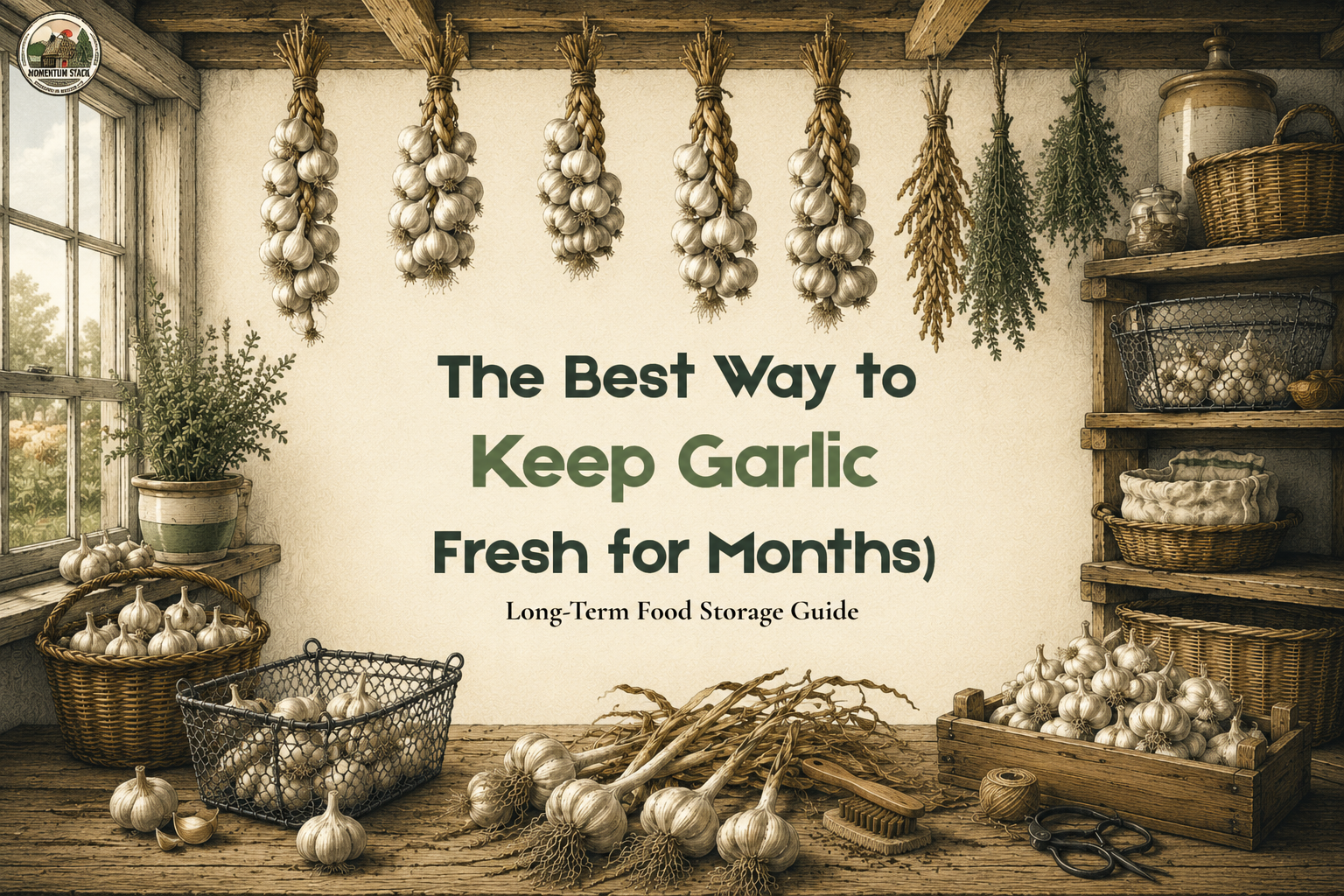

Store Garlic: The Best Way to Keep Garlic Fresh for Months
Garlic is one of the most versatile ingredients in any kitchen. Whether you’re cooking soups, roasting vegetables, making pasta sauces, or preserving seasonal harvests, a steady supply of fresh garlic can elevate almost every meal.
The good news is that garlic naturally stores much longer than many fresh vegetables. When kept under the right conditions, whole bulbs can remain usable for several months without refrigeration. Unfortunately, many people unintentionally shorten that lifespan by storing garlic in plastic bags, airtight containers, or even the refrigerator.
Moisture, excessive humidity, poor airflow, and direct sunlight are the biggest enemies of long-term garlic storage. Understanding a few simple principles can prevent mold, reduce sprouting, and help every bulb stay firm and flavorful for as long as possible.
In this guide, you’ll learn the best ways to store garlic, whether refrigeration is ever necessary, how long garlic really lasts, and the common mistakes that cause bulbs to spoil far sooner than expected.
Garlic is one of the easiest ingredients to include when building a well-stocked pantry because it naturally stores for months with very little maintenance.
Why Proper Garlic Storage Matters
Unlike many fresh vegetables, garlic continues to breathe after harvest. Every bulb slowly loses moisture while also responding to changes in temperature and humidity. Poor storage conditions speed up these natural processes, leading to sprouting, mold growth, or soft cloves.
Many people assume garlic goes bad simply because it grows green shoots. In reality, sprouting is usually a sign that the bulb has been exposed to excessive warmth, moisture, or changing temperatures rather than an indication that it’s unsafe to eat.
Proper storage helps preserve several important qualities:
- Rich garlic flavor
- Firm texture
- High moisture balance
- Longer shelf life
- Less food waste
It also saves money. Buying garlic in larger quantities is often more economical, but only if the bulbs remain usable for months instead of weeks.
Garlic harvested and cured correctly can often outlast many other pantry vegetables, making it one of the most reliable ingredients for long-term food storage.
The Ideal Conditions for Storing Garlic
Garlic doesn’t require expensive equipment or specialized containers. Instead, success comes from maintaining four simple environmental conditions.
Keep Garlic Cool — But Not Cold
Whole garlic bulbs store best at cool room temperatures rather than inside the refrigerator.
A consistently cool environment slows natural aging while avoiding the sudden temperature changes that often trigger premature sprouting. For most homes, a pantry, cellar, or shaded kitchen cabinet works much better than the refrigerator.
Avoid storing garlic near ovens, dishwashers, sunny windows, or other heat-producing appliances.
Keep Garlic Dry
Moisture is one of the fastest ways to ruin garlic.
Even small amounts of trapped humidity can encourage mold growth between the papery skins. Garlic should always remain completely dry before being stored.
If you’ve harvested garlic from your own garden, allow the bulbs to cure thoroughly before placing them into storage.
Never wash garlic before storing it.
Store Garlic in Darkness
Sunlight slowly warms garlic bulbs and encourages sprouting.
A dark pantry, cabinet, basement, or traditional root cellar helps maintain a more stable environment while protecting flavor and quality.
Opaque containers or shaded baskets are generally better choices than leaving garlic exposed on a bright countertop.
Prioritize Good Airflow
Perhaps the single most overlooked factor is ventilation.
Garlic needs continuous airflow around every bulb. Without it, humidity becomes trapped, creating the perfect conditions for mold and decay.
The best storage options include:
- Wire baskets
- Mesh bags
- Woven baskets
- Hanging braids
- Ceramic garlic keepers with ventilation holes
Avoid sealed plastic containers, zipper bags, or airtight jars for whole garlic bulbs.
Although garlic and onions appear similar, they don’t always perform best under identical storage conditions. Understanding the differences helps extend the shelf life of both crops.
https://momentumstackhq.com/store-onions-long-term/
The Best Ways to Store Garlic
No single storage method works perfectly for every household. The best option depends on your climate, available space, and how frequently you use garlic.
1. Wire Basket
Wire baskets provide excellent airflow from every direction while allowing excess moisture to escape naturally.
This is one of the simplest and most effective methods for most kitchens.
2. Mesh Bag
Mesh produce bags are inexpensive, reusable, and provide outstanding ventilation.
They’re particularly useful if you purchase garlic in bulk.
3. Paper Bag
Paper bags absorb small amounts of moisture while still allowing enough airflow.
If using a paper bag, keep the top loosely folded rather than tightly sealed.
4. Ceramic Garlic Keeper
A dedicated garlic keeper combines darkness with controlled ventilation.
These containers work especially well on kitchen counters where appearance matters, though they still need to be kept away from heat sources.
5. Hanging Braided Garlic
Traditional braided garlic remains one of the oldest storage methods still used today.
When hung inside a cool, dry room, braided garlic receives excellent airflow while taking up very little storage space.
Unlike garlic, which requires dry air and excellent ventilation, root vegetables like carrots stay fresh much longer in slightly damp storage media.
https://momentumstackhq.com/store-carrots-in-sand/
Should You Refrigerate Garlic?
One of the most common questions about garlic storage is whether it belongs in the refrigerator. For whole garlic bulbs, the answer is usually no.
Refrigerators provide a cold but humid environment. While the low temperature slows some biological processes, the added moisture often causes garlic to sprout more quickly once it’s brought back to room temperature. Condensation can also encourage mold growth over time.
Instead, whole garlic bulbs should remain in a cool, dark, well-ventilated pantry or cellar.
There are, however, a few exceptions.
Whole Bulbs
✅ Store at room temperature in a dry location.
Individual Unpeeled Cloves
Separated cloves can still be stored at room temperature, but they’ll dry out sooner than an intact bulb. Try to use them within a couple of weeks.
Peeled Garlic
Once the protective skin has been removed, refrigeration becomes important. Store peeled cloves in an airtight container and use them within about one week.
Chopped or Minced Garlic
Freshly chopped garlic should always be refrigerated and used within a few days. For longer storage, freezing is the better option.
How Long Does Garlic Last?
Storage life depends largely on how the garlic is stored and whether the bulb remains intact.
| Garlic Form | Typical Shelf Life | Best Storage Method |
|---|---|---|
| Whole bulbs | 3–6 months | Cool, dry, dark pantry |
| Individual unpeeled cloves | 2–4 weeks | Pantry |
| Peeled cloves | Up to 1 week | Refrigerator |
| Chopped garlic | 2–3 days | Refrigerator |
| Frozen garlic | 6–12 months | Freezer |
Remember that these are general guidelines. Temperature, humidity, and garlic variety can all influence storage life.
Garlic isn’t the only pantry staple with an impressive shelf life. Potatoes can also last for months when stored under the right conditions.
Common Garlic Storage Mistakes
Even quality garlic won’t last long if it’s stored incorrectly. Avoid these common mistakes to maximize freshness.
1. Storing Garlic in Plastic Bags
Plastic traps humidity and restricts airflow, creating ideal conditions for mold.
2. Using Airtight Containers
Whole garlic bulbs need ventilation. Sealed containers prevent moisture from escaping.
3. Refrigerating Whole Bulbs
Cold temperatures combined with moisture often encourage sprouting after the garlic is removed from the refrigerator.
4. Leaving Garlic in Direct Sunlight
Heat speeds up moisture loss and shortens shelf life.
5. Washing Garlic Before Storage
Moisture left on the outer skin can promote fungal growth.
6. Breaking Apart the Bulb Too Soon
Whole bulbs naturally protect each clove. Once separated, cloves deteriorate much faster.
7. Ignoring Airflow
Garlic stored in crowded containers without ventilation is much more likely to soften or develop mold
How to Tell If Garlic Has Gone Bad
Garlic naturally changes as it ages, but not every change means it should be thrown away.
Garlic Is Still Good If It Has:
- Small green sprouts
- Slightly dry outer skins
- Firm cloves
- Mild garlic aroma
Sprouted garlic is still safe to eat. Simply remove the green shoot if you find its flavor slightly bitter.
Garlic Should Be Discarded If It Has:
- Soft or mushy cloves
- Visible mold
- Black or dark brown spots
- A sour or rotten smell
- Excess moisture inside the bulb
When in doubt, it’s safer to discard spoiled garlic than risk consuming mold.
Quick Garlic Storage Checklist
✓ Store whole bulbs whenever possible.
✓ Keep garlic cool, but not refrigerated.
✓ Choose a dark location away from direct sunlight.
✓ Allow plenty of airflow.
✓ Never wash garlic before storing it.
✓ Avoid plastic bags and airtight containers.
✓ Refrigerate only peeled or chopped garlic.
✓ Check stored garlic every few weeks for soft or moldy bulbs.
Frequently Asked Questions
Can you freeze garlic?
Yes. Whole cloves, peeled cloves, or minced garlic can all be frozen for long-term storage.
Is sprouted garlic safe to eat?
Yes. Green sprouts are harmless, although they may taste slightly bitter.
Can garlic be stored in olive oil?
Fresh garlic stored in oil should always be refrigerated and used promptly because improper storage can create conditions for dangerous bacterial growth.
Can garlic and onions be stored together?
They can often be stored in the same cool, dry room, but they shouldn’t be packed tightly together. Good airflow is important for both.
Should garlic be peeled before storage?
No. Whole bulbs and unpeeled cloves last significantly longer than peeled garlic.
Can garlic be stored in Mason jars?
Only peeled garlic intended for refrigeration. Whole bulbs should never be stored in sealed jars.
Why does garlic sprout?
Sprouting is usually triggered by warmth, moisture, or changing storage temperatures.
What’s the best container for storing garlic?
Wire baskets, mesh bags, hanging braids, and ceramic garlic keepers with ventilation holes are all excellent choices.
Conclusion
Garlic is one of the easiest pantry staples to store successfully. By keeping bulbs cool, dry, dark, and well ventilated, you can enjoy fresh garlic for months without relying on refrigeration.
The key is to leave bulbs intact, avoid excess moisture, and choose breathable storage containers that allow air to circulate freely. A few simple habits can dramatically reduce sprouting, mold, and food waste while ensuring your garlic stays flavorful whenever you need it.
Building a resilient pantry isn’t just about storing garlic. Learn how to store onions, potatoes, sweet potatoes, and carrots properly so every staple stays fresh as long as possible.